


































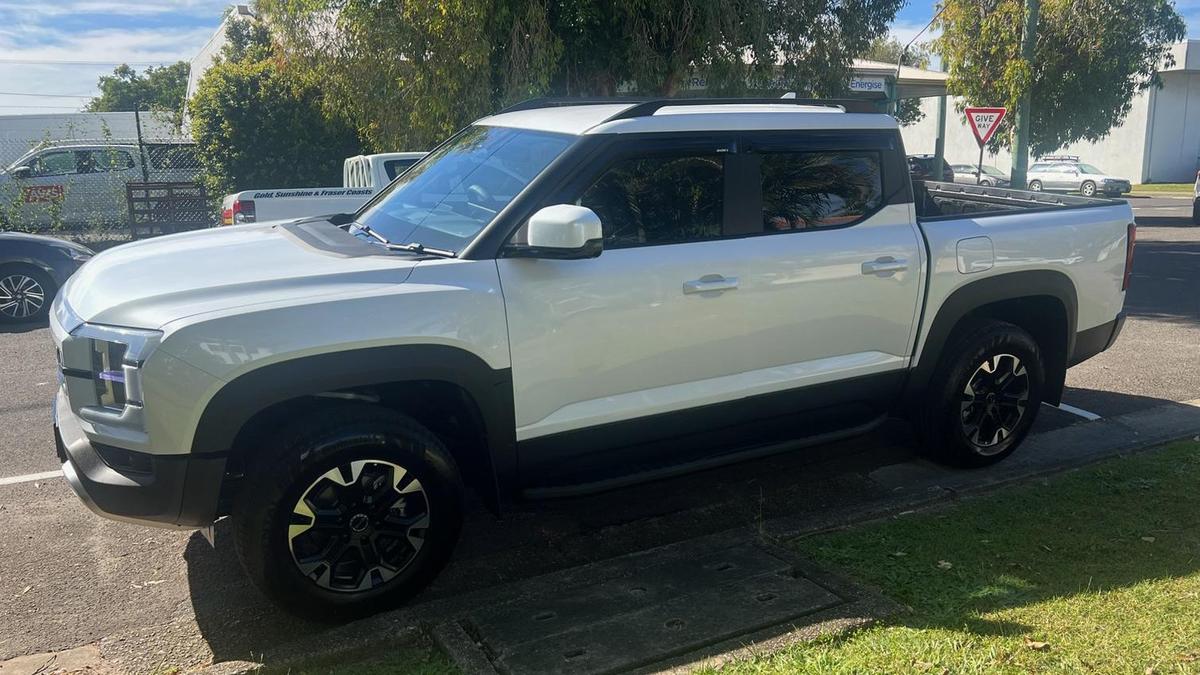
Scott Jones, a diesel fitter based in Rockhampton, has made a surprising switch from a Chevrolet Silverado 1500 LTZ to a BYD Shark 6 plug-in hybrid. With extensive experience in working on diesel vehicles, Jones’ decision reflects a shift in personal requirements and an evolving automotive market.
After enjoying the rugged reliability of his previous vehicle, a Volkswagen Amarok, Jones encountered challenges when towing a large boat. Although the Amarok had a towing capacity of 3.5t, he found it struggled on steep inclines when the boat and trailer exceeded the vehicle’s capabilities. “It didn’t feel good,” he explained regarding the performance.
To address these issues, Scott opted for a 2021 Chevrolet Silverado, which provided more power and space. He appreciated the V8’s performance but faced recurring mechanical problems that eroded his trust in the vehicle. “There were multiple problems with the fuel pump and other components,” he shared. Consequently, he began searching for another dual cab option.
Having grown disillusioned with the offerings from established brands like Toyota and Ford, Jones started exploring alternatives. He was intrigued by the BYD Shark 6, a vehicle that diverged significantly from his diesel background. The Shark 6 combines a turbocharged 1.5-litre four-cylinder petrol engine with BYD’s lithium iron phosphate battery and dual electric motors, allowing it to travel up to 80 km on electric power alone.
Jones conducted thorough research on hybrid technology and decided to test drive the Shark 6. Flying to the Sunshine Coast for the experience, he was pleasantly surprised by the vehicle’s build quality. “It was as well-built as my Amarok. There were no squeaks, rattles: everything felt tight,” he remarked. The standard features, including a decent sound system and ventilated seats, added to his positive impression.
The performance exceeded his expectations. “It really does feel like it has 321 kW when you put your foot down,” he stated, noting that it outperformed his previous diesels. In June 2025, Scott placed an order for a white Shark 6, receiving delivery just two weeks later.
Reflecting on his experience with the hybrid, he indicated satisfaction with its fuel efficiency, especially while towing. “I can get 18L/100 km at 100 km/h, whereas the Silverado returned 24L/100 km,” he noted. This marked a significant reduction in fuel costs for Jones.
While some of his colleagues questioned the decision to transition from a V8 to a Chinese hybrid, Scott remained confident. “I tell them to hop in. The quality speaks for itself,” he said. He emphasized the instant torque and efficiency of the Shark 6, which he believes rivals conventional performance vehicles.
Charging the vehicle overnight has become part of his routine, providing a comfortable range of 80 km on electric power for daily use. However, he expressed a desire for improved storage options compared to the Silverado. “I want bigger compartments and more of them,” he admitted.
Despite missing the sound of a powerful V8 engine, Jones appreciates the benefits of the Shark 6. “It has been a great vehicle so far and has matched up really well with my requirements,” he concluded. Looking ahead, he remains open to future BYD models, expressing interest in a larger version with enhanced capabilities.
In a final thought, Scott recognized the ongoing role of diesel vehicles, stating, “for my own requirements… it would have to be pretty special to fight off machines like this.” The shift in his preferences underscores the changing landscape of vehicle technology and consumer expectations.