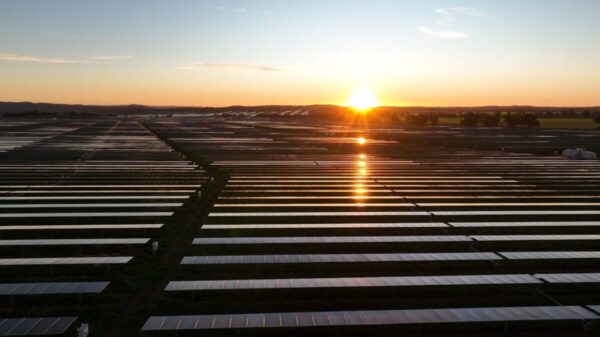













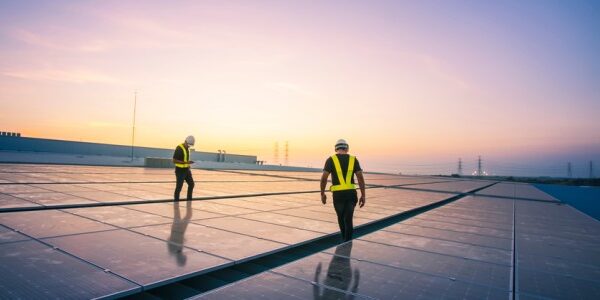



















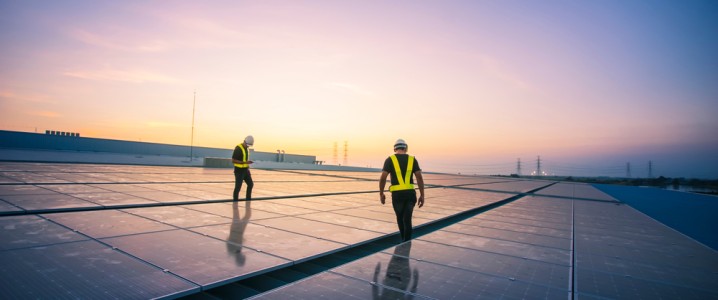
The U.S. solar market experienced a notable increase in capacity installations during the third quarter of 2025, as developers accelerated efforts to qualify for expiring tax credits. The industry added 11.7 gigawatts direct current (GWdc) of solar power capacity, marking a 20% rise compared to the same period last year and a significant 49% increase from the previous quarter. This surge represents the third-largest deployment in the history of the U.S. solar industry, according to the Solar Energy Industries Association (SEIA) and Wood Mackenzie in their U.S. Solar Market Insight Q4 2025 report.
The robust growth in the third quarter reflects the completion of many utility-scale solar projects that were underway in the preceding months. Following the passage of the One Big Beautiful Bill Act (OBBBA) earlier in the summer, developers are under pressure to begin construction on projects before the July 4, 2026, deadline to qualify for the Investment Tax Credit (ITC) or Production Tax Credit (PTC). Projects that do not meet this construction start date must be fully operational by December 31, 2027, to remain eligible for these crucial tax incentives.
Despite the record-setting installations, the industry faces challenges due to a federal permitting freeze, which introduces uncertainty and risk for future developments. SEIA and Wood Mackenzie suggest that the urgency to comply with regulations is driving a wave of activity to advance well-positioned projects. The organizations predict that the rush to meet these legal requirements will dominate the coming months.
While the current climate presents obstacles, solar and storage systems accounted for 85% of all new power added to the grid in the first nine months of the Trump Administration. Notably, 73% of the solar capacity installed this year has been concentrated in states won by President Trump. The leading states for new installations include Texas, Indiana, Florida, Arizona, Ohio, Utah, Kentucky, and Arkansas.
Abigail Ross Hopper, president and CEO of SEIA, expressed concern about the long-term viability of solar energy under the current administration. She stated, “Unless this administration reverses course, the future of clean, affordable, and reliable solar and storage will be frozen by uncertainty and Americans will continue to see their energy bills go up.”
As developers strive to take advantage of the remaining tax credits, the solar industry stands at a crucial juncture, balancing rapid growth with the looming challenges of regulatory compliance and market conditions. The coming months will be critical in determining the future trajectory of solar energy in the United States.