


































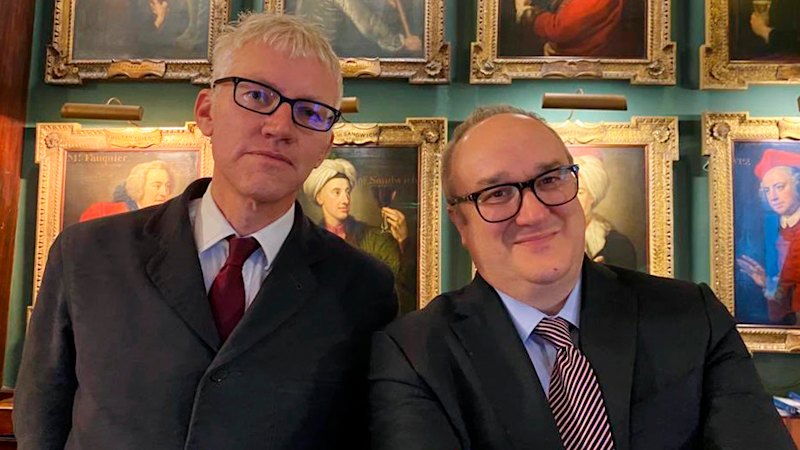
The podcast The Rest is History, hosted by historians Tom Holland and Dominic Sandbrook, has become a remarkable success, recently being named Apple’s Podcast of the Year. With over 600 episodes and millions of downloads, the show has captivated audiences by presenting history in an engaging and accessible manner that resonates with listeners worldwide.
What sets this podcast apart is its unique approach to storytelling. Holland and Sandbrook delve into historical events and figures, presenting them not just as facts but as narratives filled with human emotion and experience. Their discussions cover a wide array of topics, from the Battle of Cape St Vincent to the life of figures like Marie Antoinette and Olaudah Equiano. This focus on personal stories and moral dilemmas creates a vivid picture of history that many listeners feel has been overlooked in traditional academic settings.
Engaging History for a Modern Audience
University history courses often emphasize theories and structures, leaving behind the rich narratives that breathe life into the past. Holland and Sandbrook challenge this narrative by prioritizing storytelling. They bring history to life through anecdotes and discussions that reflect their own experiences and interests, making historical events relatable and engaging for their audience.
Both hosts come from privileged educational backgrounds, with Holland attending Cambridge and Sandbrook attending Oxford. Yet, they do not dwell on their advantages. Instead, they focus on the human aspects of history. Their episodes are peppered with humor and irony, often poking fun at historical figures and events, which adds a light-hearted element to their exploration of significant moments in time.
In their approach, they avoid abstract concepts, opting instead for concrete examples. In one episode, Holland remarked, “Let us not speak in abstract nouns,” emphasizing their commitment to making history accessible. This strategy resonates particularly well with younger audiences, as evidenced by the enthusiastic participation at their live events, such as a recent show at Leicester University, which attracted over 1,000 attendees.
A New Era of Historical Discourse
The duo’s podcast style contrasts sharply with traditional academic discourse, creating a more inviting environment for discussion. Each episode begins with a brief introduction that sets the tone, followed by a lively conversation that flows naturally. This informal yet informative style encourages listeners to engage with history in a way that feels personal and inviting.
Their diverse range of topics—from “Weird Beards” to “History’s Greatest Monkeys”—illustrates their ability to attract interest across various subjects. Although they occasionally delve into more serious themes, their lighthearted banter ensures that learning remains enjoyable. The hosts conduct their research thoroughly, crediting sources and literature to enrich their discussions while acknowledging the limitations of time in their episodes.
While their format is not without its critics, the success of The Rest is History demonstrates a demand for this type of storytelling. The podcast is a testament to the idea that history does not need to be a dry academic pursuit but can instead be a lively conversation that invites participation and reflection.
As they continue to gain popularity, Holland and Sandbrook are not only reshaping how history is communicated but also highlighting a broader demand for accessible and engaging historical narratives in the Anglophone world. Their work underscores the importance of making history relatable and exciting, encouraging a renewed interest in understanding our past.