



























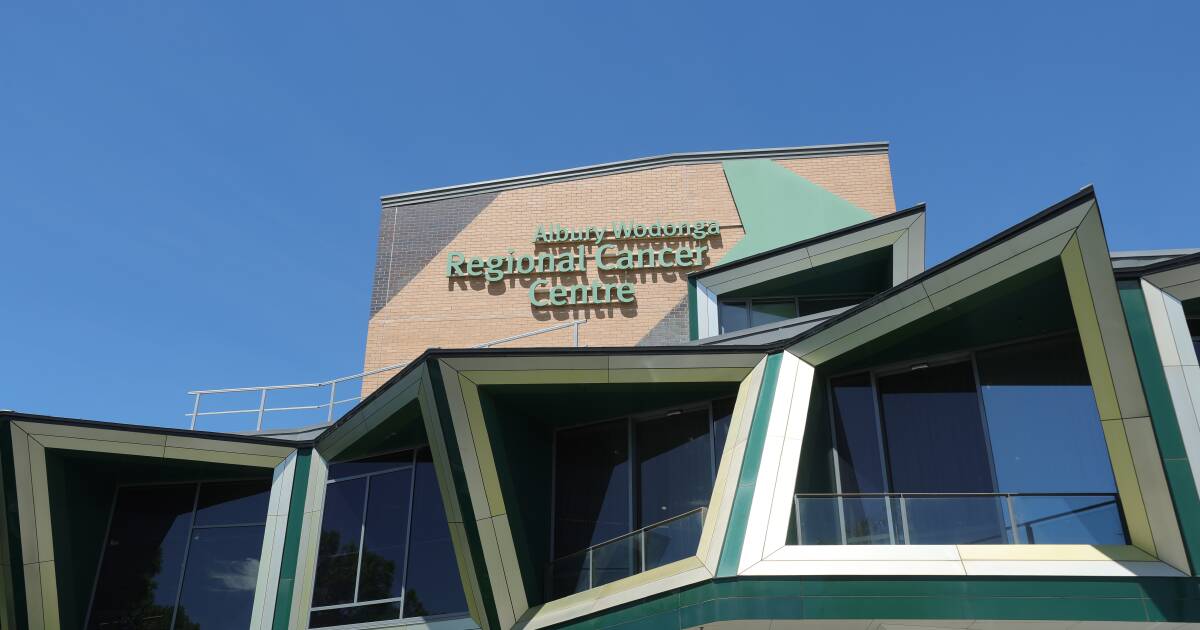
As the Albury Wodonga Regional Cancer Centre prepares for a transition to public management, patients are expressing significant concern about the continuity of their care. The shift, scheduled for January 23, 2026, has sparked anxiety among those receiving treatment, particularly regarding changes to their healthcare providers.
Janine Barron, a cancer patient who has been undergoing treatment since 2011, learned of the impending changes through a Facebook post. The announcement, which indicated that Ramsay and Border Oncology would vacate the premises, left many patients feeling anxious and uninformed. “It took me about three or four days to get my head under control,” Barron stated. Her primary worry is that she will no longer be able to see her trusted oncologist, who has been intimately involved in her care for stage four cancer. “I totally trust my oncologist; they know my history back to front,” she added. “If I die of this, I want them by my side, not a stranger.”
The management of the cancer centre will transition to Albury Wodonga Health, which has assured patients that care will “continue without interruption.” In a November 2025 update, the organization stated, “We’re working closely with all clinicians, including local oncologists, to ensure patients continue to see familiar faces and receive the same compassionate, high-quality care they trust.” Furthermore, Border Medical Oncology will continue to provide care until September 2026, meaning that immediate changes to doctors or treatment teams should not occur.
Despite these assurances, Barron and other patients feel that communication regarding the transition has been lacking. “I just wish I knew what their plans are,” she remarked. Rumors about a potential shift to a system where patients might rotate through different oncologists have only heightened her anxiety. “That’s what I’m scared of, and that would totally do my head in,” she said.
Another patient, who chose to remain anonymous, echoed these sentiments. The uncertainty surrounding the transition has added unnecessary stress, complicating an already challenging experience. “If they communicated about what was happening, then the anxiety is taken away,” she expressed. She emphasized the need for transparency, suggesting that decision-makers should consider pausing the transition until a clear plan is established. “I would like them not to touch the cancer centre at all until the community, the politicians, and the health ministers on both sides of the border are all over what the plan is,” she urged.
Patients have praised the existing system, highlighting the convenience and efficiency of the current setup. Barron noted the seamless process of receiving treatment at the centre, stating, “It’s one stop; you go and get your bloods done, you see your oncologist, and when I had radiation, that was simple too.” She described the staff as “brilliant” and the service as a “smooth, well-oiled machine,” raising the question of why such a successful model needs to change.
As the transition date approaches, the voices of patients like Barron and others emphasize the need for clear communication and reassurance to alleviate their fears. The future of cancer care in the Albury Wodonga region hangs in the balance, with patients advocating for a system that prioritizes their well-being and continuity of care during this significant shift.