
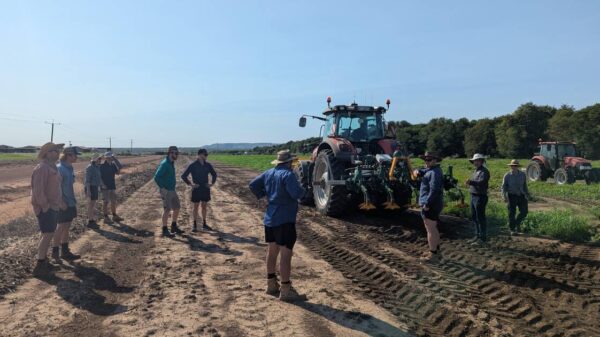
































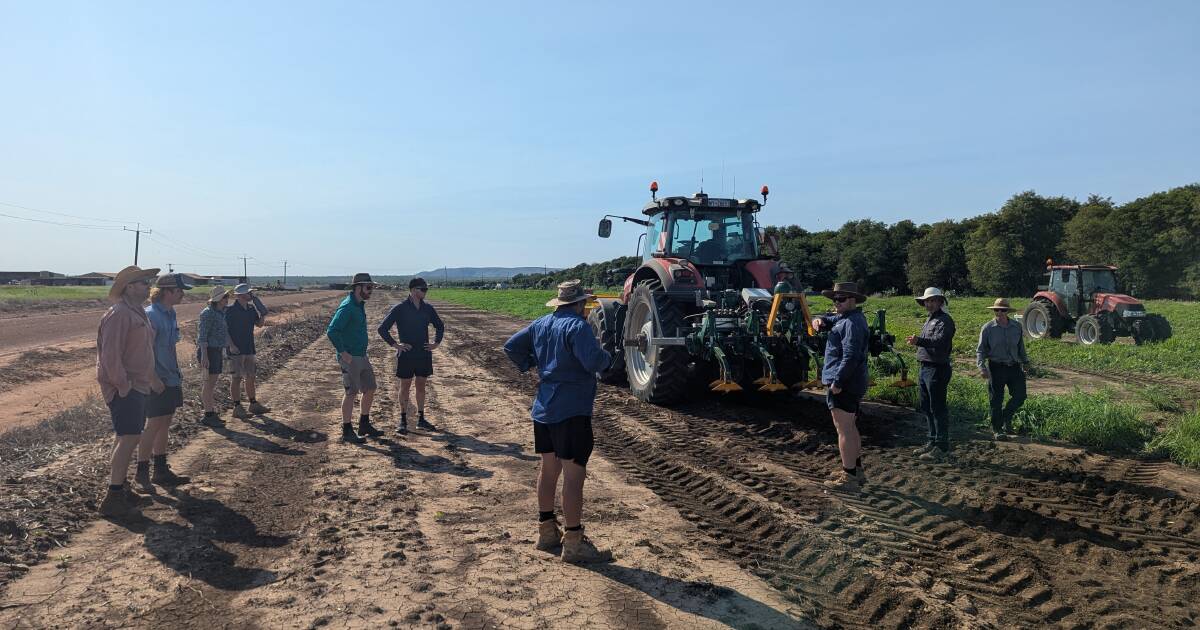
UPDATE: A groundbreaking mechanical weeding technology from Western Australia is on the verge of commercial rollout, targeting individual fallow weeds without chemicals. Developers are currently conducting final demonstrations of the innovative Weed Chipper, a product of collaboration between The University of Western Australia (UWA) and local farming stakeholders.
This urgent development comes as farmers face increasing challenges with herbicide resistance and environmental concerns. Associate Professor Andrew Guzzomi, the engineering research project leader, emphasized the technology’s potential to revolutionize weed control during fallow and pre-cropping phases of grain production. “Our targeted tillage approach enables growers to significantly reduce both chemical and non-chemical weed control inputs,” he stated.
The Weed Chipper utilizes advanced weed recognition technology, allowing precise targeting of weeds during critical growth phases. By employing active tynes activated by sensors, the system provides a non-chemical solution to weed management, fostering sustainable agricultural practices. Guzzomi explained that the technology operates similarly to a farmer physically removing weeds, but with automated efficiency.
Recent demonstrations in Kununurra have shown exceptional results, with a reported 100% weed kill rate for various weed sizes, including those up to 90 centimeters in diameter. The technology is particularly beneficial for managing low-density and herbicide-resistant weeds, making it a vital tool for farmers facing escalating weed problems.
Despite initial setbacks due to COVID-19 lockdowns, interest in the Weed Chipper has surged as growers seek alternatives to traditional chemical herbicides. Guzzomi noted that the technology’s development dates back to a project conducted by the Grains Research and Development Corporation (GRDC) from 2015-2018, in collaboration with innovative farmers like Ray Harrington, inventor of the Harrington Seed Destructor.
The UWA team is also exploring the integration of the Weed Chipper with WEED-IT sensors, enhancing its efficiency in weed detection and control. This combination allows farmers to apply herbicides only where needed, further minimizing chemical use and promoting environmental health.
Farmers interested in adopting this cutting-edge technology can connect with UWA’s Office of Industry and Commercial Development at [email protected]. Guzzomi emphasized the urgency of this technology as it aligns with the growing demand for sustainable agriculture solutions.
Looking ahead, the UWA team is committed to advancing agricultural engineering. Future developments include next-generation electrically-powered weeding technologies that promise even greater efficiency and reduced environmental impact.
As the Weed Chipper approaches commercialization, it stands poised to reshape weed management practices across broadacre farms in Australia, providing a beacon of hope for sustainable farming methods in the face of rising herbicide resistance. The agricultural community and environmental advocates alike are eager for this innovative solution to become a reality.