



































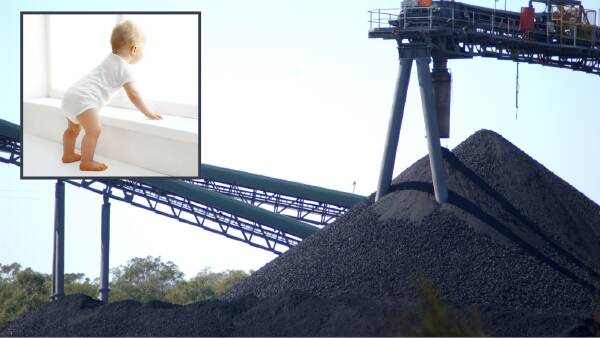
UPDATE: New analysis reveals a startling connection between coal prices and birth rates in the Hunter Region, underscoring how fluctuations in the mining industry can directly impact family planning decisions. As the coal export price surged in 2017, so did birth rates, only to sharply decline again as prices eased in subsequent years.
This urgent finding from KPMG highlights a significant drop in Australian coal prices between 2013 and 2014, which coincided with a decline in births across the Newcastle and Hunter area. Notably, after a boom in coal prices in 2017, births rebounded in 2018, illustrating the direct correlation between economic prosperity and family growth. However, the trend faced a stark shift in 2023, breaking the long-standing link as broader economic pressures led to a “baby recession.”
Terry Rawnsley, a KPMG urban economist, stated, “When commodity prices rise, this leads to a ripple effect across the entire local economy, leading to more money in people’s pockets.” He emphasizes that families often feel more financially secure during such booms, which encourages them to expand their families.
Despite this cyclical relationship, Robin Williams, president of the Mining and Energy Union Northern mining and NSW energy district, noted that he had not encountered couples actively considering coal prices in their family planning. Instead, he pointed out that “secure, well-paid jobs—like those in mining—support individuals to make major life decisions.”
The analysis also revealed that while mining continues to underpin the local economy, the Hunter Region is diversifying. The fastest-growing sectors currently include health care, with 3,500 jobs added, followed by 2,500 jobs in other services and 2,000 jobs in construction. This shift suggests a positive trend towards economic resilience, reducing reliance on volatile commodity prices.
In light of these developments, Rawnsley remarked, “The recent baby recession of 2023 broke the long-standing link between commodity prices and births.” He attributed this to inflationary pressures affecting families’ decisions nationwide, despite rising coal prices.
As the Hunter Region evolves, all eyes will be on how these changes affect future birth trends and economic stability. Will families continue to rely on the mining sector for financial security, or will emerging industries redefine the landscape? Stay tuned for updates as this story develops.
