



































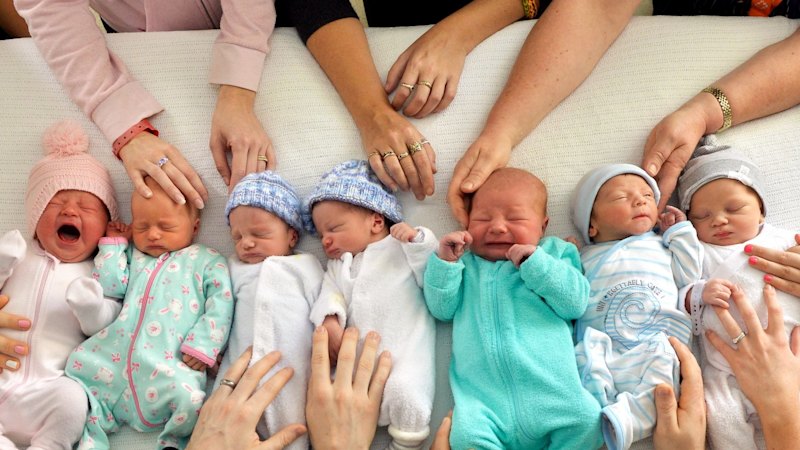
On March 13, 2026, new leader of the National Party, Matt Canavan, made headlines by advocating for an increase in the Australian birth rate. He expressed a vision to “manifest a hyper Australia,” suggesting that the country should return to its perceived golden age characterized by higher fertility rates and traditional family values. His comments have ignited a vigorous debate about gender roles, societal expectations, and the realities facing modern Australian families.
Canavan’s remarks were delivered against the backdrop of a photo gallery featuring historical leaders of the National Party, all of whom were white men in formal attire. This imagery, coupled with his call for more “Australian babies,” has been interpreted by many as a nostalgic yearning for a past that many women, particularly those who fought for gender equality, find troubling. The current fertility rate in Australia stands at a record low of 1.42 children per woman, raising concerns about the future workforce and economic stability.
The past era Canavan seems to romanticize is likely the post-war period when Australia’s fertility peaked at 3.5 babies per woman in 1961. This was a time when traditional gender roles were firmly in place. Women were often expected to prioritize motherhood over careers and were systematically excluded from many professional opportunities. Canavan’s vision appears to align with a narrative that prioritizes a patriarchal structure where women’s roles are confined to childbearing and homemaking.
Historical perspectives on this issue reveal the complexities of Canavan’s call. Figures such as Elizabeth Reid, who served as a women’s adviser to former Prime Minister Gough Whitlam, have highlighted that the 1950s and 1960s were not as idyllic for women as Canavan suggests. Reid recalls a time when women were largely invisible in society, reduced to roles as homemakers and sexual objects. “We were forced to shrink,” she notes, emphasizing the struggle for women to gain recognition and autonomy.
Canavan’s rhetoric echoes some contemporary global movements that seek to reinforce traditional family structures. While he stops short of using phrases like “Make Australia Great Again,” there are clear parallels with similar sentiments expressed in other countries. His approach combines Australian cultural references with a conservative agenda that aims to reshape societal norms around family and reproduction.
The implications of Canavan’s statements are significant, particularly for young Australian women. Amid rising costs of living, including housing and essential goods, many women are faced with difficult choices about family planning. The prospect of bringing children into a world marked by climate change, economic uncertainty, and political instability further complicates these decisions.
In a society where the pressures of modern life are increasingly felt, Canavan’s call for higher birth rates may not resonate with women who are navigating these challenges. The desire for a return to traditional values may clash with the realities of contemporary life, where many women aspire to balance careers and family, often in the face of systemic obstacles.
As the debate unfolds, it remains clear that conversations around family, gender roles, and societal structure will continue to be contentious in Australia. Canavan’s vision of a hyper Australia may inspire some, but it also raises critical questions about who is included in that vision and at what cost to women’s rights and choices.
The conversation surrounding Australia’s demographic future is not just about numbers; it is about the values and structures that shape society. As the nation reflects on these issues, the path forward will be defined by how effectively it can integrate diverse perspectives on family and gender equality.
