



































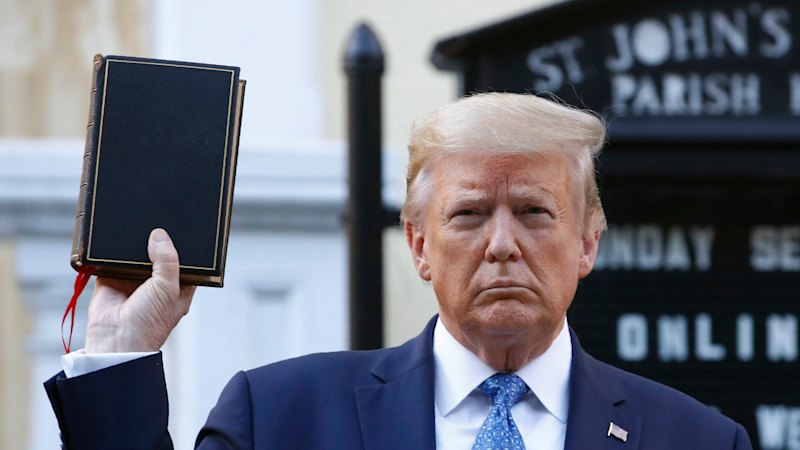
The presence of Christianity within the policies of the Trump administration has raised significant questions, especially given the former president’s initial appeal to evangelical voters. While concerns arose regarding his potential to foster a climate of “Christian nationalism,” the actual policies implemented during his tenure reveal a more complex picture.
During his presidency from January 20, 2017, to January 20, 2021, Donald Trump often aligned himself with evangelical leaders. He garnered substantial support from these communities, particularly during the 2016 election. Despite this backing, many evangelicals have expressed disappointment over the lack of explicit Christian values reflected in his administration’s actions.
One of the critical areas of concern has been the administration’s approach to social issues. While Trump’s policies on issues such as abortion and religious freedoms were generally in line with evangelical beliefs, his administration often focused more on economic policies and immigration than on explicitly Christian principles. This shift has left some feeling that their values were sidelined.
Furthermore, Trump’s foreign policy decisions have also sparked debate among Christian communities. His administration’s recognition of Jerusalem as the capital of Israel in December 2017 was celebrated by many evangelical supporters. However, critics noted that this move was politically motivated and did not necessarily reflect a broader commitment to Christian teachings.
The events surrounding the January 6, 2021, Capitol riots further complicated the relationship between Trump and Christian groups. Many evangelical leaders condemned the violence, arguing that it contradicted the principles of peace and love central to Christianity. This response highlighted a growing divide between Trump’s political strategy and traditional Christian values.
Despite these tensions, Trump’s administration did appoint three justices to the Supreme Court, significantly impacting religious freedom cases. The appointments of Neil Gorsuch, Brett Kavanaugh, and Amy Coney Barrett have been seen as victories for many in the evangelical community, as these justices have the potential to influence rulings on key religious issues for years to come.
The dynamic between Trump and evangelical communities illustrates a broader challenge within American politics. The expectation that a president would embody and promote Christian values has often clashed with the pragmatic realities of governance. As political alliances shift, the role of faith in American public life continues to evolve.
In summary, while Donald Trump did manage to rally substantial support from evangelical voters, the actual policies and actions of his administration did not always align with the expectations of Christian communities. The interplay between political allegiance and religious representation remains a complex and evolving issue in contemporary American society.
