



































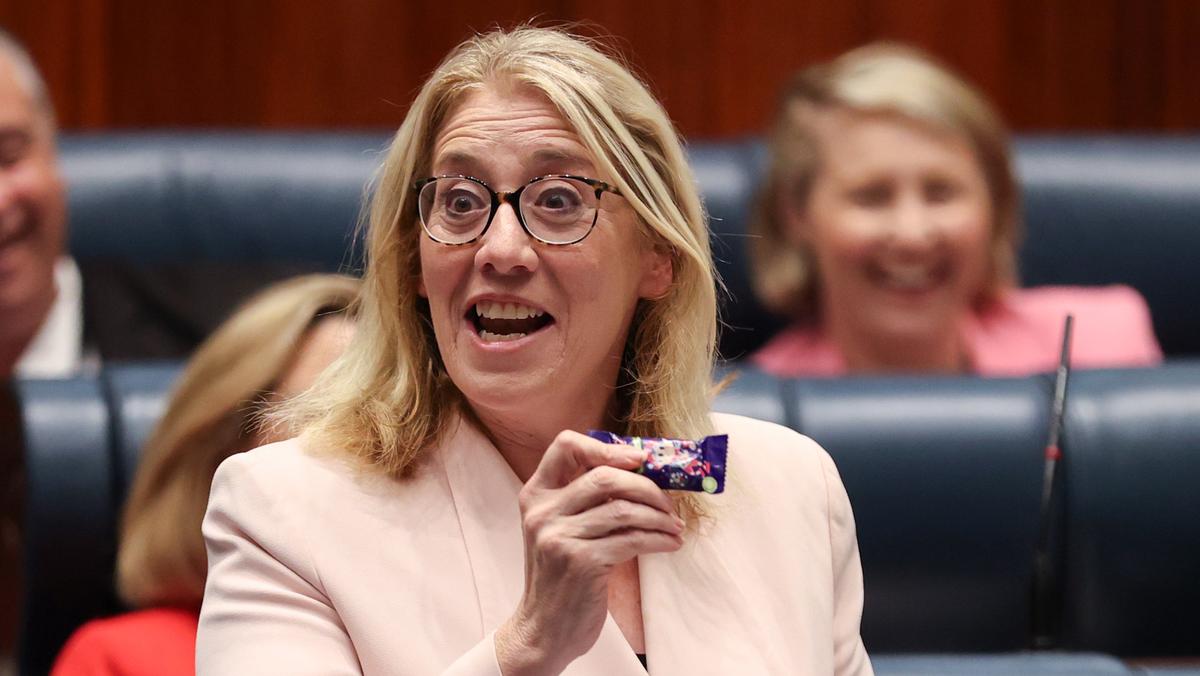
The financial landscape in Western Australia (WA) has shifted dramatically, with the state poised to record a surplus exceeding $2 billion for the current financial year. According to the latest budget update from Minister for Transport and Planning, Rita Saffioti, WA’s revenue has received a notable boost of $2.4 billion from surging iron ore and gold prices. This unexpected increase raises the expected total in royalties to an impressive $9.968 billion, in addition to an anticipated $8 billion from the Goods and Services Tax (GST).
Despite these financial gains, the debate over WA’s fair share of GST funding continues to intensify. Saffioti and Premier Roger Cook maintain that WA’s current GST allocation remains below its population share of $10.4 billion, effectively resulting in a $2.4 billion subsidy to other states and territories. However, convincing critics on the east coast of Australia’s fairness in this distribution may prove increasingly challenging.
Impact of Surging Royalties on GST Discussions
The recent surge in WA’s royalty revenue complicates Saffioti’s campaign to garner support for a more equitable GST arrangement. While the state government argues for maintaining its GST floor deal, which guarantees at least 75 cents for every dollar collected, the perception of East Coast stakeholders may not align with this stance.
The anticipated windfall from WA’s royalties could undermine the arguments being made in favor of a fairer GST distribution. As the news of WA’s financial success spreads, it is likely to diminish sympathy from those who oppose any changes to the existing GST framework.
The Productivity Commission is currently reviewing the 2018 GST deal, and the latest figures add complexity to the discussions. While WA’s financial position appears robust, the state’s government faces scrutiny from constituents who question the rationale behind cuts in annual power bill rebates and limited cost-of-living measures. Many residents are left wondering why benefits have not reflected the state’s increasing revenues.
Political Ramifications and Future Considerations
The political implications of WA’s budget surplus extend beyond financial statistics. Prime Minister Anthony Albanese finds himself in a precarious position, as any move to adjust the GST deal could alienate voters in WA, a state critical to his government’s electoral prospects.
As the situation unfolds, the challenge for WA’s leadership will be balancing the need for fair revenue distribution while addressing the immediate concerns of its citizens. The notion that everyone deserves a fair slice of the financial pie grows louder, particularly with WA’s recent $2.4 billion increase in its budgetary resources.
In summary, the financial success of Western Australia, highlighted by an impressive surplus and substantial royalty revenue, presents both opportunities and challenges in the ongoing negotiation for a fair GST distribution. As the political landscape evolves, the focus will remain on how WA’s government navigates these complex dynamics while advocating for its constituents’ needs.
