



































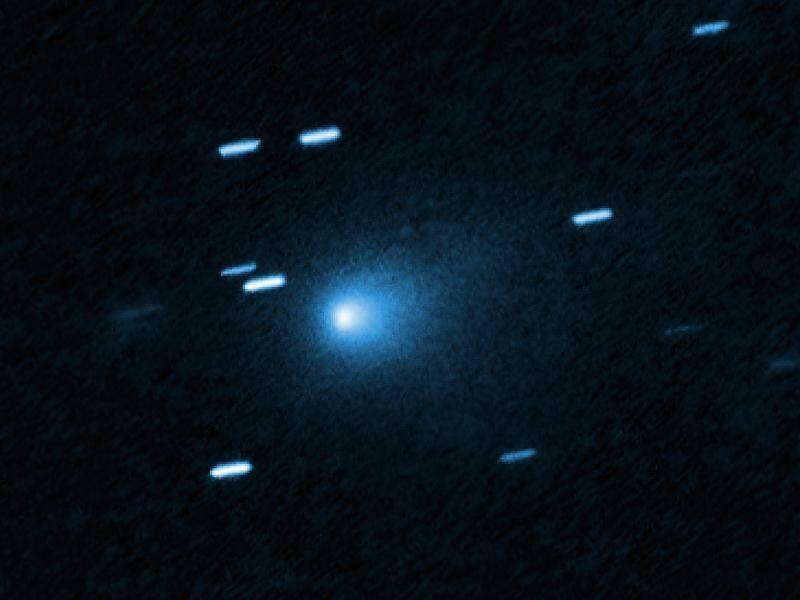
A comet originating from beyond our solar system, known as 3I/Atlas, is scheduled to make its closest approach to Earth on July 7, 2023. This event marks a significant moment for astronomers and skywatchers alike, as the comet will pass within 269 million kilometers of our planet before continuing its journey back into interstellar space.
Discovered on July 1, the comet is currently estimated to measure between 440 meters and 5.6 kilometers in size. NASA is actively monitoring 3I/Atlas using its space telescopes, providing a unique opportunity for backyard astronomers to observe this rare visitor as it fades from view.
Significance of 3I/Atlas
3I/Atlas is the third confirmed interstellar object to traverse our solar system. Unlike comets such as Halley’s Comet, which originate from the icy outskirts of our solar system, interstellar comets like 3I/Atlas are believed to come from star systems located elsewhere in the Milky Way. According to Paul Chodas, director of NASA’s Center for Near Earth Object Studies, this particular comet may have originated from a star system significantly older than our own.
The comet’s trajectory will take it much closer to Jupiter in March 2024, when it will pass within 53 million kilometers of the gas giant. After this close encounter, the comet will continue its course into interstellar space, with the next significant point of no return expected in the mid-2030s.
Observing 3I/Atlas
The discovery of 3I/Atlas was made by NASA’s sky-surveying Atlas telescope in Chile, which was originally designed to identify potentially hazardous asteroids. This comet follows the first confirmed interstellar visitor, detected in 2017 by a telescope in Hawaii, and another spotted by a Crimean amateur astronomer in 2019. Both previous interstellar objects have added to our understanding of the cosmic phenomena that occasionally intersect with our solar system.
As 3I/Atlas approaches Earth, it presents a captivating subject for both professional astronomers and enthusiasts. With its imminent departure from visibility, the time to observe this remarkable celestial phenomenon is quickly running out. Skywatchers are encouraged to utilize their telescopes to catch a glimpse of this extraordinary comet before it races back toward the vastness of interstellar space.
