



































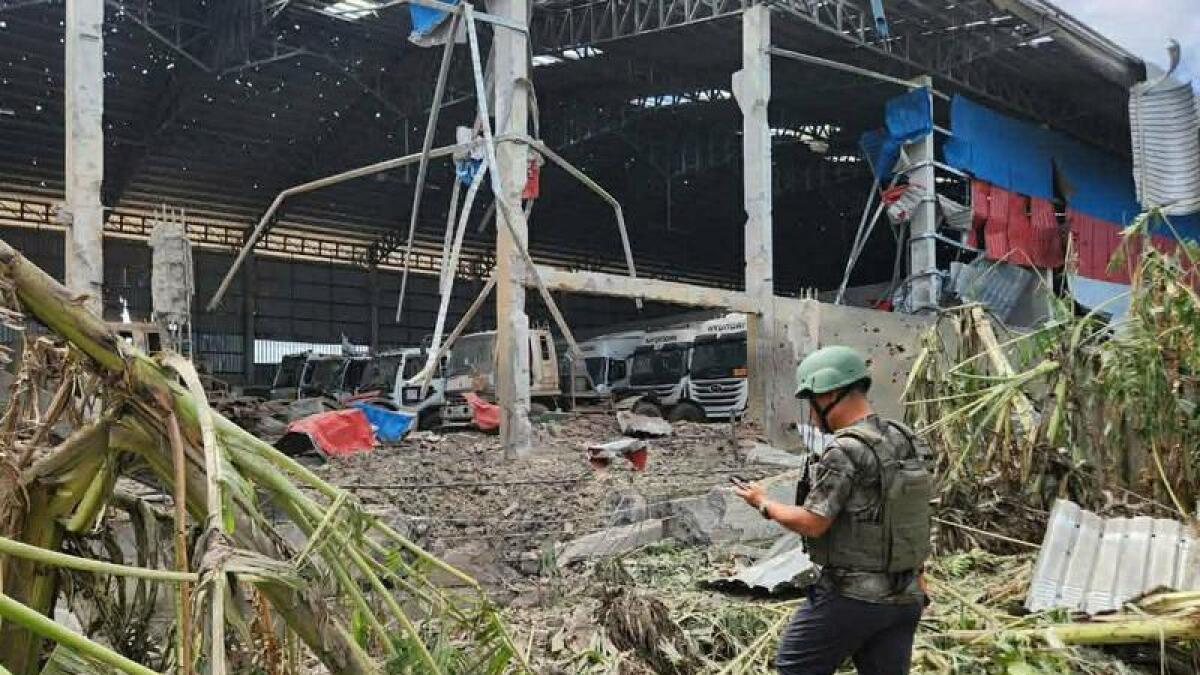
Tensions between Thailand and Cambodia have escalated, prompting urgent calls for a ceasefire ahead of an upcoming ASEAN meeting. On Friday, US Secretary of State Marco Rubio contacted Thai Foreign Minister Sihasak Phuangketkeow, emphasizing the need for de-escalation and adherence to a prior ceasefire agreement. The State Department confirmed these discussions, highlighting Washington’s concerns over the intensifying conflict.
Chinese Foreign Minister Wang Yi also engaged in talks with his Thai and Cambodian counterparts on Thursday. According to China’s foreign ministry, both officials expressed a desire to calm tensions and work towards a ceasefire. The ministry noted that the current level of conflict has surpassed previous incidents, warning that continued hostilities would jeopardize the unity of the Association of Southeast Asian Nations (ASEAN). A special envoy has been dispatched to both nations to facilitate peace efforts.
In a statement, the Thai foreign ministry indicated that Sihasak reiterated Bangkok’s commitment to dialogue and shared potential pathways forward, including participation in the ASEAN meeting scheduled for Monday. The ministry confirmed communication with Wang as well. Despite these diplomatic efforts, Cambodia has yet to respond officially to the proposals from Washington and Beijing.
Cambodian Foreign Minister Prak Sokhonn is set to attend the ASEAN meeting in Kuala Lumpur on Monday, marking the first direct interaction between Thailand and Cambodia since fighting resumed on December 8. Malaysian Prime Minister Anwar Ibrahim, who currently holds the ASEAN chairmanship, expressed cautious optimism about the meeting, noting that both Thailand and Cambodia’s leaders are eager to find a peaceful resolution.
The ongoing conflict stems from long-standing border disputes between the two nations, which share an 800-kilometer land border. Both countries accuse each other of actions that led to the breakdown of a ceasefire established in July, which was later expanded into a broader agreement in October. As tensions flared, fighting continued along the border, with reports of heavy weaponry being used.
On Friday, Cambodian forces were reported to have fired heavy artillery, prompting a response from Thailand. A spokesperson for the Thai defense ministry confirmed ongoing exchanges of fire. The situation has remained volatile since Thailand suspended de-escalation measures in November, which included troop withdrawals and the release of Cambodian prisoners of war. This decision followed the injury of a Thai soldier due to a landmine, which Thailand attributes to Cambodia, a claim that Phnom Penh denies.
Bangkok insists that any resolution must begin with a cessation of hostilities from Cambodia, coupled with a clear ceasefire proposal. Conversely, Phnom Penh asserts that it is acting in self-defense against military provocations from Thailand. The upcoming ASEAN meeting presents a critical opportunity for both nations to address these tensions and seek a lasting peace.
