



































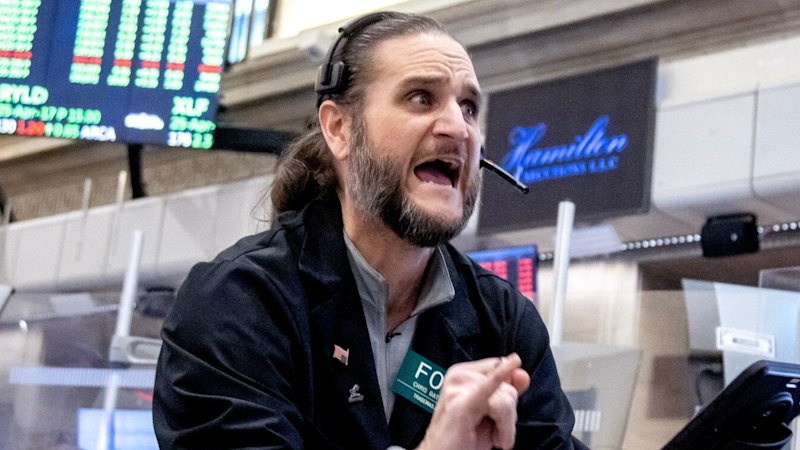
Stocks on Wall Street experienced a notable rebound on Friday, marking a second consecutive day of gains. This rally helped to erase earlier losses sustained earlier in the week, largely driven by a surge in technology stocks, particularly those focused on artificial intelligence. The S&P 500 and Nasdaq both wrapped up the week positively, indicating a recovery in investor sentiment.
The S&P 500 climbed by 59.74 points, or 0.9 percent, finishing at 6,834.50, which translated to a modest weekly gain of 0.1 percent. The Dow Jones Industrial Average also saw a rise, increasing by 183.04 points, or 0.4 percent, to close at 48,134.89. The Nasdaq, known for its heavy technology exposure, outperformed both indices, soaring by 301.26 points, or 1.3 percent, concluding the week at 23,307.62, with a weekly gain of 0.5 percent.
The Australian sharemarket is set for an optimistic start, with futures indicating a rise of 41 points, or 0.5 percent, at the market’s opening. As of 5:18 AM AEDT, the Australian dollar was trading at US66.12 cents.
A significant contributor to Wall Street’s upward momentum was Nvidia, which experienced a robust gain of 3.9 percent. Other technology stocks also performed well, with Broadcom rising by 3.2 percent. The technology sector has played a pivotal role in supporting market growth throughout the year, though investors have begun scrutinizing the valuations of these high-profile companies.
In a notable development, Oracle surged by 6.6 percent after announcing the formation of a new joint venture with TikTok, alongside investors Silver Lake and MGX. Each entity will hold a 15 percent stake in the popular social media platform, allowing it to continue operating in the United States.
Earnings reports and performance amidst tariffs and inflation were focal points for Wall Street this week. Nike fell sharply by 10.5 percent, as the effects of tariffs overshadowed an otherwise strong quarterly profit report. Lamb Weston, a frozen potato manufacturer, saw its stock tumble by 25.9 percent, despite exceeding profit and revenue forecasts. Conversely, Winnebago Industries experienced an 8.4 percent increase after surpassing analysts’ expectations for its latest quarter.
Homebuilders faced declines following a report indicating that home sales had slowed year-on-year for the first time since May. KB Home saw a drop of 8.5 percent as a result.
A survey conducted by the University of Michigan revealed a slight improvement in consumer sentiment for December compared to November, though it remains significantly lower than a year ago. According to Joanne Hsu, Director of Surveys of Consumers, “Despite some signs of improvement to close out the year, sentiment remains nearly 30 percent below December 2024, as pocketbook issues continue to dominate consumer views of the economy.”
Consumer confidence has been on a downward trend throughout the year, primarily due to persistent inflation and a weakening job market, raising concerns among businesses and consumers alike regarding the ongoing impacts of a broad US-led trade war targeting key partners, including China and Canada.
On Thursday, an inflation update revealed a surprising moderation in prices for November, with the Labor Department reporting a 2.7 percent rise in the consumer price index. Nonetheless, economists cautioned that these figures may be distorted due to delays caused by a 43-day federal shutdown.
Mark Hackett, Chief Market Strategist at Nationwide, noted, “The wave of economic data did little to provide clarity for investors this week, keeping the market in the trading range it has been in since September.” Current inflation levels remain above the Federal Reserve’s target of 2 percent. The central bank recently cut its benchmark interest rate, balancing concerns about a slowing job market with the risk that further cuts could exacerbate inflation and hinder economic growth.
Looking ahead, the Federal Reserve is expected to maintain a cautious approach to interest rate policy as it approaches its next meeting in January. Treasury yields in the bond market increased, with the yield on the 10-year Treasury rising to 4.15 percent from 4.11 percent late Thursday.
In international markets, Japanese stocks advanced after the Bank of Japan raised its benchmark interest rate to its highest level in 30 years, with the Nikkei 225 gaining 1 percent and leading gains across key Asian markets. European markets also experienced positive movement, contributing to an overall sense of recovery in global stock indices.
