



































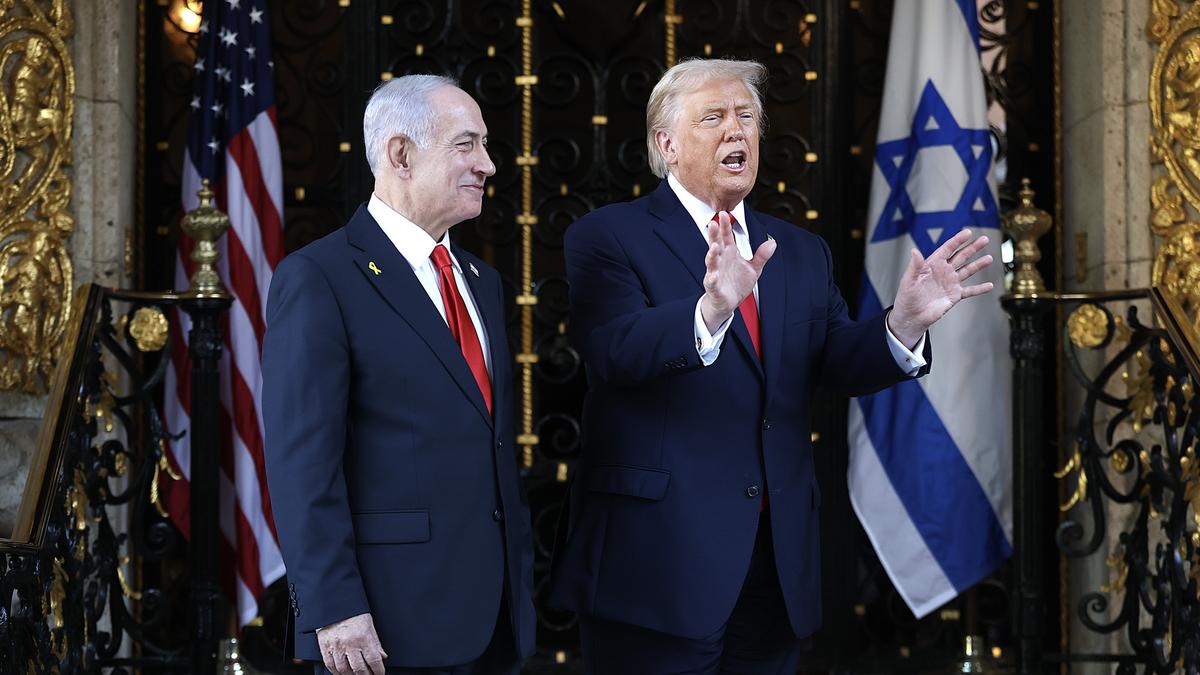
UPDATE: US President Donald Trump and Israeli Prime Minister Benjamin Netanyahu are currently meeting at Mar-a-Lago to urgently discuss the next phase of the Gaza ceasefire plan. The meeting, taking place this afternoon, aims to address critical concerns regarding Hezbollah and Iran as tensions in the region escalate.
Trump’s administration is pushing for swift progress in the stalled ceasefire following a series of conflicts that have left significant casualties. Netanyahu, who confirmed the meeting on December 22, is set to demand that Hamas return the remains of the last Israeli hostage, Ran Gvili, before proceeding with further stages of the ceasefire. This key demand underscores the urgency surrounding the negotiations, which are crucial for both Israeli security and humanitarian relief in Gaza.
The first phase of the ceasefire, initiated in October, included a partial Israeli withdrawal, increased aid to Gaza, and the exchange of hostages. However, Israel remains cautious, fearing that its adversaries may rebuild their military capabilities. According to officials, there have been ongoing breaches of the ceasefire, with more than 400 Palestinians killed since the start, the majority of whom are civilians, as reported by Gaza health officials.
During this high-stakes meeting, Netanyahu is also expected to address the ongoing situation in Lebanon, where a US-backed ceasefire with Hezbollah has faced challenges. Israel has conducted near-daily airstrikes in Lebanon to prevent Hezbollah from rearming, complicating the peace efforts.
US Secretary of State Marco Rubio emphasized last week the importance of establishing a transitional governance structure in Gaza, a key component of Trump’s peace plan. This governance, referred to as a Board of Peace, is intended to facilitate the deployment of an international security force as mandated by a November 17 UN Security Council resolution.
As the meeting unfolds, observers are closely watching for any breakthroughs or signs of progress. The international community remains concerned about the humanitarian crisis in Gaza and the potential for renewed violence if Hamas does not comply with disarmament demands.
The stakes are high as both leaders navigate these complex issues, with implications that could affect regional stability. The meeting’s outcomes will be critical in determining the next steps in the peace process and the future of governance in Gaza.
Stay tuned for further updates as this developing story unfolds.
