



































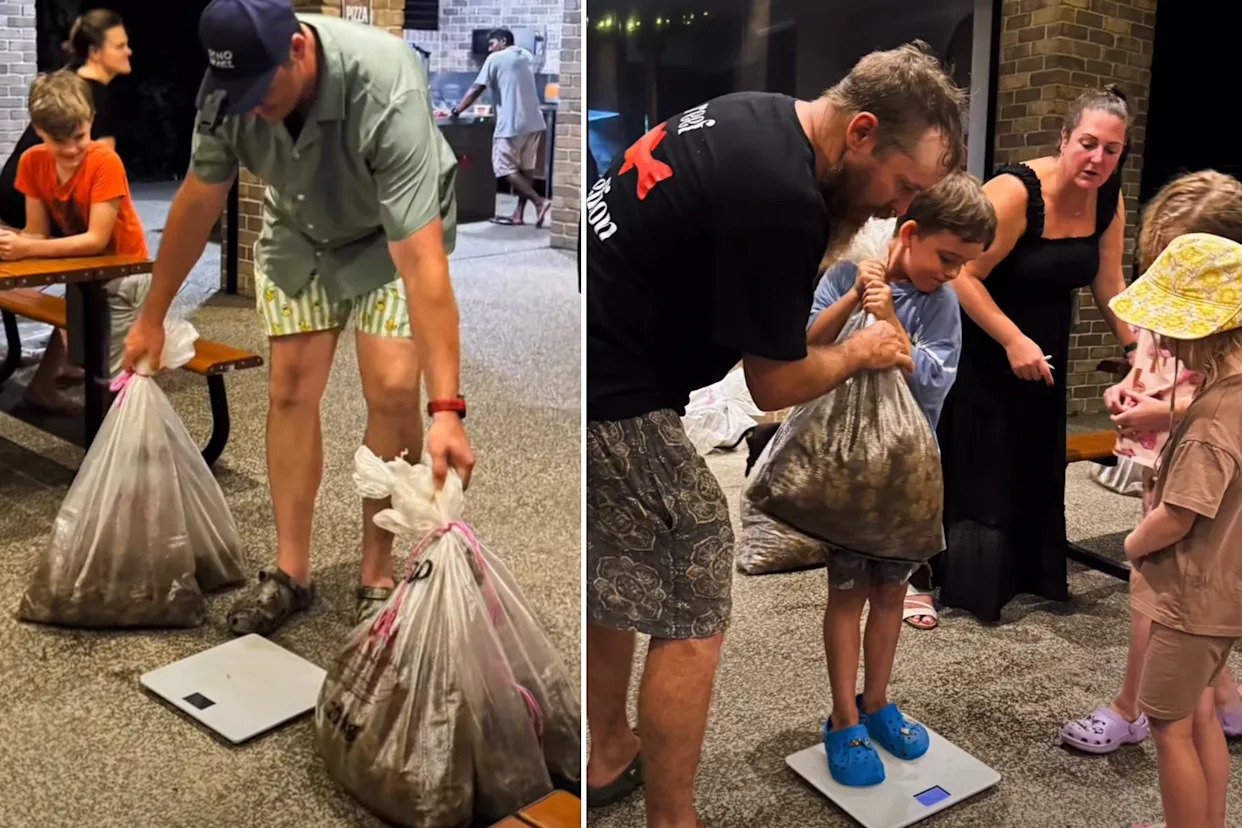
Australia faces an ongoing environmental crisis with invasive species, particularly the cane toad, which has proliferated to alarming numbers. Conservationists like Bundaberg farm owner Carly Clark are leading efforts to control this invasive population. On Boxing Day, a community event at her farm, Splitters, saw participants collectively capture an astonishing 96 kilograms of cane toads in just a few hours.
Cane toads, introduced to Australia in the 1800s, were originally brought in to combat pests affecting sugar cane crops. From an initial release of just 100 toads, their population has surged to an estimated 200 million across the country. This rapid increase has raised significant concerns among conservationists as the species continues to wreak havoc on native wildlife.
At the annual “cane toad challenge,” families and groups compete to collect as many toads as possible. “It’s free entry, and we give them a firewood bag, and basically whoever catches the most cane toads by weight wins their camping trip next year free of charge,” Clark explained. The competition has grown year after year, reflecting the overwhelming presence of these pests in the region.
Impact on Native Ecosystems
Cane toads are particularly destructive to native species. Clark has observed a notable decline in local frog populations, including the green tree frog, as well as adverse effects on goanna and freshwater crocodile populations due to their predatory behavior. “Goanna populations, particularly the yellow-spotted monitor, have plummeted by as much as 90 to 95 percent,” she noted, emphasizing the ecological imbalance caused by the invasive species.
The event not only raises awareness about the issue but also encourages humane methods of pest control. “Freezing puts them to sleep in the most humane way we can,” Clark stated. The challenge is designed to limit the impact on the environment while actively engaging the community in conservation efforts.
Growing Concerns Over Cane Toad Spread
The cane toad invasion poses a significant threat beyond Queensland. Invasive populations have spread into neighboring regions, including New South Wales and the Northern Territory, and have recently been detected in Western Australia. The species has adapted remarkably well to Australian conditions, laying up to 30,000 eggs at a time, which facilitates their rapid expansion.
Clark is considering expanding her efforts to include larger-scale community events, reflecting the broader concern within the community regarding the cane toad crisis. “We’ve even been approached by the broader community to run larger-scale events,” she said, highlighting the need for collective action against this environmental challenge.
The plight of the cane toad serves as a stark reminder of the delicate balance within ecosystems and the ongoing struggle to protect Australia’s unique wildlife. Conservationists like Carly Clark continue to combat these invasive species, demonstrating resilience and hope in the face of ecological threats.
