



































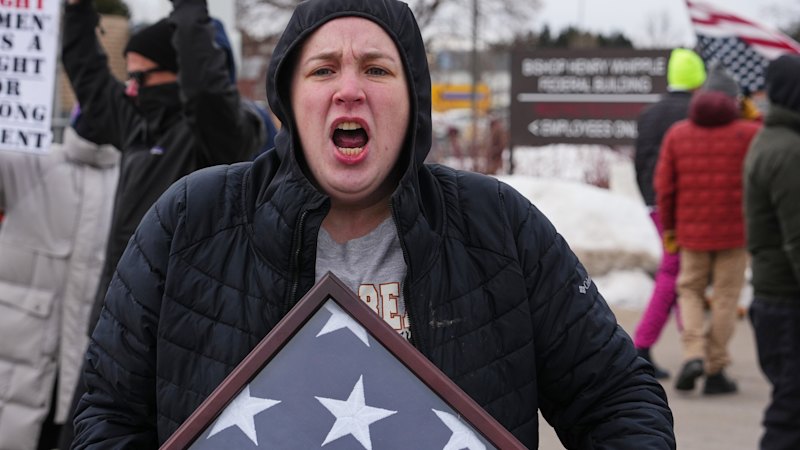
The rise of protests against U.S. Immigration and Customs Enforcement (ICE) has prompted a fierce backlash from conservative media, which is framing a segment of the protestors—dubbed “wine moms”—as a significant threat. This week, Fox News highlighted what it termed “organised gangs of wine moms” employing “antifa tactics” against ICE. Columns in right-leaning outlets have declared that affluent white liberal women are among the “greatest threats to our nation,” spurring a wave of political rhetoric that targets these activists.
The controversy intensified following the **death of Renee Good**, a vocal critic of ICE, which has become emblematic of the escalating tensions between law enforcement and protestors. Good’s death shocked many, particularly as it highlighted the increasing violence against middle-class white mothers at the hands of law enforcement. Public sentiment shifted dramatically following her killing, with an **Economist/YouGov poll** revealing that only **30 percent** of Americans believe the shooting was justified. Many view ICE as a force that is making communities less safe, with growing support for abolishing the agency altogether.
In response to the backlash, the administration has sought to portray the protests as a terrorist threat. Following Good’s death, the **Justice Department** initiated a criminal investigation into her partner, Becca Good, leading to resignations among federal prosecutors who opposed the action. This move has been interpreted as an attempt to validate the increasingly aggressive tactics employed by ICE in Minneapolis.
Conservative commentators have characterized these protests as an insurgency, with some asserting that the actions of activists like Good have incited violence against ICE agents. Rich Lowry, editor of the **National Review**, described Good’s confrontational stance towards ICE as creating the conditions for her tragic death. His rhetoric reflects a broader strategy to dehumanize these activists and justify harsh responses from law enforcement.
As tensions escalate, President **Donald Trump** has indicated he may invoke the **Insurrection Act** to curb what he labels as civil defiance. This declaration is particularly concerning in light of recent events in Minneapolis, where sporadic violence has erupted during protests. On Wednesday, **Homeland Security** reported that an ICE agent was injured during a confrontation, which resulted in shootings and further unrest among protestors.
The backlash against activists has also highlighted a cultural shift within conservative circles. Traditionally, the critique of white women, particularly those protesting, has been associated with leftist discourse. However, conservatives are now positioning these women as adversaries to their political goals. This shift underscores the deepening divides in American society, exemplified by the growing animosity towards those who challenge established norms.
Activists such as those involved in the protests against ICE are increasingly viewed as vital defenders of civil rights, often documenting and calling attention to alleged abuses by law enforcement. Reports of ICE agents using excessive force have emerged, adding to the urgency of their cause. One protestor, **Patty O’Keefe**, recounted an incident where she was subjected to aggressive tactics by ICE agents, further illustrating the risks faced by those opposing the agency’s actions.
As the movement grows, the resistance against ICE is manifesting in various local initiatives. Communities across the United States are organizing watch groups and educational campaigns aimed at opposing ICE’s operations. These grassroots movements are not only mobilizing citizens but also reaffirming local civic engagement.
In summary, the increasing visibility of protests against ICE, particularly among women labeled as “wine moms,” reflects broader societal tensions. The conservative framing of these activists as a significant threat underscores the political stakes involved as both sides navigate the complexities of immigration enforcement and civil rights.
