



































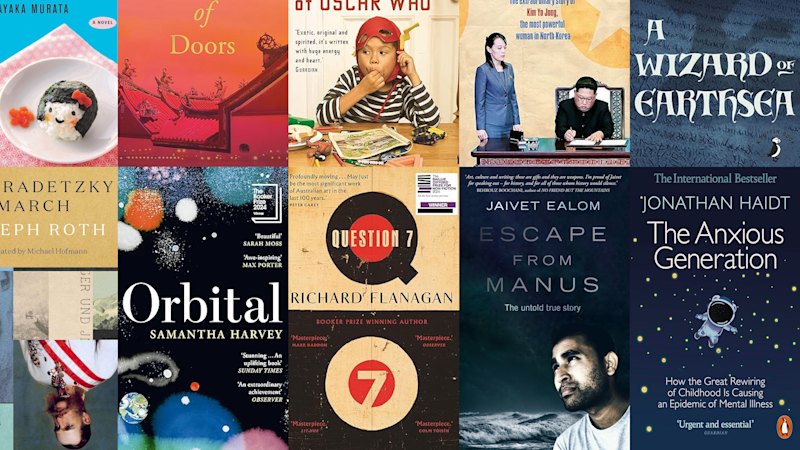
David Crowe, the Europe correspondent for The Sydney Morning Herald and The Age, embarked on an ambitious literary challenge to read 52 books from 52 countries in 52 weeks. Initially inspired by the travel restrictions during the pandemic, Crowe’s journey began as a way to explore the world through literature. However, as the end of 2024 approached, he found himself struggling to meet his own goal.
Adapting the Challenge
What began as an exciting literary adventure soon transformed into a test of endurance. Crowe’s daughter set the challenge, and for the first two years, the reading flowed easily, allowing him to escape Australia with each turn of the page. By the end of 2024, he recognized he needed to adapt the rules, allowing himself the flexibility of reading 52 books over a span of 52 fortnights instead.
Despite the challenges, Crowe’s literary explorations took him to many vibrant places. He vividly remembers his time in Tokyo, experiencing the life of a unique narrator in Convenience Store Woman by Sayaka Murata. He also found himself immersed in colonial Malaysia through Tan Twan Eng‘s The House of Doors, and felt the emotional weight of Hisham Matar‘s poignant tale, In The Country of Men, set in Libya.
Exploring Diverse Narratives
Crowe’s literary journey was not without its challenges. Some selections proved to be less engaging than others. He expressed regret over his choice to read about North Korea in The Sister by Sung-Yoon Lee, which delved into the complexities of dynastic politics but lacked the gripping narrative he sought. In contrast, works by authors such as Chimamanda Ngozi Adichie captivated him. Her collection, The Thing Around Your Neck, featured stories from Nigeria that resonated deeply.
Crowe’s reading list also included imaginative works like The Wizard of Earthsea by Ursula Le Guin and The Radetzky March by Joseph Roth, which transported him to different realms and historical contexts. A unique entry was Orbital by Samantha Harvey, which offered a poetic exploration of life aboard the international space station.
Returning to Australia, he appreciated Question 7 by Richard Flanagan, a reflective memoir that added depth to his collection. He also engaged with Escape From Manus by Jaivet Ealom, a gripping account of a Rohingya refugee’s harrowing journey that spanned Myanmar and Papua New Guinea.
Impact of Literature on Understanding the World
While some may view the target of 52 books as trivial, Crowe found it to be a meaningful exercise. It encouraged exploration into varied landscapes and characters, pushing him beyond the familiar narratives of his own country. His readings included stark depictions of social issues, such as Broken April by Ismael Kaldare, which explored themes of blood feuds in Albania, and Surviving Year Zero by Savonnora Ieng, a harrowing account of Cambodia’s dark history.
Crowe selected only one title from the United States, The Anxious Generation by Jonathan Haidt, offering a crucial analysis of children’s mental health in the digital age. He then journeyed through Scotland with Caledonian Road by Andrew O’Hagan, which vividly illustrated class dynamics in London, followed by a poignant exploration of village life in Wales through The Life of Rebecca Jones by Angharad Price.
His skepticism regarding literary accolades, particularly The International Booker Prize, grew as he discovered hidden gems like Lost On Me by Veronica Raimo, which delivered genuine laughter amidst the emotional weight of his other readings. Crowe’s experience underscored the value of literature that reflects the complexities of our world, including Lullaby by Leila Slimani, a gripping portrayal of a Moroccan nanny in Paris.
As 2024 drew to a close, Crowe reflected on his readings, including Born A Crime by Trevor Noah, whose humorous yet insightful memoir from South Africa resonated widely. He also revisited classic tales like The Emperor’s New Clothes by Hans Christian Andersen, reminding him of the timeless nature of storytelling.
Ultimately, Crowe identified Homegoing by Yaa Gyasi as a standout. The novel transported him to unfamiliar territories, brought characters to life, and exemplified the power of fiction to foster understanding and empathy. As he concluded his literary journey, Crowe expressed gratitude to his readers, emphasizing the importance of getting lost in a good book as the world continues to evolve.
