



































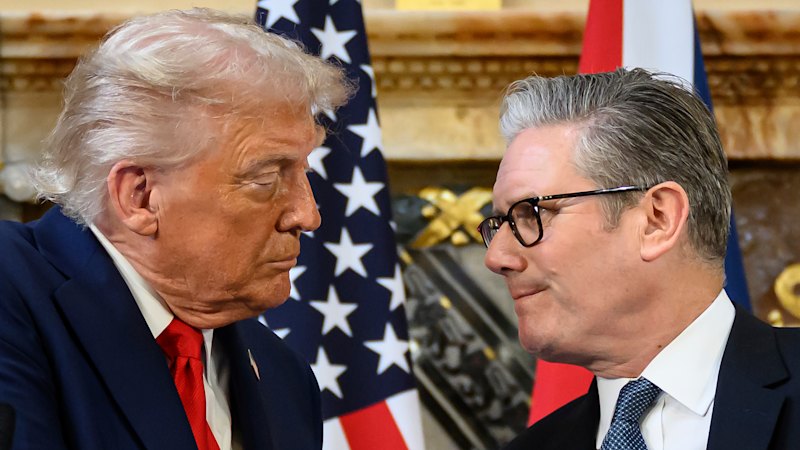
Former President Donald Trump has ignited a wave of backlash across Europe following his controversial remarks regarding allied troops in Afghanistan. During a recent interview, Trump suggested that NATO forces “stayed a little back” during the conflict, a comment that many interpreted as disrespectful to the sacrifices made by military personnel. The fallout has drawn sharp criticism from prominent figures, including UK Prime Minister Keir Starmer and Prince Harry.
In response to Trump’s comments, Starmer stated that the former president should issue an apology to the soldiers and their families. He emphasized that such statements diminish the bravery and contributions of those who served in Afghanistan. Starmer’s remarks reflect a broader sentiment among European leaders who regard Trump’s comments as not only misguided but also damaging to the alliance’s credibility.
Prince Harry, who served in Afghanistan as a British Army officer, also condemned Trump’s statement. He highlighted the importance of acknowledging the hard work and sacrifices of military personnel rather than undermining their contributions. The backlash from these influential figures underscores the sensitivity surrounding discussions of military engagement in Afghanistan, a topic that remains deeply personal for many in the UK and beyond.
The criticism is not limited to political leaders. Various public figures and veterans’ organizations have voiced their disapproval, calling for a united front in honouring the legacy of those who fought in Afghanistan. Many veterans feel that Trump’s comments undermine their experiences and sacrifices, which they regard as pivotal to international security.
This incident comes at a time when transatlantic relations are already facing challenges. The North Atlantic Treaty Organization (NATO) has been navigating complex geopolitical issues, and comments such as Trump’s can exacerbate tensions among member states. European leaders are particularly sensitive to remarks that may weaken the unity essential for collective security efforts.
As the discourse continues, it remains clear that Trump’s comments have resonated across the Atlantic, prompting a reevaluation of how military service and international alliances are discussed in public forums. The call for an apology from leaders like Starmer and the condemnation from Prince Harry reflect a significant pushback against narratives perceived as diminishing the importance of military service.
The response from European leaders highlights the ongoing need for careful communication regarding sensitive historical topics. As discussions evolve, the impact of Trump’s remarks serves as a reminder of the weight that words can carry, especially in the context of international relations and military history.
