



































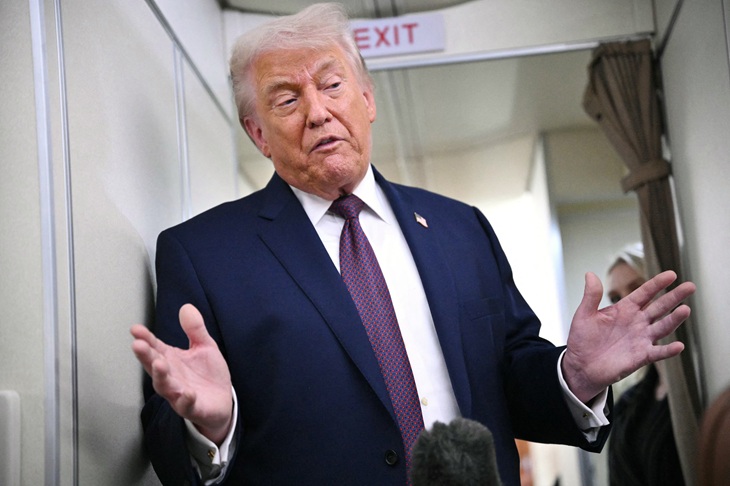
The Australian Labor government is confronting significant challenges as global geopolitics undergo rapid transformation. Recent developments, particularly in U.S. foreign policy under the leadership of former President Donald Trump, signal a departure from established norms that could impact Australia’s international standing and security.
The U.S. has shifted its focus, prioritizing its national interests in a manner reminiscent of the 1823 Monroe Doctrine, which aimed to restrict European influence in the Americas. Trump has rebranded this doctrine as the Donroe Doctrine, reinforcing a stance that may justify American assertiveness in the Western Hemisphere and beyond. This reorientation raises questions about the implications for global stability and alliances.
In an era characterized by three major powers—the United States, China, and Russia—the Labor government appears hesitant to adapt to these changes. According to Mark Carney, the Canadian Prime Minister, there seems to be a tendency within the Labor government to adopt a passive approach, seeking to “go along to get along” instead of actively addressing the evolving geopolitical landscape.
The challenges are further complicated by the emergence of China as a formidable global player, reshaping the balance of power. The failures of U.S. foreign policy, particularly since the Second Indochina War, have compelled a reevaluation of America’s role in the world. As a result, the Labor government’s inability to articulate a clear response to these developments raises concerns about Australia’s foreign policy direction.
In 2024, a photo of the Quad leaders—U.S. President Joe Biden, Indian Prime Minister Narendra Modi, Japanese Prime Minister Kishida Fumio, and Australian Prime Minister Anthony Albanese—might evoke nostalgia rather than relevance as Australia grapples with its place in an increasingly multipolar world. Albanese’s silence on critical issues, such as the implications of the Aukus nuclear-powered submarines for Australian sovereignty, suggests a lack of strategic clarity.
The historical context of the Thucydides Trap offers a lens through which to examine the potential for conflict between the U.S. and China. The ancient Greek historian Thucydides noted that rising powers, like Athens, often provoke war with established powers, such as Sparta. This framework raises alarms about the risks of escalating tensions in the current global scenario, where the U.S. may be tempted to respond militarily to perceived challenges from China.
The Labor government’s recent diplomatic efforts, including Albanese’s visit to Indonesia in May 2025, indicate a recognition of the need for collaboration with other middle powers. Yet, there remains a pressing need for a more coherent strategy that addresses the rapid changes in global dynamics. The call for a proactive approach is essential for reinforcing Australia’s position in a world that is anything but static.
As the international landscape continues to evolve, the Labor government must confront its misapprehensions about the changing geopolitical landscape. The stakes are high, and the need for a responsive and strategic foreign policy has never been more critical. The time for action is now, as Australia navigates its role in an increasingly complex world.
