



































United States President Donald Trump has issued a stark warning to Iran, threatening military action “far worse” than previous strikes if the Islamic Republic fails to reach an agreement regarding its nuclear weapons program. In a statement made on January 13, 2026, Trump highlighted the rapid deployment of a military fleet towards Iranian waters, indicating a willingness to take decisive action if necessary.
“A massive Armada is heading to Iran. It is moving quickly, with great power, enthusiasm, and purpose,” Trump stated in a post on Truth Social, the platform he owns. He likened the situation to recent events in Venezuela, implying that the U.S. military is prepared to act with speed and violence. He urged Iran to negotiate a “fair and equitable deal” that would eliminate nuclear weapons and benefit all parties involved, emphasizing that “time is running out.”
Trump’s comments reflect an increasingly interventionist foreign policy as tensions escalate in the region. This month alone, he has overseen military actions in Caracas and threatened European allies with tariffs amid efforts to assert U.S. control over Greenland. The heightened rhetoric towards Iran is particularly notable given the domestic challenges Trump faces, including criticism over a controversial immigration operation in Minnesota that resulted in the deaths of two U.S. citizens.
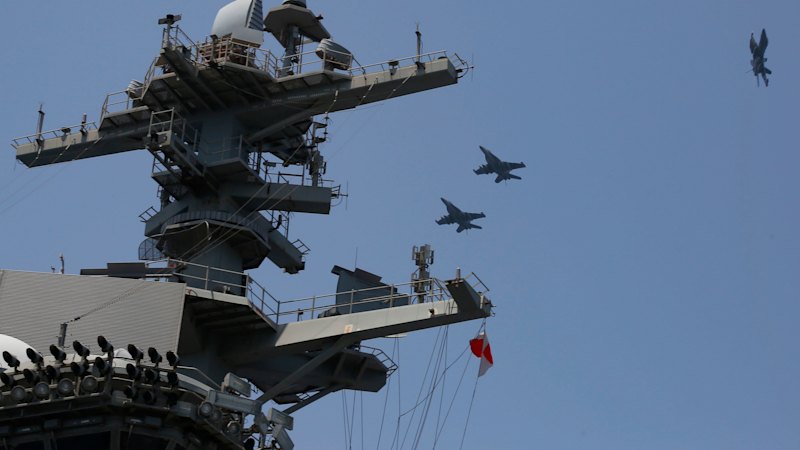
On January 13, as protests erupted in Iran against the government, Trump called for demonstrators to continue their fight against the regime, promising U.S. support. Shortly thereafter, on January 23, he announced that the USS Abraham Lincoln and its strike group were en route to Iran from the Asia-Pacific region. Speculation regarding a potential U.S. attack intensified with the carrier’s recent arrival, raising concerns over the implications for regional stability.
In the context of these developments, the semi-official Iranian Students News Agency reported that Iranian Foreign Minister Abbas Araghchi and U.S. Special Envoy Steve Witkoff have been engaging in informal discussions. Several countries have expressed their willingness to mediate between the U.S. and Iran to diffuse the escalating tensions.
Following Trump’s latest statements, crude oil prices surged, reflecting market concern over the possibility of military conflict. The ongoing protests in Iran, which began on December 28, have reportedly resulted in significant loss of life. According to the U.S.-based Human Rights Activists News Agency, at least 6,221 individuals have died since the protests began, including 5,858 protesters, 214 government-affiliated forces, and over 100 children. The Iranian government has faced criticism for its violent crackdown on dissent, which has become increasingly apparent following a two-week internet blackout—the most extensive in the country’s history.
In his remarks, Trump recalled previous negotiations with Iran, warning that failure to strike a deal in the past led to devastating attacks on Iranian nuclear facilities. He reiterated, “As I told Iran once before, MAKE A DEAL! They didn’t, and there was major destruction of Iran. The next attack will be far worse! Don’t make that happen again.”
As the situation continues to evolve, the international community watches closely, aware that diplomatic solutions are imperative to avoid further escalation.
