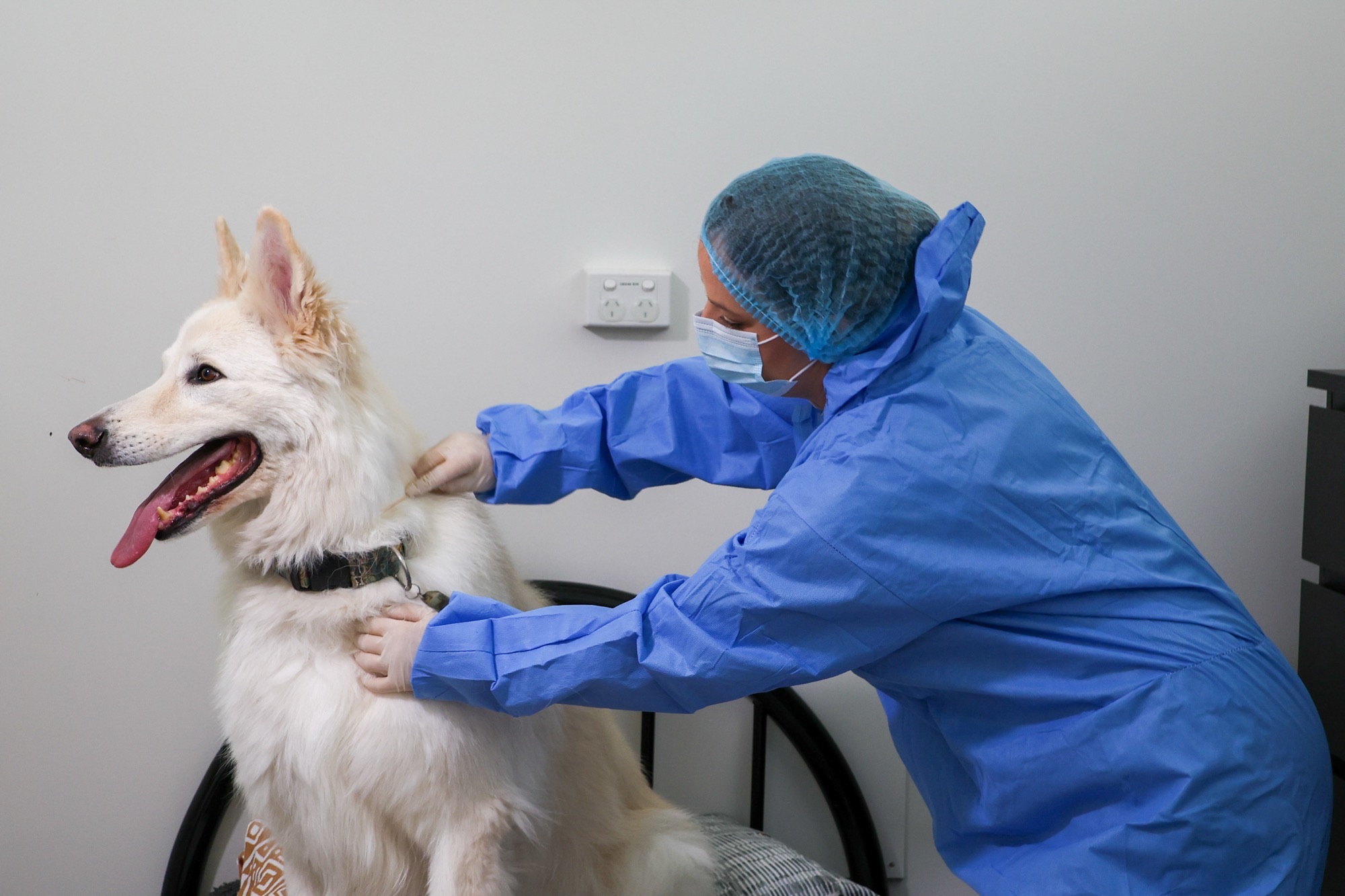
Research led by experts at Flinders University in collaboration with Victoria Police has uncovered a remarkable role for household pets, particularly dogs and cats, in forensic investigations. The study reveals that these animals can serve as intermediaries for human DNA transfer, potentially providing crucial leads in criminal cases.
In a significant step forward for forensic science, the research team, which includes PhD student Heidi Monkman, Dr. Roland van Oorschot, and Dr. Mariya Goray, has demonstrated that even brief interactions between pets and people of interest can leave detectable traces of DNA on the animals. This finding opens new avenues for investigators, particularly in cases where pets are present at crime scenes.
Significant Findings on DNA Transfer
The studies conducted involved controlled interactions between pets and volunteers, allowing researchers to monitor how DNA is transferred in various scenarios. The results indicated that pets can carry and spread human DNA as they move around their homes or to other locations. This transfer can connect owners or other individuals to crime scenes where they were not physically present.
Dr. Monkman, co-author of several forensic DNA articles, emphasized the implications of these findings: “Dogs and cats are present in the majority of households worldwide and routinely interact with multiple people and environments. Our findings show that they can act as intermediaries in human DNA transfer, which has significant implications for case work where animals are present.”
The recent research included a study titled “Investigation of human DNA transfer during mock dog-napping,” where five dogs were placed in cars unfamiliar to them and their owners. After a 20-minute period, sampling revealed that their owners’ DNA was detectable on the dogs, suggesting a possible link to crime scenes.
Implications for Forensic Investigations
Dr. Goray highlighted the need for forensic investigators to consider the presence of pets at crime scenes: “This research highlights their potential critical role in the dynamics of DNA transfer.” The studies suggest that pets could offer investigators vital clues, particularly in serious criminal cases.
In another article, “The role of cats in human DNA transfer,” published in Forensic Science International, researchers tested 20 different cats and found quantifiable human DNA in 16 of the samples, indicating a significant rate of DNA transfer. This research underscores how animals, often overlooked in forensic work, could become valuable assets in solving crimes.
The ongoing research indicates that as many as 60% of households have pets, with the number rising to 90% when considering past pet ownership. This prevalence suggests that the potential for DNA transfer through pets is significant, making them silent witnesses in various investigations.
The findings of this research were published in February 2026, in the edition of Forensic Science International with the DOI: 10.1016/j.forsciint.2025.112724. As the field of forensic science continues to evolve, the role of pets may become an essential consideration in the investigation process, paving the way for new methodologies in crime solving.