



































Iran has intensified military preparations this week by conducting live-fire drills in the strategically significant Strait of Hormuz. This waterway is critical, as it facilitates the passage of approximately one-fifth of the world’s traded oil. The maneuvers coincide with increased deployments of American warships and aircraft in the region, although these movements do not necessarily indicate an impending US strike on Iran.
The situation has escalated as President Donald Trump has emphasized his readiness to respond to Iranian actions. He has refrained from launching military strikes despite setting red lines regarding the killing of peaceful protesters and the mass executions carried out by Tehran. Trump has also re-engaged with Iran in nuclear negotiations, which were previously disrupted by the conflict between Iran and Israel that erupted in June. On his Truth Social platform, he stated, “Should Iran decide not to make a Deal, it may be necessary for the United States to use Diego Garcia, and the Airfield located in Fairford, in order to eradicate a potential attack by a highly unstable and dangerous Regime.”
The Iranian government is currently grappling with significant domestic unrest following a heavy-handed crackdown on protests, which have persisted since the beginning of the year. Mourning ceremonies have been organized to honor those killed by security forces, with some gatherings featuring anti-government sentiments. These memorials have taken place approximately 40 days after the deaths, a traditional period of mourning in Iranian culture.
Military Drills and International Presence
The recent military drill involved Iranian forces collaborating with Russian sailors in the Gulf of Oman and the Indian Ocean. According to the state-run IRNA news agency, the exercises aimed to enhance operational coordination and facilitate the exchange of military experiences. While China had participated in similar drills in prior years, there was no indication of its involvement in this round.
In addition to these drills, a vessel resembling a Steregushchiy-class Russian corvette was observed at a military port in Bandar Abbas. Iran has also issued warnings to pilots in the region regarding potential rocket fire, suggesting that anti-ship missiles may be launched during the exercise.
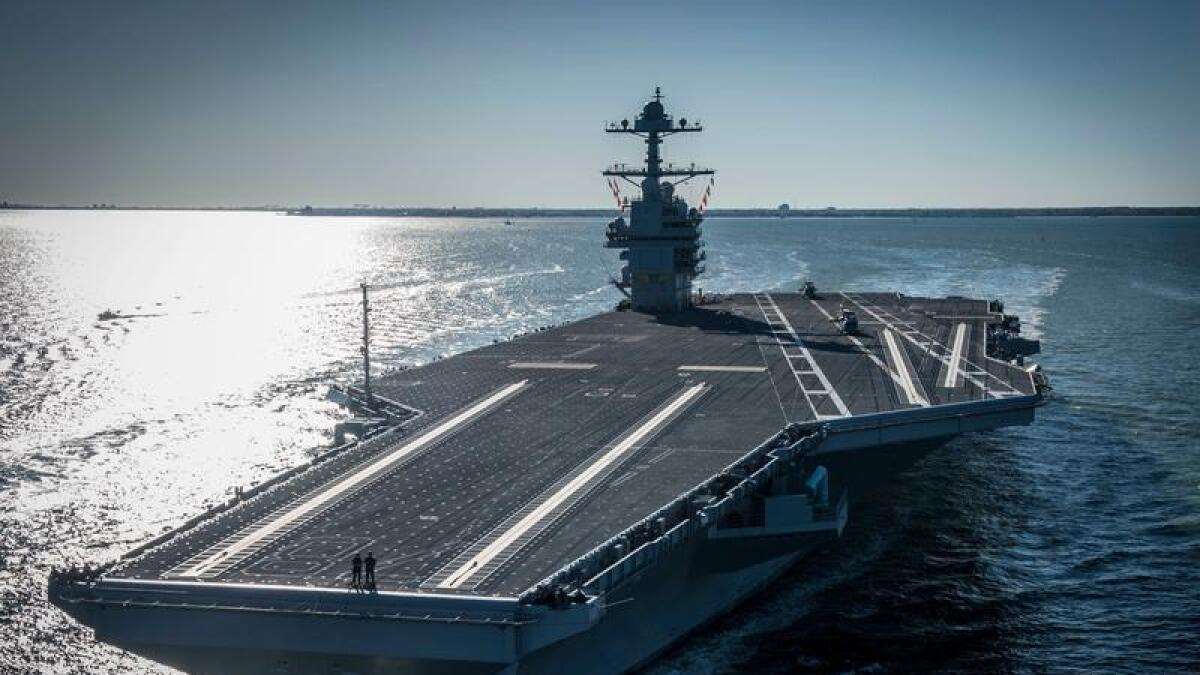
The presence of the US aircraft carrier, Ford, tracking data confirmed it was off the coast of Morocco on Wednesday. This positioning allows the carrier to pass through Gibraltar and potentially deploy to the eastern Mediterranean, where it could bolster American forces and offer additional air power to protect Israel and Jordan in the event of a conflict with Iran. Similar deployments of US warships occurred during the recent Israel-Hamas war in Gaza, aimed at countering Iranian threats.
Ongoing Domestic Unrest
The atmosphere in Iran remains charged as mourning ceremonies for those killed during protests in January have seen increased attendance. These demonstrations began on December 28, 2023, initially sparked by the collapse of Iran’s currency and quickly spreading nationwide. Tensions escalated on January 8, with protests called by the exiled crown prince, Reza Pahlavi. The Iranian government has reported a death toll of 3,117, while the US-based Human Rights Activists News Agency estimates over 7,000 deaths.
The complex dynamics of international military presence and domestic instability illustrate the precarious situation surrounding Iran and its relations with the United States. As both nations navigate this charged atmosphere, the potential for conflict looms large, underscoring the necessity for continued dialogue and diplomacy.
