



































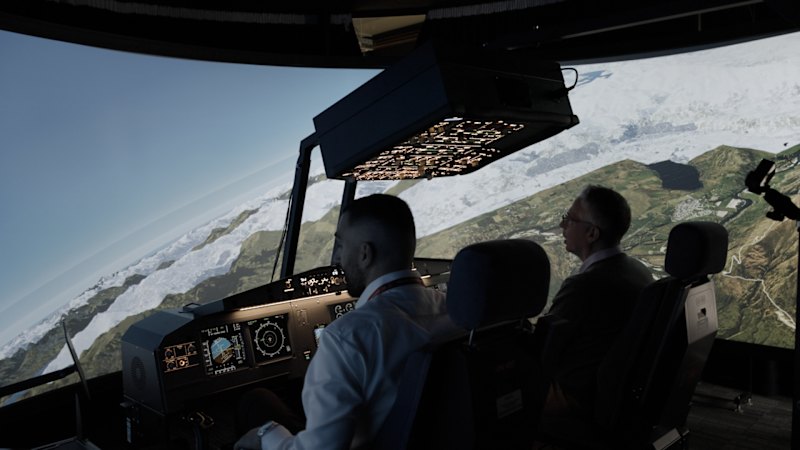
The aviation industry is leveraging cutting-edge flight simulator technology to address the fears of anxious flyers. As travel rebounds globally, airlines are implementing these simulators not only for pilot training but also to help nervous passengers build confidence before their journeys.
In a recent demonstration, aviation reporter Chris Zappone explored how these simulators create realistic flying experiences for those who dread flying. The technology allows users to experience flight scenarios in a controlled environment, significantly reducing anxiety associated with air travel.
How Flight Simulators Work
Flight simulators replicate actual flying conditions, enabling users to engage with the cockpit controls and experience turbulence, takeoffs, and landings without leaving the ground. Participants can practice techniques to manage their anxiety, such as breathing exercises, while familiarizing themselves with the flight process.
Airlines are increasingly adopting this approach, recognizing that a significant portion of the flying public experiences anxiety. According to recent studies, approximately 30% of adults report feeling fearful about flying. By providing access to flight simulators, airlines aim to ease these nerves, potentially increasing passenger willingness to fly.
The Impact on Passenger Experience
The introduction of flight simulators marks a shift in how the aviation sector addresses passenger stress. Many airlines are now offering these sessions as part of pre-flight services, often free of charge, to help passengers acclimatize to flying.
For instance, Airline A recently launched a program where participants can spend an hour in a simulator before their flight. Feedback has been overwhelmingly positive, with many reporting a newfound sense of comfort and reduced anxiety levels.
The technology has not only provided immediate benefits to passengers but has also sparked interest in further research into aviation and mental health. Airlines are collaborating with psychologists and aviation experts to refine these programs, ensuring they meet the needs of anxious flyers.
This innovative application of technology highlights a growing recognition within the aviation industry of the importance of mental well-being. As the demand for air travel continues to rise, addressing passenger anxiety could play a vital role in enhancing overall travel experiences.
By integrating flight simulator training into their services, airlines are not just focusing on operational excellence but also prioritizing the emotional comfort of their passengers. As such, this initiative represents a significant advancement in how the aviation sector is evolving to meet the needs of its clientele in a post-pandemic world.
