



































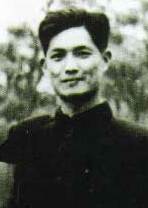
Song Ping, a significant figure in the history of the Chinese Communist Party (CCP), passed away on Wednesday at the age of 108. His death was reported by the Xinhua News Agency, stating that he succumbed to illness despite receiving medical treatment. Song died at 15:36 in Beijing, marking the end of a remarkable political journey that spanned nearly a century.
A Lifetime of Service and Influence
Born Song Yanping on April 24, 1917, in Ju County, Shandong Province, Song joined the Communist Party in 1937. His career witnessed the transformation of China from chaotic warlord territories to a modern state. Rising through the ranks, he served under influential leaders such as Mao Zedong, Deng Xiaoping, and Jiang Zemin.
Song’s early involvement in revolutionary activities began during the tumultuous 1930s, during which he graduated from Tsinghua University with a degree in chemistry. His political career took off when he served as political secretary to Zhou Enlai during the Second United Front against Japan from 1938 to 1947. This role provided him with invaluable insight into the party’s leadership.
Following the establishment of the People’s Republic of China in 1949, Song held various key positions, including First Party Secretary of Gansu Province from 1977 to 1981. His leadership there was characterized by a focus on economic reforms and talent development, notably promoting Hu Jintao, who would later rise to become General Secretary of the CCP.
Political Legacy and Final Years
During the reform era under Deng Xiaoping, Song led the State Planning Commission from 1983 to 1987 and served as State Councilor. He played a pivotal role in shaping economic policies and overseeing high-level appointments within the party. Following the 1989 Tiananmen Square crisis, he was elevated to the Politburo Standing Committee, which further cemented his influence in stabilizing the political landscape.
Song retired at the 14th Party Congress in October 1992. Although he stepped down from his formal roles, he remained a respected figure within the party, symbolizing continuity from the revolutionary past. His ability to bridge generational gaps allowed him to witness the leadership of five successive generations, including Xi Jinping.
In his later years, Song maintained a low profile, steering clear of public controversies, yet he attended major party events, including the 19th National Congress in 2017 at the age of 100 and the 20th Congress in 2022 at 105. His presence at these significant gatherings underscored his enduring connection to the party’s history and values.
Song celebrated his 100th birthday in 2017, and his passing signifies the closure of a significant chapter in the party’s history. His wife, Chen Shunyao, who was also a revolutionary, passed away in 2019. Together, they had at least one son, Song Yichang.
As China continues to emphasize its revolutionary traditions and history under Xi Jinping, tributes to Song will likely focus on his loyalty, contributions to cadre training, and his role in crucial economic planning during transformative periods. His death marks the end of an era, as he was the last surviving member of the 13th Politburo Standing Committee from 1989 to 1992.
Funeral arrangements have not yet been disclosed, but it is expected that state protocol will dictate high-level memorials to honor his contributions. Song Ping leaves behind a legacy interwoven with the evolution of the CCP and a network of protégés who have shaped contemporary Chinese politics.
