



































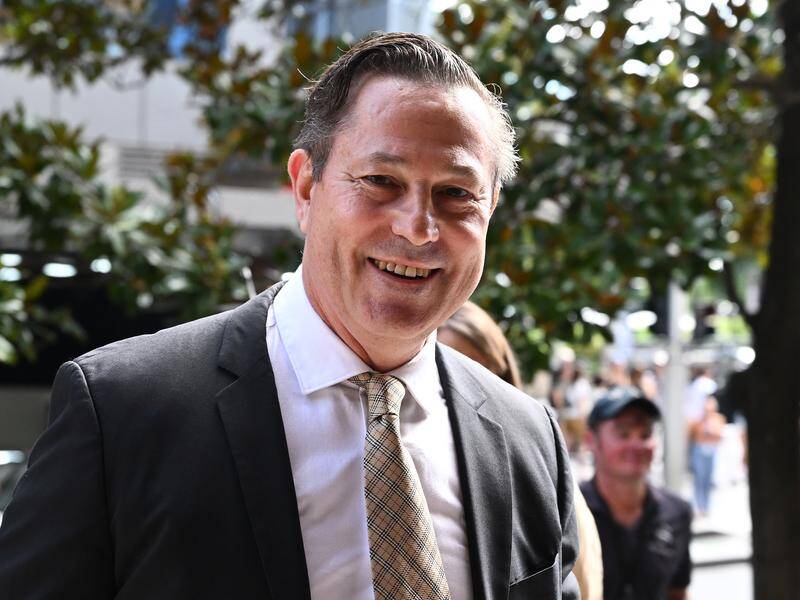
UPDATE: An Australian businessman is currently on trial for reckless foreign interference, raising serious concerns regarding China’s espionage activities. The trial of Alexander Csergo, 59, is unfolding in the NSW District Court, where shocking details about his interactions with alleged Chinese spies are emerging.
Csergo allegedly provided sensitive reports to two individuals, suspected to be linked to China’s Ministry of State Security. The accusations stem from meetings in December 2021, where he was asked for confidential information. Prosecutors claim that Csergo’s actions could jeopardize national security, with the trial highlighting the urgent nature of foreign interference in Australia.
In a dramatic turn, the jury heard that one of the alleged spies, referred to only as “Ken,” texted Csergo in May 2022 expressing a desire to “do something different.” Prosecutors revealed that during this time, Csergo was working on telecommunications projects through his Shanghai-based business. His involvement with the alleged spies raised questions about the integrity of Australian businesses operating in China.
During a police raid in March 2023, authorities discovered a “shopping list” of sensitive topics that Ken had given to Csergo. This list, found creased and stuffed into a shelf, was riddled with spelling errors, leading defense barrister Iain Todd to question its authenticity. “Is (Ken) actually directed or just on his own mission?” Todd asked, suggesting that Csergo may not have been dealing with legitimate intelligence operatives.
Prosecutors allege that Csergo exchanged plagiarized reports for cash payments that surged from around $1,000 to over $6,000. He reportedly claimed that some materials were sourced from former Prime Minister Kevin Rudd, who later testified he had never engaged with Csergo. The implications of these exchanges highlight the potential vulnerability of Australian businesses to foreign influence.
The trial also revealed that Csergo was in contact with tech giant Oracle, indicating a complex web of relationships that could have far-reaching consequences for national security. During a critical time marked by strict COVID lockdowns, a friend warned Csergo of the dangers, stating, “If you have any concerns and need to get out of China, we can get you out in 24 hours.”
Csergo’s reports covered sensitive topics such as mining, the AUKUS security agreement, and the Quad partnership, with meetings often taking place in secluded cafes. Prosecutors noted that Ken encouraged Csergo to pursue riskier material, stating that less-sensitive topics were “too normal and boring.”
In a shocking admission during police interviews, Csergo said he aimed to provide Ken and Evelyn with “material that was not real or confidential,” emphasizing his belief that he was under Chinese surveillance. However, prosecutors countered that he had the opportunity to approach Australian authorities but chose not to, indicating his intent to maintain ties with the alleged spies.
The trial continues, with significant implications for Australia’s national security and the ongoing battle against foreign interference. As the jury deliberates on these serious accusations, the case underscores the urgent need for vigilance against espionage and foreign influence in the country.
Stay tuned for further updates as this trial unfolds.
