



































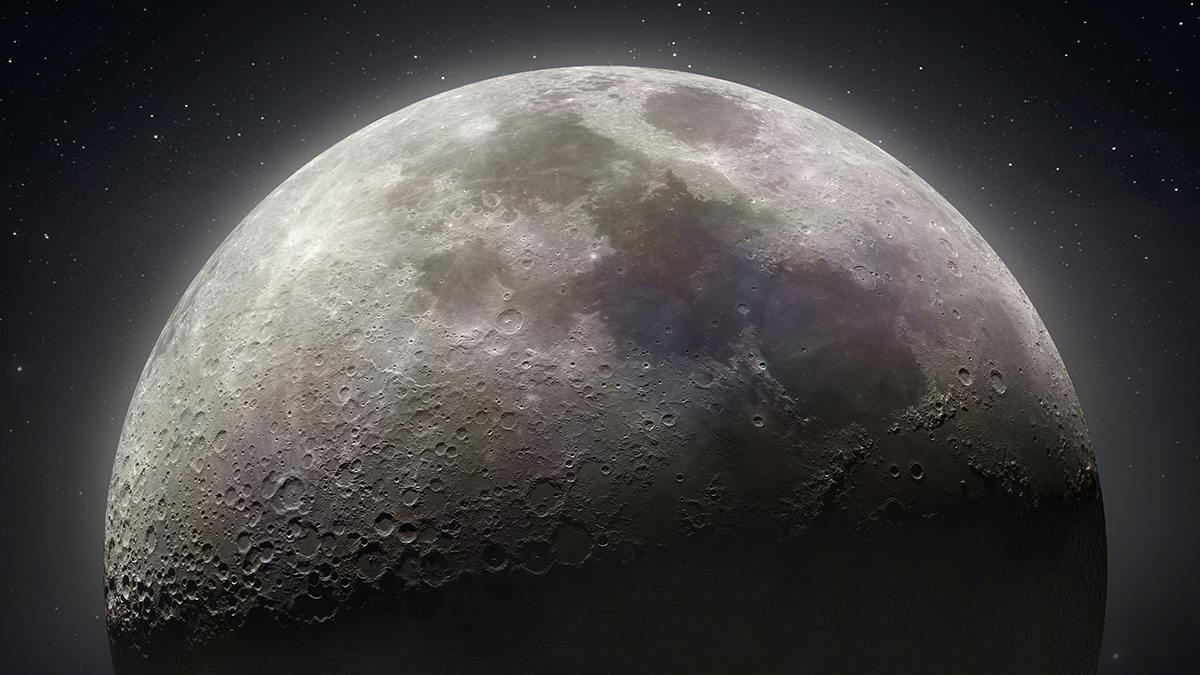
A team of scientists has resolved a longstanding mystery surrounding the Moon’s intense magnetism, a phenomenon that has puzzled researchers for over three decades. Their findings indicate that this magnetic anomaly is approximately 3.5 billion years old, and it provides critical insights into the Moon’s geological history.
The research, led by the University of California, Los Angeles (UCLA), utilized data collected from NASA’s Lunar Reconnaissance Orbiter and previous Apollo missions. The study was published in the Geological Society of America journal in October 2023, revealing that the Moon’s magnetic field was significantly stronger in its early years than previously believed.
Decoding the Magnetic Mystery
The Moon’s surface exhibits a patchy distribution of magnetism, with certain areas showing a strength up to 100 times greater than that of Earth’s magnetic field. These findings suggest that the Moon once had a global magnetic field, which has since diminished. Researchers believe this magnetic activity was likely generated by a molten core, similar to that of Earth, challenging earlier assumptions about the Moon’s geological evolution.
The study’s lead author, Professor David Stevenson from UCLA, explained that understanding the Moon’s magnetism helps scientists grasp how planetary bodies evolve. “The Moon’s magnetic field offers a snapshot of its past, revealing how it interacted with the solar wind and the environment of early space,” Stevenson stated in the study.
This research has implications beyond lunar studies; it can also inform scientists about the magnetic fields of other planetary bodies within our solar system. For instance, understanding the Moon’s magnetic history may provide insights into the conditions that could support life on exoplanets.
Implications for Future Exploration
The findings hold significant relevance for future lunar exploration missions. NASA’s upcoming Artemis program, which aims to return humans to the Moon by 2024, will benefit from this research. As plans for sustainable lunar bases and missions to Mars take shape, knowledge about the Moon’s geological and magnetic history is crucial for assessing the Moon’s resources and potential hazards.
In addition, this research underscores the importance of continuing to study the Moon. As space agencies and private companies prepare for a new era of lunar exploration, understanding the Moon’s past will be vital for ensuring the safety and success of missions.
As scientists delve deeper into the Moon’s mysteries, the resolution of this magnetic anomaly represents a significant step forward in lunar science. The findings not only enhance our understanding of the Moon but also pave the way for future discoveries about our solar system’s history and the formation of planetary bodies.
