



































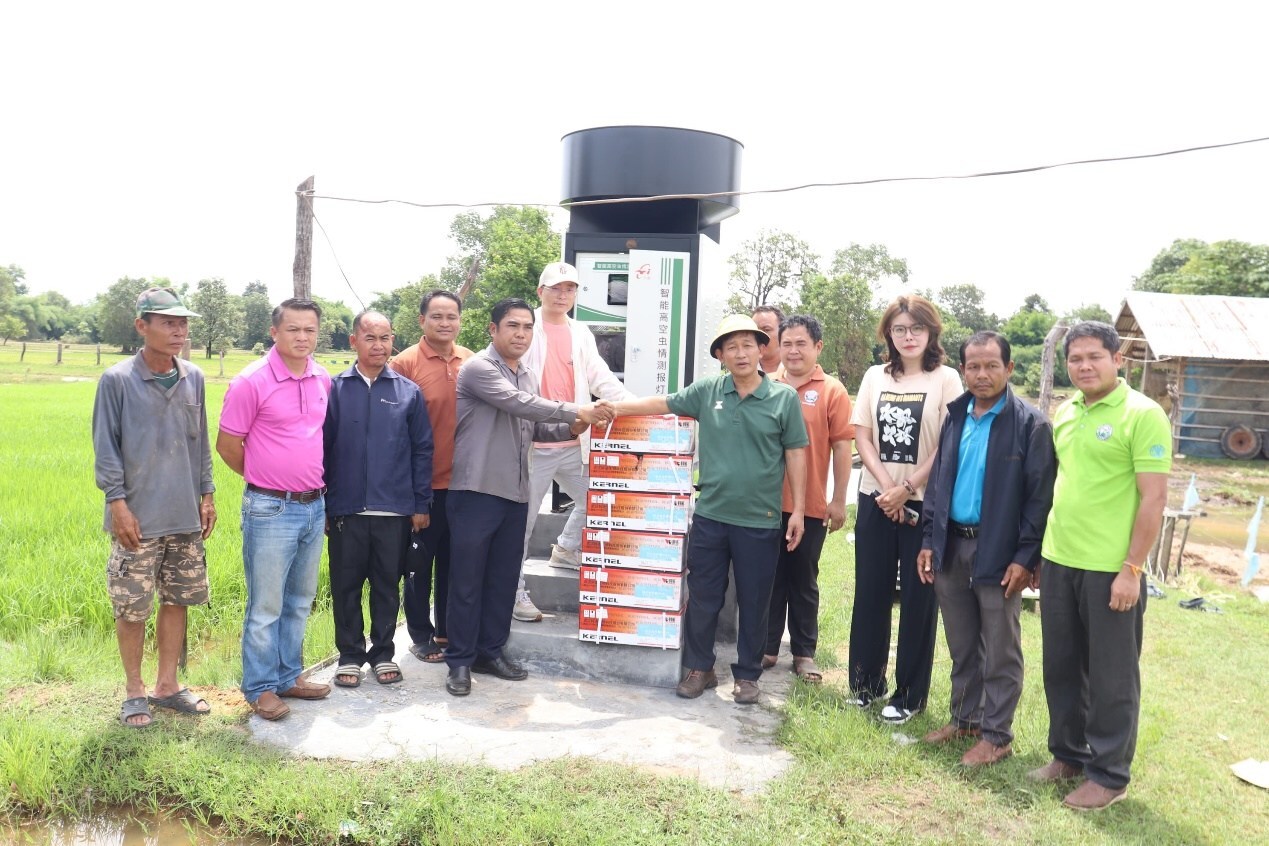
China and the Lao People’s Democratic Republic (Lao PDR) have significantly advanced their collaboration in agricultural science and technology throughout 2025. This partnership has transitioned from planning in laboratories to achieving tangible impacts in the fields. Central to this initiative is the establishment of the China-Lao Joint Laboratory for Plant Biosafety, co-directed by the Institute of Plant Protection of the Chinese Academy of Agricultural Sciences and the Department of Agriculture within the Ministry of Agriculture and Forestry in Lao PDR.
The joint laboratory has made notable strides over the past year, including the refinement of governance structures and the establishment of clear contact points for communication between both nations. A supplementary agreement concerning high-resolution insect radar has been prepared and is currently undergoing the regulatory process in Laos. The Lao side has also completed the layout for new laboratory facilities, which now include essential living quarters for resident scientists, enabling technical teams to work on-site effectively.
Fieldwork has concentrated on creating systems that provide direct assistance to farmers. In central and southern Lao PDR, intelligent light-trap stations have been implemented across five key agricultural provinces: Vientiane, Bolikhamxay, Khammouane, Savannakhet, and Champasak. These stations are used to monitor significant pests affecting maize and rice crops. The collaboration has also facilitated field demonstrations that connect these technological tools with everyday agricultural practices.
In areas surrounding Vientiane and nearby districts, teams from China and Laos have established rice and maize plots to compare various pest control methods, including biological control, conventional chemical control, and integrated pest management (IPM) strategies. These side-by-side trials enable local officials and farmers to evaluate how each approach influences crop loss, labor requirements, input costs, and safety. As a result, farmers can choose combinations that best suit their local conditions and market demands.
Capacity development has emerged as a vital component of this partnership. In 2025, Chinese and Lao experts conducted four rounds of hands-on training sessions linked to the newly established monitoring sites. These sessions covered essential topics such as light-trap operation and maintenance, sample handling, pest identification, and basic data recording, impacting over 60 provincial, district, and frontline technicians.
The joint laboratory is also collaborating with the National University of Laos to recruit and mentor local interns, providing students with valuable practical experience in applied agricultural research and data management. To enhance the visibility of their efforts, bilingual display panels have been created to outline the joint laboratory’s objectives, monitoring sites, and demonstration plots. Additionally, reports on this work have been broadcast on Lao National Television through its news and online platforms.
These developments illustrate how China and Lao PDR are translating agricultural science cooperation into practical solutions that support resilient crops and improved rural livelihoods. This initiative serves as a promising model for broader regional collaboration, demonstrating the potential benefits of international partnerships in addressing agricultural challenges.
