



































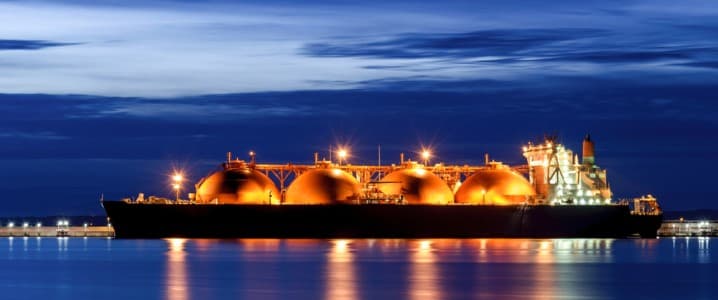
Egypt has signed a preliminary agreement with QatarEnergy to import at least 24 cargoes of liquefied natural gas (LNG) this year. This move comes as the North African nation seeks to diversify its energy sources amid declining domestic gas production. The deal follows a significant long-term agreement with the Israeli government, valued at $35 billion, which was finalized last month.
Under the terms of the recent agreement with Israel, Egypt is set to receive 130 billion cubic meters of natural gas from the Leviathan field in the Mediterranean at a fixed price. Last year, gas imports from Israel reached a record high of 981 million cubic meters, an increase of 18.2% from previous years. Notably, imports from Israel now account for approximately one-fifth of Egypt’s total natural gas imports.
Domestic Production Challenges
Despite being a significant producer of natural gas, Egypt’s production has faced challenges in recent years. The country’s gas output peaked in 2021 at a rate of 6.6 billion cubic feet per day but has since fallen to below 5 billion cubic feet daily. This decline is primarily attributed to natural depletion at mature fields, particularly the Zohr field, which contributes around 40% of Egypt’s total gas production.
Discovered in 2015 and commencing production in early 2018, the Zohr field initially produced about 250 million cubic feet per day, which expanded to 2 billion cubic feet by September of the same year. Its peak production reached 2.7 billion cubic feet daily. Despite significant investments from major oil companies, the anticipated growth in output has not materialized, leading Egypt to explore alternative energy sources.
Future Outlook
The agreement with QatarEnergy is not only expected to secure Egypt’s electricity needs during the peak summer demand but also aims to reinforce the country’s role as a regional gas trading hub. As Egypt navigates these changes in its energy landscape, the diversification of supply sources remains crucial for its energy security.
In summary, Egypt’s reliance on LNG imports from Qatar and natural gas from Israel underscores the importance of adapting to production declines while ensuring stable energy supplies for its population.
