



































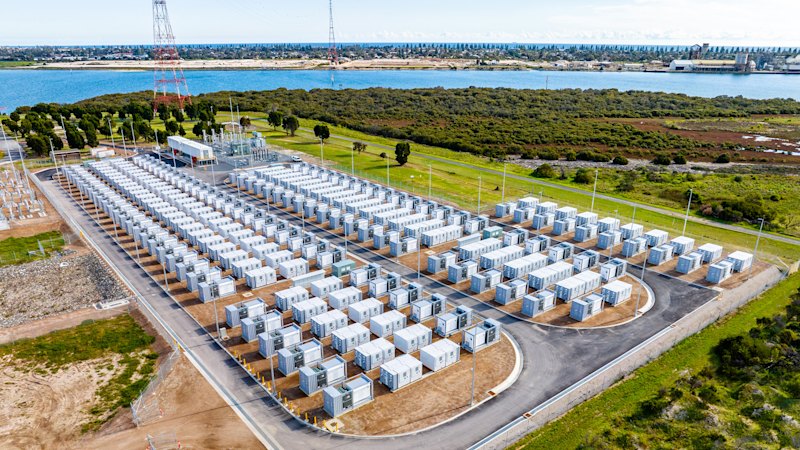
Large-scale batteries are projected to surpass natural gas as a primary energy source in Australia’s electricity grid by 2027, according to forecasts by energy consultancy Rystad Energy. This shift is expected to fundamentally change the dynamics of the energy market, potentially leading to lower electricity bills for consumers. Australia has emerged as the third-largest market for utility-scale batteries globally, following China and the United States. The rapid decline in battery costs and favorable economic conditions are attracting significant investment from both local and international players.
The surge in interest has resulted in a considerable increase in shovel-ready battery projects within Australia’s development pipeline. Analysts predict that these projects will exceed the total gas capacity of the grid within just two years, fundamentally altering how electricity is generated and distributed. Major energy companies, including Origin Energy and AGL, alongside newcomers like Akaysha, Quinbrook, and Neoen, are spearheading this transition. The business model for these battery projects involves storing energy during off-peak hours at lower prices and selling it during peak demand periods when prices are significantly higher.
Investment in new gas-fired generation, in contrast, has stagnated. Despite the consensus among energy experts regarding the importance of gas as a backup for renewable sources during periods of low wind and solar generation, it has not been included in the federal government’s Capacity Investment Scheme, designed to underwrite new energy supply.
According to David Dixon, an analyst at Rystad Energy, the influx of battery storage will introduce significant new supply during evening peak hours, which have traditionally been dominated by coal and gas. He noted, “You’re going from a situation where there is limited competition [during the evenings] to this scenario where you’ve got 15 gigawatts entering the market – more than the entire gas fleet. During the evening, this is going to have a downward effect on prices.”
Dixon also highlighted that almost half of the batteries currently under construction are expected to be operational this year, with the remainder coming online by 2027. This transformation is critical as batteries will help absorb excess solar and wind energy produced during the day that would otherwise go unused, a phenomenon referred to as curtailment.
The growth of both large and small-scale batteries represents a notable success for Australia’s clean energy transition, especially concerning wind farms and other infrastructural projects. Despite this progress, Origin Energy recently announced it would delay the closure of its Eraring coal power station, the largest in the country, citing the slow pace of renewable energy rollout as a significant factor in its decision.
In 2025, data compiled by energy systems analyst Dylan McConnell from the University of New South Wales showed that the amount of power supplied to the grid by large batteries increased by 143 percent year-on-year, albeit from a low starting point. In contrast, gas generation saw a decline of approximately 14 percent during the same period.
McConnell expressed optimism about the potential for new battery projects to exert downward pressure on wholesale power prices, which have historically been influenced by gas generators. He cautioned, however, that this outcome depends on the level of competition among battery operators. Should ownership of these assets become concentrated among a few key players, the anticipated competitive benefits may not materialize.
“The big thing we haven’t seen in the rollout so far is a decoupling of [overall] prices from gas prices,” McConnell stated. “Theoretically, when we get more capacity and more competition between batteries, we could get lower prices.”
Despite the increasing presence of batteries, McConnell noted that gas will continue to play a vital role in the energy system, serving as a reliable backup during “high impact, low probability” events. He explained that while batteries are effectively displacing gas during peak evening hours, they cannot yet replace gas for extended periods of high demand, such as during cold snaps. “Batteries are eating gas’ lunch for around four hours a day. But if you need gas to run for 12 hours or so during a cold snap, that’s where the gas generators actually make their money,” he added.
As Australia’s energy landscape evolves, the growing presence of large-scale batteries signifies a pivotal shift towards a more sustainable and cost-effective energy future. With stakeholders from various sectors investing heavily in this transition, the coming years are likely to witness significant changes in how electricity is generated and consumed across the nation.
