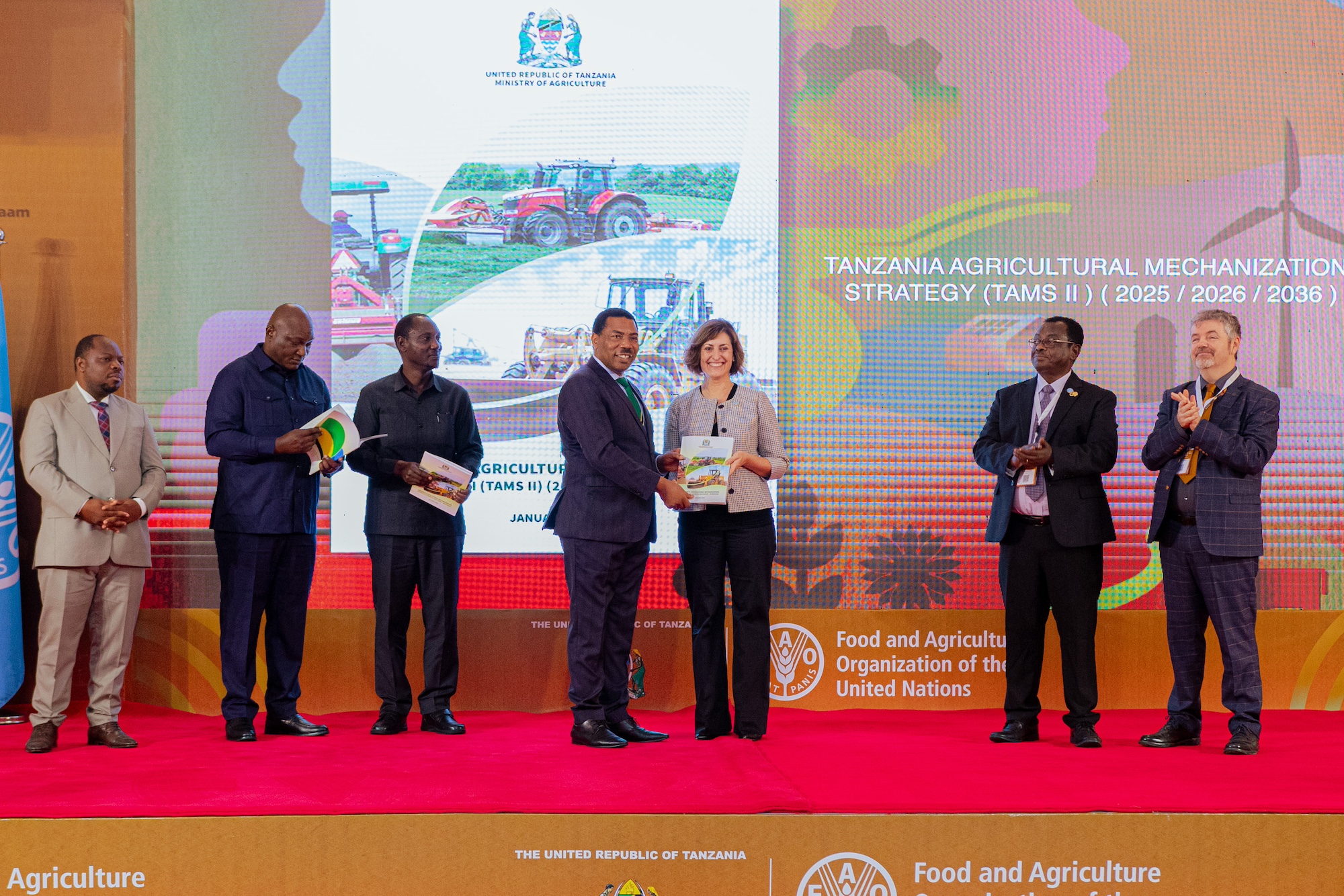
The launch of Tanzania’s National Agricultural Mechanization Strategy 2026-2036 marks a pivotal moment in Africa’s commitment to sustainable agriculture. Prime Minister Mwigulu L. Nchemba introduced this strategic initiative today at the Africa Conference on Sustainable Agricultural Mechanization in Dar es Salaam. Organized by the Food and Agriculture Organization (FAO) in partnership with the Tanzanian government, the conference aims to foster collaboration among various stakeholders, including governments, private sector representatives, researchers, and farmers.
During his opening remarks, Prime Minister Nchemba emphasized the importance of mechanization, stating, “Through action, we can change Africa’s agriculture to be a mechanized sector that is sustainable, for this generation and future generations.” The new strategy aligns with the FAO-African Union Framework for Sustainable Agricultural Mechanization in Africa (F-SAMA) and places a strong focus on empowering women and youth.
This conference represents Africa’s first regional gathering since the global event in Rome in 2023. It signals a decisive shift towards locally driven solutions aimed at transforming agriculture across the continent. Participants are gathering to share experiences, establish partnerships, and develop scalable solutions to bridge the existing mechanization gap, which continues to inhibit agricultural productivity.
Beth Bechdol, FAO Deputy Director-General, highlighted the need for a modern approach to mechanization. “Shipping in large machines without financing, training, repair services, or local adaptation has not delivered lasting results,” she stated. Bechdol advocates for systems that empower farmers rather than simply providing equipment, emphasizing that sustainable mechanization serves as a catalyst for transformation by reducing labor and enhancing productivity.
The mechanization gap in Africa is significant. Many farmers in the region still rely on manual or animal labor, while much of Asia and the Near East have seen a surge in tractor usage. Past mechanization efforts have often faltered due to equipment unsuited for smallholder farms and a lack of local supply chains for maintenance and repair. Despite possessing around half of the world’s uncultivated arable land—approximately 202 million hectares—Africa’s crop yields remain only 56 percent of the global average.
Agriculture employs about 60 percent of Africa’s population, yet it contributes merely 21 percent to the continent’s GDP. Sustainable mechanization is essential for addressing these disparities. It has the potential to create skilled jobs, improve efficiency, and enable climate-smart practices.
FAO Assistant Director-General Abebe Haile-Gabriel stressed the potential of embracing mechanization, digitalization, and innovative policies. He remarked, “Choosing a new direction that embraces mechanization, digitalization, scientific innovation and inclusive policies can fundamentally transform Africa’s agrifood landscape.”
Chef and FAO Regional Goodwill Ambassador for Africa Fatmata Binta shared a success story from a joint project introducing processing machines for the local grain fonio. “When we invested in fonio processing machines, what was once a burden became an opportunity. Mechanization gave the women back their time, their energy and their motivation,” she explained.
As the conference progresses, participants will explore youth job opportunities, digital transformation, and avenues for increasing investment in agricultural mechanization. Delegates will also visit a youth incubation center and a rice mechanization cooperative to witness practical implementations of these strategies.
The conference will continue until February 6, 2024, promising insightful discussions and collaboration aimed at advancing sustainable agricultural practices across the continent.