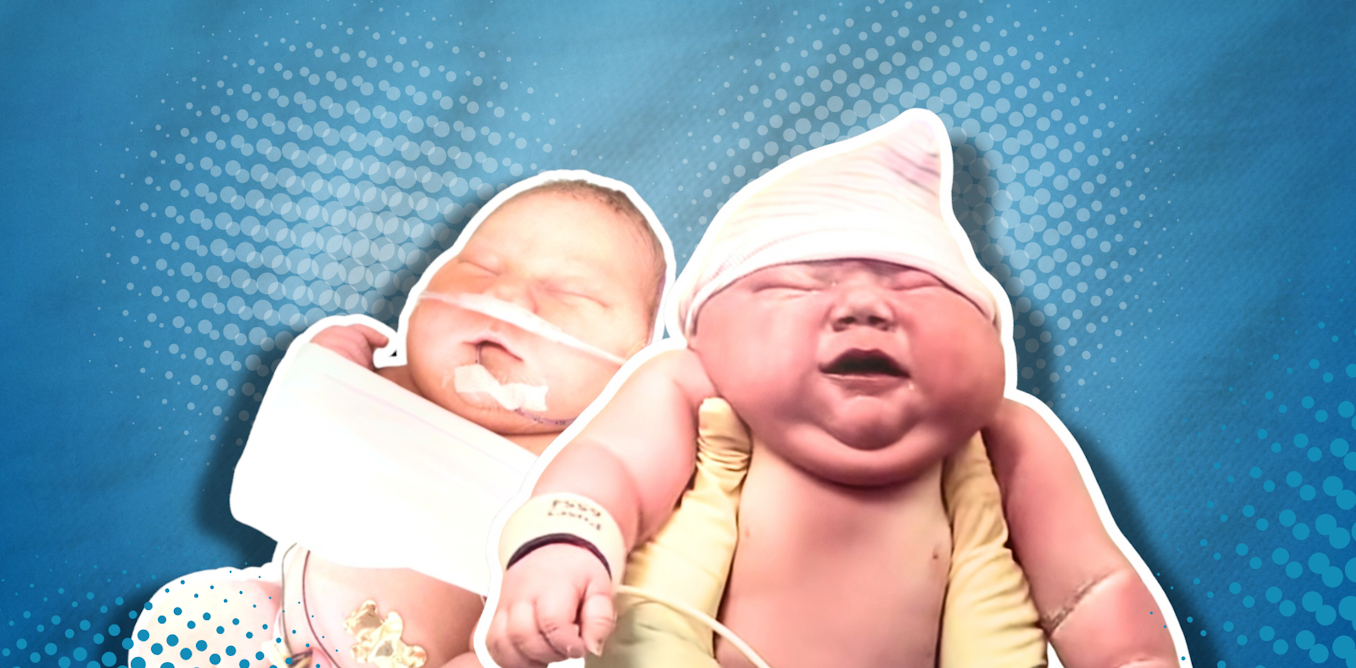
In recent weeks, a baby boy named Cassian has captured the attention of social media users after his birth in the United States. Weighing an impressive 5.8 kilograms (approximately 12.8 pounds), Cassian’s arrival sparked headlines worldwide, with descriptions of him as a “giant” baby. The news quickly spread after Cassian’s mother and the hospital shared details about his remarkable size, prompting discussions about the implications of having larger-than-average newborns.
While Cassian’s weight is notably above the norm, he is not alone in this phenomenon. In 2023, a baby boy in Brazil made headlines after being born at an astounding 7.3 kilograms (about 16.1 pounds). These stories may provoke concern among expectant mothers, raising questions about the prevalence of large babies and potential complications associated with their birth.
Understanding Macrosomia and Its Implications
The term “macrosomia” refers to babies born weighing over 4.0 kilograms (approximately 8.8 pounds) to 4.5 kilograms (around 9.9 pounds), depending on the specific definitions used. Macrosomia often indicates that a newborn’s weight exceeds the 90th percentile for their gestational age, meaning that they are larger than 90% of infants at the same stage of development. This condition is often described more accurately as “large for gestational age,” as it incorporates both weight and gestational weeks into its definition.
According to available data, the incidence of large babies has remained relatively stable over the past decade in Australia, hovering around 9–10% of total births. This statistic suggests that while large babies gain media attention, they represent a consistent, albeit small, portion of the overall birth population.
Potential Risks for Mothers and Babies
The specific circumstances surrounding Cassian’s birth, including the health of both him and his mother, remain unknown. However, larger babies can introduce certain risks during delivery. Generally, complications may arise when babies weigh more than 4.5 kilograms. This does not mean that every large baby presents issues, but the likelihood of requiring medical interventions increases with size.
There is a greater chance of needing assistance during delivery, such as the use of forceps or vacuum extraction, or even a caesarean section. Such interventions can affect a woman’s recovery and influence her options for future pregnancies. For larger infants, there is also a risk of shoulder dystocia, where the baby’s shoulders become lodged in the birth canal, requiring additional maneuvers by medical personnel to facilitate a safe delivery.
“Manoeuvres to assist in the delivery can sometimes lead to complications, including oxygen deprivation that may necessitate resuscitation,” said Hannah Dahlen, a prominent figure in maternity care research.
While these complications can be serious, they remain rare, especially in cases where the baby’s size was not anticipated prior to birth.
Factors Contributing to Larger Babies
Most large babies are healthy, and several factors may contribute to their size. Genetic predisposition plays a significant role, as some families consistently have larger infants. Additionally, babies born past their due dates often have more time to grow in the womb, resulting in increased birth weight.
Maternal health is another crucial factor. Women with poorly controlled diabetes, for example, may give birth to larger babies due to elevated blood sugar levels that provide excessive energy for fetal growth. Babies born to mothers diagnosed with gestational diabetes during pregnancy may also face an increased risk of obesity later in life.
Furthermore, mothers who are larger in size before or during pregnancy may be more likely to have larger babies. This correlation is often linked to a higher probability of developing diabetes during pregnancy and potential nutritional challenges.
Predicting Baby Size: Challenges and Considerations
Estimating a baby’s weight before birth can be challenging. Many women receive inaccurate predictions regarding their baby’s size, leading to surprises during delivery. Medical professionals typically monitor the growth of the fetus during antenatal visits by assessing the positioning of the baby and measuring the distance from the top of the uterus to the pubic bone. These measurements can suggest whether a baby is growing as expected.
If discrepancies arise—typically a difference of more than 3 centimeters—an ultrasound may be recommended to evaluate fetal growth and estimate size. However, studies demonstrate that ultrasound predictions are often unreliable. The recent Big Baby Trial conducted in the United Kingdom randomized nearly 3,000 women, comparing outcomes between those induced at 39 weeks based on ultrasound suggestions of larger babies and those allowed to wait for labor onset. The findings revealed no significant differences in birth weights or complications, leading to an early termination of the trial. Remarkably, about 60% of the babies flagged as large were not born larger than average.
Recommendations for Expecting Mothers
For women looking to minimize the potential for having a large baby, maintaining a healthy weight before and during pregnancy is crucial. Health experts recommend aiming for a body mass index (BMI) under 30, consuming a balanced diet, and avoiding excessive weight gain. Regular exercise and consultation with healthcare providers can further support healthy pregnancy outcomes. Women diagnosed with diabetes, whether pre-existing or gestational, should prioritize careful monitoring of their blood sugar levels and fetal growth.
Ultimately, with informed guidance and proactive measures, expectant mothers can navigate their pregnancies with greater confidence and awareness regarding the potential for larger babies.
Hannah Dahlen disclosed that she does not have any financial interests or affiliations with organizations that could benefit from this article, beyond her academic role.