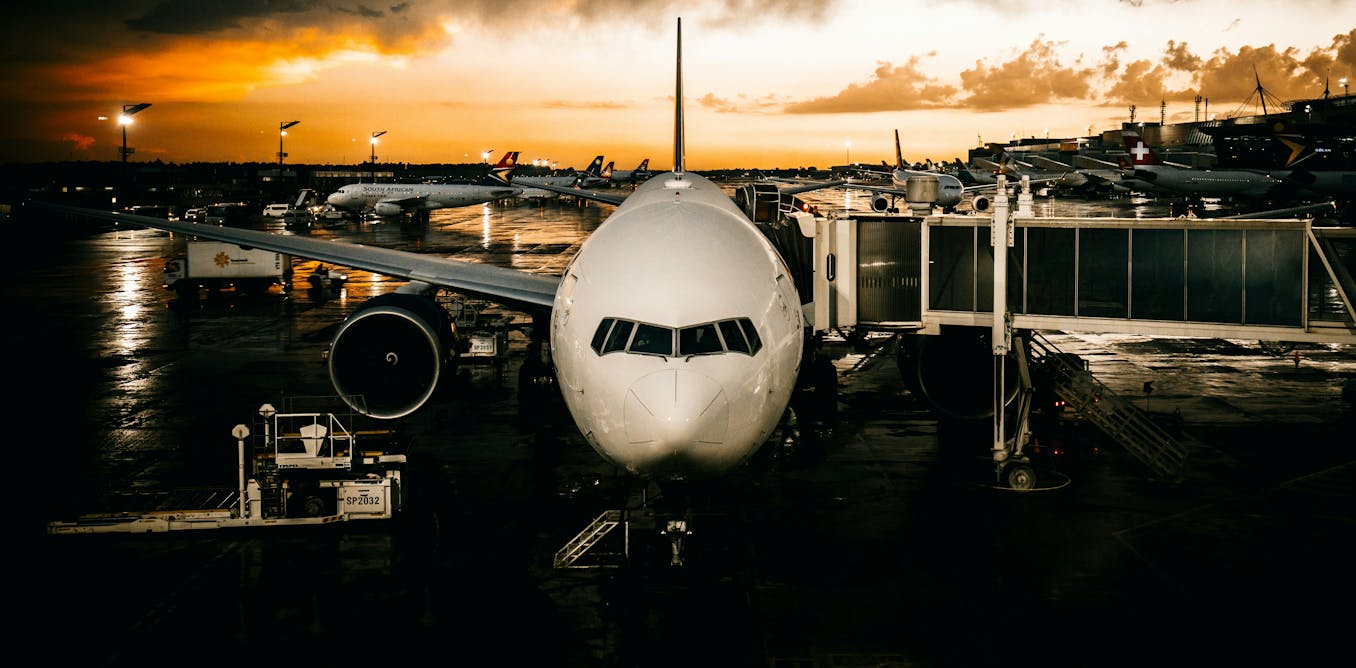
A recent incident involving a Qantas flight, QF1889, has highlighted the reality of in-flight technical issues that, while alarming, are often managed effectively. On September 22, 2023, this Embraer 190 aircraft experienced a sudden descent of approximately 20,000 feet due to a cabin pressurisation warning, prompting the crew to divert back to Darwin. Although the experience was unsettling for passengers, the aircraft landed safely, demonstrating the robust safety protocols in place for such situations.
The aviation industry is built on rigorous training, detailed checklists, and advanced safety systems designed to handle various technical failures. Here, we explore four common aircraft malfunctions that may sound frightening but are generally addressed efficiently by trained professionals.
1. Pressurisation Problems
At cruising altitudes, typically around 36,000 feet, aircraft cabins are pressurised to a comfortable level equivalent to 8,000 feet. This is crucial for passenger comfort and safety, as outside conditions are extreme, with temperatures plummeting to around -55°C. When pressurisation issues arise, the crew treats them seriously and initiates emergency procedures.
Passengers may experience a rapid descent, which can feel dramatic, along with possible ear popping and, in some cases, the deployment of oxygen masks if cabin altitude exceeds 14,000 feet. In the majority of instances, as with flight QF1889, a controlled descent occurs without the need for masks.
When alerted to a pressurisation issue, pilots don their oxygen masks, declare an emergency, and consult their emergency descent checklist, aiming to bring the aircraft down to around 10,000 feet quickly. This is usually followed by a diversion to the nearest airport.
2. Engine Failures
One of the most feared scenarios for passengers is engine failure. Modern twin-engine airliners are certified to fly safely on a single engine, and pilots regularly train for such emergencies in flight simulators. Dual engine failures, while rare, can occur, as evidenced by the 2009 incident involving US Airways Flight 1549, which successfully landed on the Hudson River following a bird strike that disabled both engines.
In the event of an engine failure, passengers might hear a loud bang or experience vibrations. Recent incidents, such as an engine failure involving a Boeing 737 in Sydney, concluded with safe landings due to the crews’ preparedness.
When an engine failure is detected, pilots identify the affected engine and follow their checklist, which typically involves shutting down the malfunctioning engine and descending to a safer altitude. If the aircraft is in cruise, they will divert to the nearest suitable airport.
3. Hydraulic Issues and Flight Controls
Aircraft rely on multiple hydraulic and electric systems to operate flight controls. If one system fails, redundancy ensures the aircraft remains controllable. For example, if the left wing aileron, which assists in turning the aircraft, malfunctions, the right wing continues to function.
Passengers may notice extended delays as crews troubleshoot the issue, along with potential changes in landing configurations. In July 2023, a regional Qantas flight to Melbourne made an emergency landing in Mildura due to hydraulic difficulties.
Upon receiving a hydraulic system warning, pilots follow established checklists and adjust their approach, often requesting the longest available runway and the presence of emergency services.
4. Landing Gear and Brake System Issues
Airliners are equipped with retractable landing gear, which is crucial for safe landings. Occasionally, landing gear may not extend or retract properly, or the braking system may underperform due to hydraulic failures.
In such cases, passengers might receive instructions to brace for impact or prepare for a precautionary return. Earlier in 2023, a Qantas flight returning to Brisbane faced landing gear issues but landed safely after crew instructions to keep heads down.
When confronted with landing gear malfunctions, pilots utilize comprehensive checklists and may consult maintenance engineers for troubleshooting. Backup systems are in place to ensure the landing gear can be deployed, and in extreme cases, crews may need to consider belly landings.
Overall, in-flight failures trigger a comprehensive response designed to maintain safety. With decades of expertise, detailed training, and multiple layers of redundancy, most flights encountering technical issues conclude safely, similar to the experience of QF1889. A sudden descent or an urgent landing does not signify disaster; rather, it indicates that safety systems—including the aircraft’s design, crew training, checklists, and redundancy—are functioning as intended, ensuring that passengers arrive safely at their destinations.