



































In Finland, the fight against fake news begins in preschool classrooms. The Nordic country has integrated media literacy, including the ability to analyze various types of media and recognize disinformation, into its national curriculum for students as young as three years old. This initiative is part of a comprehensive strategy to bolster resilience against propaganda and misinformation, particularly in light of tensions with neighboring Russia and the ongoing disinformation campaigns that have intensified since the outbreak of the conflict in Ukraine.
As part of this educational approach, teachers are now tasked with incorporating artificial intelligence (AI) literacy into their lessons. The urgency of this addition has been heightened by Russia’s increased disinformation efforts amid its full-scale invasion of Ukraine and Finland’s accession to NATO in 2023. Despite Moscow’s denials of interfering in other nations’ affairs, Finnish educators recognize the necessity of equipping students with critical skills to navigate an increasingly complex information landscape.
Kiia Hakkala, a pedagogical specialist for the City of Helsinki, emphasized the importance of media literacy, stating, “We think that having good media literacy skills is a very big civic skill. It’s very important to the nation’s safety and to the safety of our democracy.”
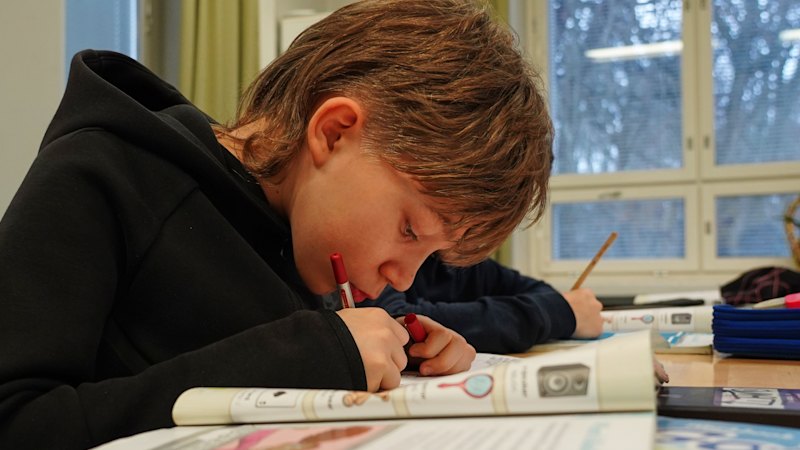
At Tapanila Primary School, located in a quiet neighborhood north of Helsinki, teacher Ville Vanhanen instructs fourth graders on how to identify fake news. As a TV screen displayed a “Fact or Fiction?” banner, ten-year-old student Ilo Lindgren reflected on the challenge of discerning truth from falsehoods. Vanhanen noted that his students have been learning about fake news and disinformation for several years, initially focusing on reading headlines and short texts. In a recent class, they generated a list of five indicators to assess the trustworthiness of online news, a skill they are now expanding to include the detection of AI-generated content.
The role of Finnish media in promoting literacy is significant. Each year, an event known as “Newspaper Week” allows young people to engage with various news sources. In March 2024, Helsingin Sanomat, a prominent newspaper based in Helsinki, collaborated on the distribution of an ABC Book of Media Literacy to every 15-year-old as they commenced upper secondary school. Jussi Pullinen, the daily newspaper’s managing editor, highlighted the importance of maintaining a reputation for trustworthy information, stating, “It’s really important for us to be seen as a place where you can get information that’s been verified, that you can trust.”
Media literacy has been a part of the Finnish educational system since the 1990s, with additional resources available for older adults who may be more susceptible to misinformation. Finland, with a population of 5.6 million, consistently ranks highly on the European Media Literacy Index, compiled by the Open Society Institute.
Reflecting on the changing landscape of information, Finnish Education Minister Anders Adlercreutz remarked, “I don’t think we envisioned that the world would look like this – that we would be bombarded with disinformation, that our institutions are challenged – our democracy really challenged – through disinformation.”
With rapid advancements in AI technology, educators and experts are striving to equip students and the public with the tools necessary to differentiate fact from fiction. Martha Turnbull, director of hybrid influence at the Helsinki-based European Centre of Excellence for Countering Hybrid Threats, noted the increasing difficulty of recognizing genuine information, stating, “It already is much harder in the information space to spot what’s real and what’s not real.” She pointed out that while current AI-generated fakes may be easier to identify, future developments could pose greater challenges in distinguishing between authentic and fabricated content.
As Finland continues its proactive stance against misinformation, the integration of media and AI literacy into educational curricula may serve as a model for other nations grappling with similar issues.
