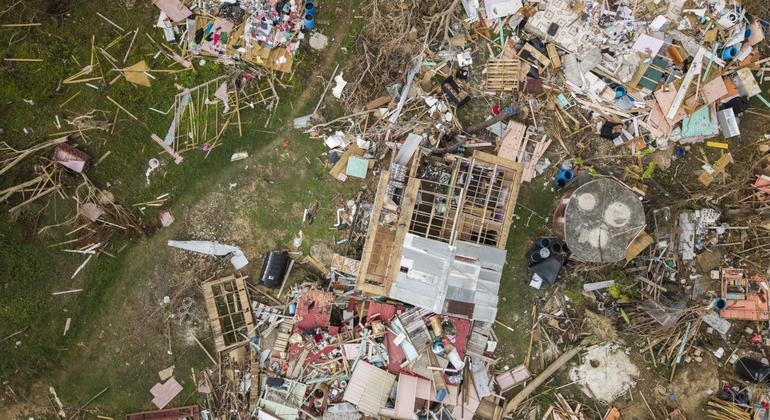
Fifty days after Hurricane Melissa struck Jamaica, the nation faces a daunting recovery from the extensive damage the storm inflicted. Reports estimate that the total costs of destruction and loss range from $8 billion to $15 billion, which represents nearly a quarter of Jamaica’s gross domestic product (GDP). These figures were shared by Dennis Zulu, the UN Resident Coordinator for Jamaica and several Caribbean territories. The hurricane has impacted more than 626,000 people and resulted in approximately 45,000 lives lost, highlighting the profound human toll of this disaster.
Despite ongoing recovery efforts, the situation remains critical. Currently, 90 emergency shelters are operational, housing nearly 950 individuals who have not yet returned to their homes. Many communities remain vulnerable, particularly in southwestern Jamaica, where at least 120,000 buildings have lost their roofs. Mr. Zulu noted that Hurricane Melissa caused “prolonged” and “cascading” disruptions to essential services, stating, “Western parishes were left without electricity for weeks on end.”
Impact on Education and Economy
The educational sector has also suffered significantly, with around 450 schools—nearly two-thirds of the nation’s institutions—reporting severe damage, including roof loss and structural failures. Many children remain unable to attend school due to these extensive impacts.
The economic repercussions are equally alarming. The hurricane has devastated Jamaica’s tourism and agricultural sectors, which are fundamental to the country’s economy and employment. Mr. Zulu emphasized that this level of destruction is “unprecedented,” reversing hard-won developmental progress in a nation that had been on a positive trajectory.
UN’s Ongoing Support and Recovery Priorities
In response to these challenges, the United Nations is collaborating closely with the Government of Jamaica, local institutions, civil society, and international partners to provide life-saving assistance to the most vulnerable communities. Immediate recovery priorities include:
– Restoring health services to safe and fully operational levels.
– Supporting the education sector as schools prepare to reopen.
– Assisting in the restoration of essential services in areas still lacking access.
– Contributing to the repair and reconstruction of homes, roads, and critical infrastructure.
– Restoring livelihoods through targeted support for small farmers, fishers, and micro-enterprises.
– Strengthening the agricultural sector to enhance food production and rural employment.
– Supporting the tourism sector, a key employer and source of foreign exchange, to safeguard jobs and accelerate recovery.
The UN stresses the importance of ensuring that recovery efforts are inclusive, climate-resilient, and informed by risk assessments, enabling Jamaica to rebuild stronger and better than before.
As the nation grapples with the aftermath of Hurricane Melissa, the path to recovery is fraught with challenges, but international support and a focused recovery strategy aim to help Jamaica emerge from this crisis.