



































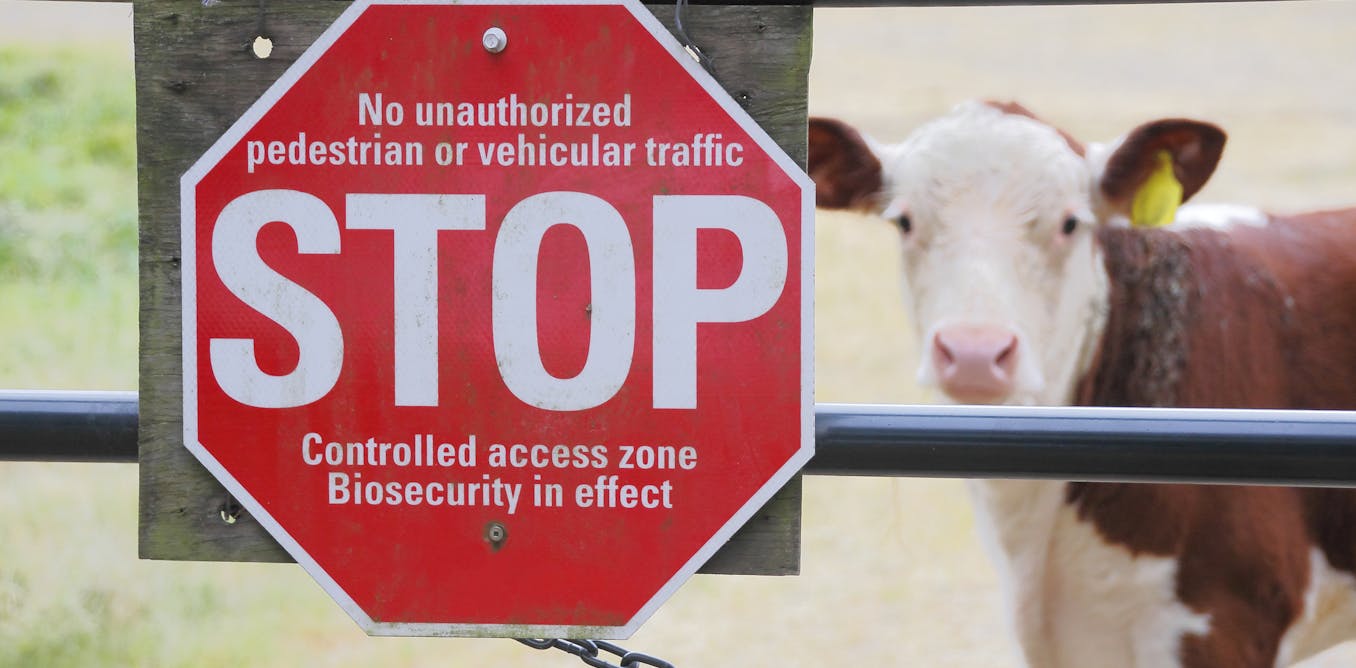
Foot-and-mouth disease, a highly contagious virus affecting livestock, poses a severe threat to Australia’s agricultural sector. With the arrival of a new locally-produced mRNA vaccine, there is renewed hope for mitigating the impact of this disease, should it enter the country. Foot-and-mouth can cause significant long-term damage to cattle health, affecting milk yields and overall livestock productivity.
The last recorded outbreak in Australia occurred in 1872, but the emergence of the virus in Indonesia three years ago has raised alarm and prompted stronger biosecurity measures. If the disease were to reach Australia, it could devastate livestock exports and threaten the livelihoods of graziers nationwide.
Understanding the Threat
Foot-and-mouth disease spreads rapidly, often through the air and on surfaces, making it more challenging to control than many other infectious diseases. The economic repercussions of an outbreak are severe. In 2001, the United Kingdom faced a widespread outbreak that led to the culling of over six million animals, costing the industry an estimated A$16 billion. For Australia, maintaining its status as a country free from major animal diseases is crucial for livestock exports.
If the virus entered Australia, it could lead to immediate export bans from importing countries, significantly impacting the economy. Authorities typically resort to mass culling to contain outbreaks, as seen in the UK, which highlights the urgency of effective responses.
The Role of the New mRNA Vaccine
While preemptive vaccination of Australia’s 30 million cattle against foot-and-mouth is unlikely due to potential complications with disease-free status, the new mRNA vaccine represents a significant advancement. This vaccine can be tailored quickly to match the viral strains in circulation, allowing for a faster response in the event of an outbreak.
The advantage of local production means that authorities can ramp up distribution rapidly. If an outbreak were detected, vaccination could be employed as part of a broader containment strategy, alongside movement restrictions and targeted culling.
Currently, stockpiles of traditional foot-and-mouth vaccines exist globally, but the flexibility and scalability of mRNA technology could enhance the effectiveness of responses significantly. Despite its promise, the new vaccine must undergo rigorous regulatory checks to ensure safety for both animals and human consumers.
Timothy J. Mahony, a specialist in disease modelling and vaccine development, emphasizes that while vaccines are a critical tool, Australia’s stringent biosecurity measures remain essential. The country has implemented advanced livestock tracking systems that assign unique ID tags to each animal, helping authorities monitor movements and identify potential exposure swiftly.
The introduction of this vaccine is a welcome development, but it is not a standalone solution. Continuous investment in biosecurity, coupled with innovative technologies, will be crucial in safeguarding Australia’s agricultural industry from the threat of foot-and-mouth disease.
