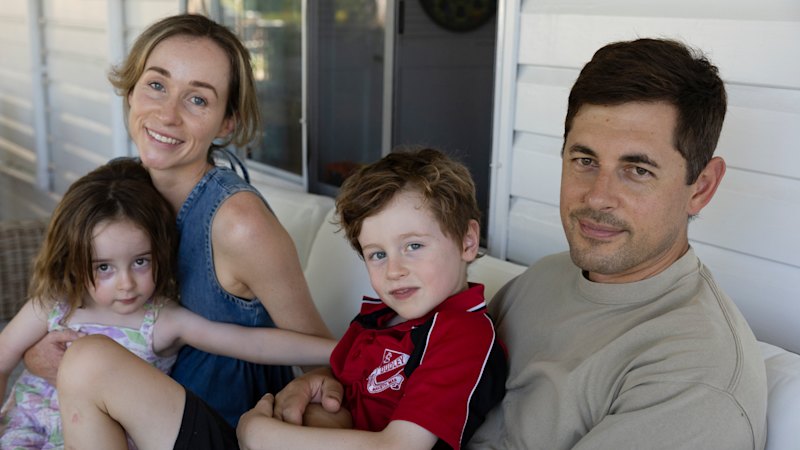
Parents in New South Wales are increasingly opting for private education as public school enrolments continue to decline. Sarah Peddie-McGuirk, a public school graduate, was surprised to discover that many parents began pulling their children from Dudley Public School, a well-regarded institution in a coastal area south of Newcastle. Initially believing she had plenty of time to consider high school options for her eldest son, Henry, she soon realised that families were transferring their children to secure spots in the Catholic education system well before they reached Year 7.
Peddie-McGuirk, who had not previously considered private education, felt a growing sense of urgency. “There’s definitely a feeling of, ‘OK, I perhaps need to be a bit more proactive in looking at what the options are going to be,’” she stated, reflecting the concerns of many parents about ensuring their children thrive in a supportive environment.
Recent data from the NSW Education Department reveals a striking trend: more students attended private schools last year than ever before, as public education enrolments dropped by nearly 7,000 students. This situation marks the seventh consecutive year of declining enrolment share in public schools, with secondary girls leading the migration toward private institutions.
The NSW Education Department has long asserted that public education is vital for maintaining a fair society. Yet, as enrolment numbers shift, concerns grow about the long-term implications for public education. If current trends persist, projections indicate that, within a decade, there could be more high school students in Catholic and independent schools than in public ones.
Educational analysts attribute this shift to policies initiated in the 1960s and 1970s that promoted “school choice,” which increased taxpayer funding for private schools. This has resulted in a phenomenon known as residualisation, where disadvantaged students remain in increasingly underfunded public schools as more affluent families choose private education. Research led by former Education Department head Michele Bruniges highlights that 97 percent of schools with high concentrations of disadvantage in NSW are public institutions.
Professor Glenn Savage, an education researcher at the University of Melbourne, describes residualisation as a central risk to the education system. He notes that when families who can afford fees leave public schools, it compounds the challenges faced by those who remain, creating a cycle of disadvantage.
The implications of this trend are multifaceted. Research indicates that students in schools with a high percentage of low-income peers often achieve lower results compared to those attending schools with a more affluent demographic. This “socio-economic composition effect” not only disadvantages students academically but also exacerbates the challenges faced by teachers in high-needs schools.
Savage warns that the decline in public school enrolments undermines the historical role of public education in fostering shared civic institutions. “Once that function is lost, it’s not easily recovered,” he cautions.
In Sydney, the consequences of declining enrolments are already apparent. Independent education researcher Barbara Preston characterises the situation as a “vicious cycle of residualisation.” She points to the closure of public high schools in affluent areas, which have lost significant enrolments to the private sector. “Once you’ve closed the school down, kids have to travel a much longer distance or go to a private school,” she explains.
Factors contributing to this trend extend beyond financial resources. The COVID-19 pandemic significantly impacted public schools, with government funding largely favouring private institutions. Preston notes that public schools did not receive adequate financial support during the crisis, resulting in a higher percentage of students without internet access at home.
In a recent address to educators at The Sydney Morning Herald Schools Summit, Education Minister Prue Car highlighted the challenges posed by the previous government’s failure to provide sufficient public schooling options. She remarked that in some areas of Sydney, parents have no choice but to turn to private schools.
To address these issues, the New South Wales government has introduced several initiatives aimed at reversing the trend. These include the Inspire program, which aims to give high-potential students access to gifted education in comprehensive schools, and relaxing strict catchment policies for public schools. Car believes that by offering tailored programs, the government can entice parents back to public education.
Despite these positive steps, challenges remain. Sharryn Brownlee, president of the Central Coast Council of Parents and Citizens, expresses optimism about expanding gifted education and relaxing enrolment restrictions but calls for a broader focus on vocational options for diverse student needs.
The state and federal governments signed a historic funding agreement last year, committing an additional $4.8 billion over the next decade to public schools in NSW. Yet, former public school principal Chris Bonnor argues that funding discrepancies cannot entirely resolve the entrenched two-tiered education system. Many parents perceive that enrolling their children in schools with a higher concentration of advantaged peers offers a better chance for academic success.
As selective schools continue to draw students away from comprehensive schools, the competitive landscape further complicates the situation. NSW now boasts 48 fully or partially selective schools, exacerbating the challenges faced by public institutions.
The pressure surrounding selective schools is palpable, as evidenced by chaotic scenes during testing sessions that required police intervention. In light of this, some experts question the viability of the selective school model, suggesting that modifications may be necessary to ensure a more equitable education system.
While some educators believe that social media can help promote individual public schools, comprehensive system-wide changes are essential. Denise Lofts, president of the NSW Secondary Principals’ Council, calls for a level playing field between public and private schools, particularly regarding staffing and discipline policies.
As public education in New South Wales faces mounting challenges, experts caution that the consequences of declining enrolments extend far beyond the classroom. “It would be a shame if the enrolment decline continues,” warns Lofts, emphasising the need for an inclusive education system that serves all Australians.
Education researcher Lyndsay Connors notes the urgent need to win back parents who have turned to private education. “There’s a rapid, dangerous decline now in public schools,” she states, highlighting the critical state of public education funding and support.
As the landscape of education in New South Wales continues to shift, the future of public schooling hangs in the balance, raising concerns about equity and access for all students.