



































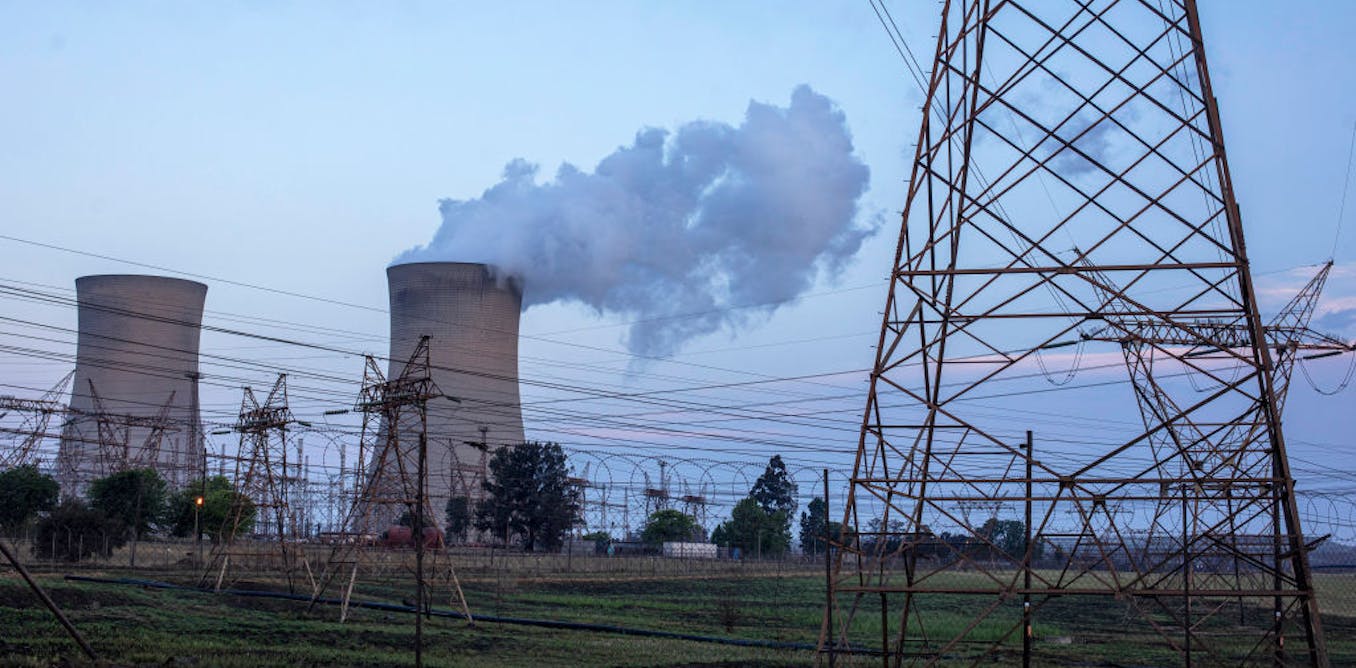
In a significant move to address South Africa’s ongoing energy crisis, President Cyril Ramaphosa announced the establishment of a new Transmission System Operator during his State of the Nation Address. This operator will take ownership of the country’s transmission assets, which include critical powerlines and substations, marking a pivotal shift in the management of South Africa’s electricity supply.
The announcement has sparked a wave of optimism in various media outlets, suggesting that this development could pave the way for long-lasting solutions. However, analysts warn that there are numerous complexities that must be resolved before South Africa can confidently celebrate the potential for a stable electricity system.
Restructuring Eskom and Establishing Independence
In his address, President Ramaphosa emphasized the need to restructure Eskom, the state-owned power utility, by creating a fully independent transmission entity. This entity will take over the ownership and operation of the transmission assets, responsible for managing the nation’s electricity market. Ramaphosa stated, “Given the importance of this restructuring for the broader reform of the electricity sector, I have established a dedicated task team under the National Energy Crisis Committee to address various issues relating to the restructuring process.” The task team is expected to provide a report within three months outlining clear timelines for implementation.
The National Transmission Company of South Africa, established in July 2024, currently owns and operates the national grid transmission system. It was anticipated that this company would eventually be spun off from Eskom. Instead, Ramaphosa’s announcement indicates a more direct approach, asserting that the new Transmission System Operator will have full control over the transmission assets.
This unexpected shift surprised many in government and the business community, raising questions about the financing of new energy infrastructure. The government’s ambitious plan entails a $25 billion investment over the next decade to stabilize energy output, but concerns remain regarding the source of this funding.
Funding Challenges and Private Sector Involvement
Business leaders and Enoch Godongwana, South Africa’s Minister of Finance, have expressed that the only viable method to fund such an extensive infrastructure project is through private sector investment. While there is a consensus on the availability of investment capital within South Africa, doubts linger regarding private investors’ willingness to commit funds to an Eskom subsidiary, given the utility’s compromised balance sheet and tarnished reputation.
As outlined in earlier reports, the government-approved Transmission Development Plan foresees a R400 billion investment strategy aimed at constructing 14,400 kilometers of new transmission lines and 271 new transformers over a ten-year period. Without significant private investment, the likelihood of achieving these targets diminishes, which could lead to a return of load shedding by the year 2029.
The Medium Term Adequacy Outlook from Eskom highlights the risks of decommissioning aging power stations, including Hendrina, Camden, and Grootvlei, without timely replacement infrastructure. If the necessary 6GW of gas capacity is not developed, South Africa could face severe energy shortages.
Should the National Transmission Company fail to secure the required capital, the anticipated integration of renewable energy sources into the national grid may not materialize, further exacerbating energy supply issues. Analysts caution that Eskom’s financial instability may hinder its ability to raise sufficient debt, making the independent Transmission System Operator an essential component for attracting necessary investment.
Despite the potential benefits of creating a fully independent operator, the transition will require careful planning to avoid disrupting Eskom’s financial health. The report requested by Ramaphosa will need to address how asset transfers can occur without jeopardizing the utility’s fiscal position.
Furthermore, establishing a revenue model that is independent of Eskom will be critical to ensure financial viability and attract long-term investments. Without such a model, the risk of revenue shortfalls could ultimately shift the burden onto taxpayers.
As South Africa navigates this complex energy transition, the government must act decisively to enhance conditions for private investment in public infrastructure. This initiative is not about privatization; rather, it aims to mobilize domestic capital to fulfill the nation’s energy needs while promoting sustainable growth.
In summary, while Ramaphosa’s announcement is a crucial step toward addressing South Africa’s energy challenges, the real test lies in the details. For the country to avoid the pitfalls of the past and secure a reliable energy future, robust planning and stakeholder alignment will be paramount.
