



































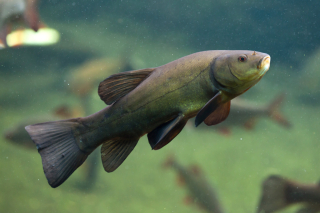
Research from McGill University has identified effective methods for early detection of the invasive tench species in the St. Lawrence River. This study is crucial for fisheries managers aiming to contain and control the spread of tench, which was first introduced to Quebec in the early 1990s. The findings will guide efforts to prevent this species from encroaching into new aquatic environments, particularly the Great Lakes.
The research, conducted in partnership with Fisheries and Oceans Canada, compared various sampling techniques to determine their effectiveness in capturing tench. The study revealed that both gill nets and fyke nets yielded the highest numbers of captured tench, while gill nets and electrofishing provided the best probability of detecting the species in shallow, vegetated habitats where tench thrive.
Detecting tench at the “invasion front” remains a challenge for agencies operating on both sides of the Canada-U.S. border. Reliable detection methods are essential for managers to locate tench populations before implementing removal or long-term suppression strategies. The study tested four fishing methods—gill nets, fyke nets, seines, and electrofishing—during both daytime and nighttime sampling across two vegetated bays.
Christophe Benjamin, the lead author who completed his MSc in Biology in 2022, emphasized the importance of these findings. Now an aquatic science biologist with Fisheries and Oceans Canada, he stated, “Our goal was to help managers choose the right tools.” In areas where at-risk species, such as copper redhorse, are present, fyke nets might be the more suitable option. Benjamin explained, “Every time we’re sampling we’re impacting the environment, so what we try to do is actually find a balance. With fyke nets, even though efficiency is a little bit lower, you actually reduce the overall impact.”
The research team also examined additional data collected along the St. Lawrence and Richelieu Rivers to identify native fish that coexist with tench. They found positive associations with six species, including emerald bowfin, pumpkinseed, and largemouth bass. This information can help managers strategically focus their efforts in areas where tench may be newly establishing.
The latest findings build upon two previous studies from the same research group. One study explored how tench adapt to various substrates and temperatures, revealing that they can thrive in a wider range of habitats than previously thought. Another study compared the feeding efficiency of tench and native fish, indicating that tench might compete with local species in productive wetlands.
Together, these studies paint a picture of a species that is adaptable and likely to continue its spread unless proactive detection and management strategies are implemented. Benjamin expressed hope that this work will assist agencies in preparing for the potential arrival of tench in the Great Lakes.
He reiterated the significance of selecting effective tools for monitoring and containment, stating, “If you’re trying to monitor or contain tench, you need a method that actually works.”
The study, titled “Optimal methods for sampling Tench (Tinca tinca) in its introduced range,” was published in the journal Management of Biological Invasions, highlighting the importance of evidence-based approaches in managing invasive species.
