



































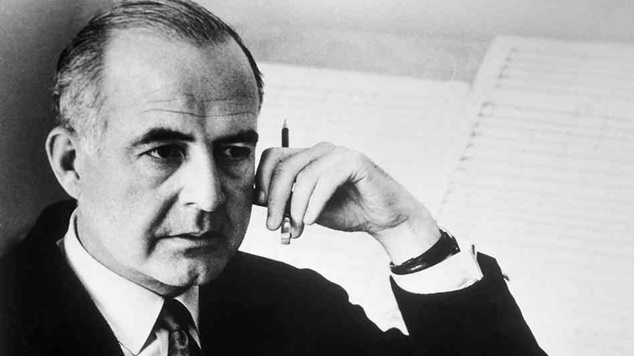
Samuel Barber, the acclaimed American composer, passed away on January 23, 1981, at the age of 70 in New York City. Renowned for his contributions across various musical genres—including orchestral, opera, choral, and piano music—Barber’s works continue to resonate with audiences around the world.
One of his most notable compositions, the 1936 piece Adagio for Strings, has garnered immense popularity, featuring prominently in numerous film scores. This hauntingly beautiful piece has been reinterpreted by electronic musicians such as William Orbit, Tiesto, Armin van Buuren, and Ryuichi Sakamoto. Its emotional depth has led to its performance at significant events, including the funerals of prominent figures like Albert Einstein, Princess Grace of Monaco, and during broadcasts following the funeral of President John F. Kennedy.
Early Life and Musical Journey
Born in West Chester, Pennsylvania, Barber exhibited a passion for music from a young age, beginning to compose at just six years old. Despite his parents’ encouragement to pursue sports, Barber expressed his deep love for music in a letter to them at the age of nine, revealing his struggles with the expectations placed upon him. By the time he turned 12, he had taken on the role of organist at his local church.
After graduating high school at only 14, Barber enrolled at the prestigious Curtis Institute of Music in Philadelphia. It was here that he met Gian Carlo Menotti, who would become both his professional collaborator and life partner. The couple purchased a home together in Mt Kisco, New York, aptly named Capricorn, which served as their artistic retreat for over four decades.
Career Highlights and Challenges
Barber’s career reached a significant milestone in 1958 when he won the Pulitzer Prize for his opera Vanessa, with a libretto penned by Menotti. The 1960s saw him collaborate with renowned director Franco Zeffirelli on an opera about Antony and Cleopatra, which received mixed reviews and led to a period of depression for Barber.
Following this challenging phase, Barber left the United States for several years, living in Europe. During this time, his relationship with Menotti began to deteriorate, resulting in estrangement. Despite his continued efforts in composition, Barber struggled to replicate his earlier success.
Barber’s life came to an end on January 23, 1981, attributed to cancer. He left behind a legacy that has influenced generations of musicians and composers. Menotti, who remained an important figure in Barber’s life, passed away in 2007 at the age of 95.
As the music world reflects on Barber’s contributions, his ability to evoke deep emotion and connect with audiences remains a testament to his enduring legacy. His works continue to inspire new interpretations and captivate listeners, ensuring that Samuel Barber’s influence will be felt for years to come.
