



































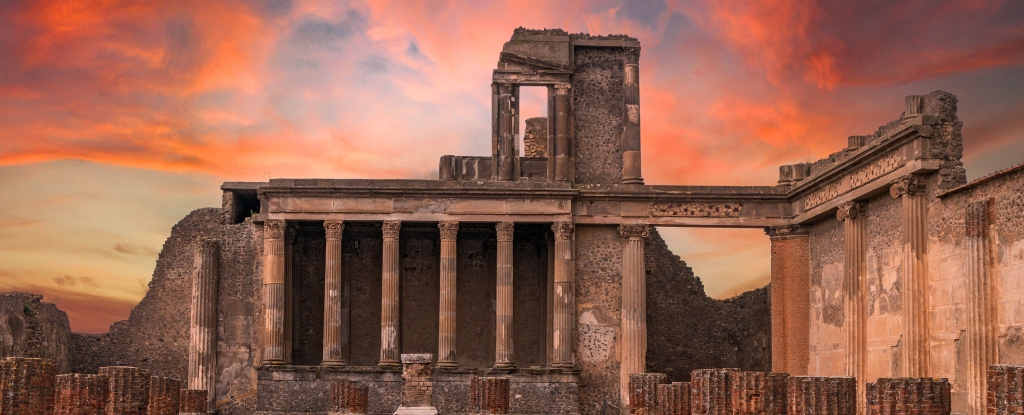
Archaeologists have revealed new findings that suggest the reoccupation of Pompeii following the catastrophic eruption of Mount Vesuvius in 79 AD. The discovery, announced by the directors of the historic site, indicates that some survivors returned to the city after the eruption, despite the extensive devastation that had occurred. Initially home to over 20,000 people, Pompeii became a ghost town, but those unable to relocate sought to rebuild their lives among the ruins.
The evidence points to a community of survivors who returned not only to salvage belongings but also to establish informal settlements. These areas lacked the infrastructure typical of a Roman city, as noted by Gabriel Zuchtriegel, director of the site. He described the post-eruption environment as “a precarious and grey agglomeration, a kind of camp, a favela among the still recognisable ruins of the Pompeii that once was.”
Life After the Eruption
The archaeological findings indicate that while some survivors occupied the upper floors of existing buildings, ground floors were repurposed into cellars equipped with ovens and mills. This adaptation showcases the resilience of those who returned to the city, attempting to carve out a new life from the remnants of their former community.
Previous excavations hinted at the reoccupation, but these traces were often overlooked in the rush to explore Pompeii’s more visually striking aspects, such as its frescoes and intact structures. Zuchtriegel emphasized that “the faint traces of the site’s reoccupation were literally removed and often swept away without any documentation.” The focus on the dramatic events of 79 AD has overshadowed the ongoing human story of survival that unfolded in the years following the disaster.
The Impact of the Eruption
Estimates suggest that between 15 to 20 percent of Pompeii’s population perished in the eruption, primarily due to thermal shock caused by the intense heat and the subsequent cloud of gases and ash. The city was buried under volcanic ash, which remarkably preserved its buildings, artifacts, and even the remains of its inhabitants until its rediscovery in the late 16th century.
Today, Pompeii stands as a UNESCO World Heritage Site and ranks as Italy’s second most-visited tourist destination, attracting approximately 4.17 million visitors in the past year alone. Covering around 22 hectares (54.4 acres), a significant portion remains buried under ash, holding countless untold stories of its ancient residents and their struggles to endure in the aftermath of one of history’s most infamous volcanic eruptions.
