



































A team of astronomers has made a significant breakthrough in solar observation by tracking an active region on the Sun for over 90 consecutive days. This achievement marks a new record in solar physics and enhances the potential for predicting space weather events. The active region, named NOAA 13664, was born on April 16, 2024, on the far side of the Sun and became visible to Earth in May 2024, coinciding with a powerful solar storm that produced auroras in areas typically unaccustomed to such phenomena.
The observation period lasted until July 18, 2024, when the region rotated out of view. During this time, astronomers managed to monitor NOAA 13664 almost continuously, with only a brief interruption from April 26 to April 29. According to Ioannis Kontogiannis, a solar physicist at ETH Zurich, “This is the longest continuous series of images ever created for a single active region. It’s a milestone in solar physics.”
Innovative Observational Methods
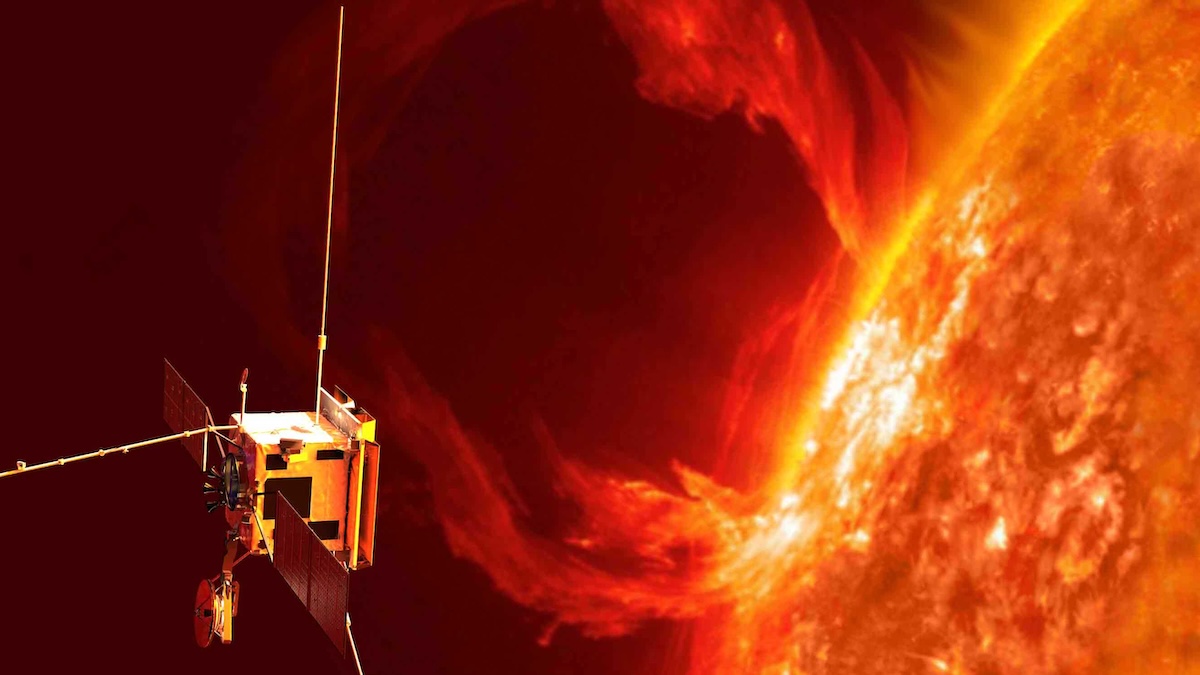
Typically, scientists can observe active solar regions for only about two weeks at a time due to the Sun’s rotation, which takes approximately 28 days. This limited visibility usually restricts the study of solar phenomena. However, the recent observations were made possible by the collaboration of two spacecraft positioned strategically to monitor the Sun from different angles. The Solar Orbiter, launched by the European Space Agency (ESA) in 2020, was observing the far side of the Sun when NOAA 13664 emerged. Meanwhile, NASA’s Solar Dynamics Observatory maintained its watch from Earth orbit.
This dual perspective allowed researchers to comprehensively analyze how the magnetic fields of the active region evolved over time. Understanding these changes is essential, as they are directly linked to solar activity that can lead to significant space weather events.
The Importance of Solar Observation
Solar storms can have serious implications for modern technology. They can disrupt satellites, damage electricity grids, and interfere with communication systems. Therefore, improving our understanding of solar activity is crucial for developing accurate predictive models, which can help mitigate the impacts of such storms on Earth.
The findings from this extensive observation of NOAA 13664 were published in the journal Astronomy & Astrophysics. This research not only adds to the body of knowledge in solar physics but also underscores the importance of continuous monitoring of the Sun. With the ongoing advancements in observational technology, astronomers are hopeful that future studies will further enhance our understanding of solar phenomena and their implications for life on Earth.
