



































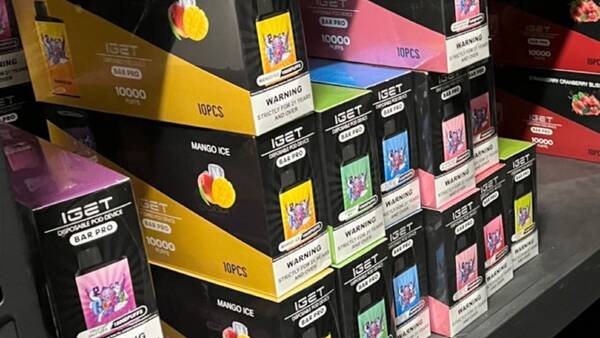
A major enforcement operation in New South Wales (NSW) has led to the seizure of illegal vaping products and tobacco valued at over $2.8 million. The crackdown, conducted by NSW Health inspectors in the Hunter New England region, included more than 220 retail inspections between July 1 and December 12, 2023.
During this period, inspectors confiscated approximately 23,000 illegal vapes, liquid nicotine, and other related goods. The operation also resulted in the seizure of more than 2 million illicit cigarettes and 264 kilograms of other tobacco products. This initiative aligns with recent legislative changes that empower the NSW government to impose closure orders on establishments engaged in the sale of illicit tobacco and vaping goods.
Closure Orders and Ongoing Investigations
As part of this enforcement effort, eight stores in the Hunter New England area have been shut down for 90 days under new laws introduced in early November. These closures include six stores in Lake Macquarie and Port Stephens, which are set to reopen in February. Additionally, two stores in Taree and one in Forster are also facing similar closure orders, with plans to reopen in March.
A spokesperson for NSW Health remarked, “The operation is part of ongoing efforts to disrupt the supply of illicit tobacco and vaping goods to protect public health.” They added that investigations continue, and further enforcement actions may follow. The agency relies on multiple intelligence sources, including public and law enforcement reports, to guide their regulatory actions.
Public Health Concerns and Criminal Implications
Billie Bonevski, an honorary professor at the University of Newcastle, highlighted the serious implications of illegal tobacco sales in Australia. She noted that these activities undermine public health efforts aimed at reducing smoking rates. “Crime related to illegal tobacco has also skyrocketed, and crime syndicates seem to have infiltrated the retail sector,” Bonevski explained.
She emphasized the dangers of illegal sales, stating, “Some people see buying these cheap cigarettes as a way to save money. But as has been reported, it comes at great cost to the community, with fire-bombings, murder, and serious crimes funded by illegal sales.” Bonevski pointed out that all Australian states and territories have enacted tobacco retailer licensing schemes, with violations leading to severe penalties.
In NSW, retailers found violating these laws can face closure for up to 12 months, in addition to the potential for 90-day closure orders. Bonevski asserted that robust measures are necessary to combat this issue effectively, calling for adequately resourced enforcement officers across all states.
Greg Chipp, managing director of Drug Policy Australia, expressed concern that criminalization might inadvertently push vapers towards the black market. He stated, “We’re talking about nicotine addiction. I think tobacco is harder to give up than heroin.” Chipp criticized the prohibitionist approach, indicating that it often creates dangerous alternatives.
“History shows us prohibition does not work,” he added. “These people who want to ban cigarettes and vapes are well motivated to look after people’s health, but in doing so, they make the situation worse.” He warned that a punitive approach could deepen existing inequalities and potentially cause more harm than good.
Recent health data shows that 20 percent of people aged 16 to 24 in Hunter New England were daily or occasional vapers last year. For individuals aged 16 and over, the rate was 6 percent. As the NSW government continues its crackdown on illegal tobacco and vaping products, the balance between public health and the realities of addiction remains a critical topic for discussion.
