



































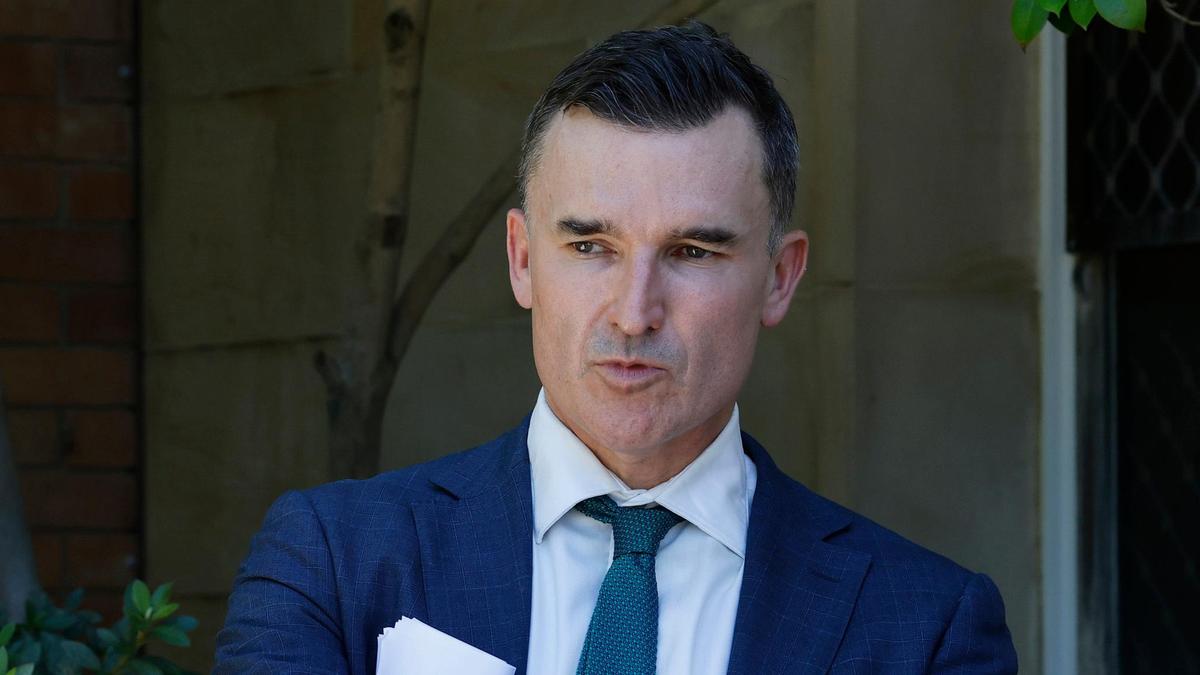
Health Infrastructure Minister John Carey has declared intentions to streamline hospital maintenance processes in Perth but has refrained from committing additional funding or staff to address a growing maintenance backlog. This comes after an independent review revealed that Western Australia’s hospital maintenance systems are underdeveloped and overly reactive, leading to significant delays.
An independent report published on August 10, 2025, highlighted that “resourcing constraints” were a major factor contributing to these delays. It found that the maintenance funding system was primarily reactive and lacking in adequate oversight, performance indicators, and dedicated funding for ageing assets. The report was authored by former Health Department head Neale Fong and ex-under-treasurer Michael Barnes, costing taxpayers over $400,000.
When questioned about the potential for increased resources to tackle the maintenance issue, Carey responded, “That’s for the budget process.” He emphasized that substantial investments are already being made, with $260 million allocated in 2025 and a similar amount expected in the current financial year. Additionally, the government has set aside $50 million for a maintenance “blitz” aimed at expediting repairs.
The Australian Medical Association (AMA) has voiced concerns that improving hospital maintenance standards will take “years, not months or weeks.” AMA WA president Kyle Hoath stated that while the government acknowledges the problem, adequate investment is crucial for meaningful change. He remarked, “I’m not an economist. I don’t know what these things cost, but that $50 million is going to disappear very quickly when you start looking at whole system changes.”
The $50 million maintenance blitz was announced following an investigation by The West Australian, which uncovered hundreds of leaks and mould issues at the Sir Charles Gairdner Hospital. Since the announcement, only $6 million worth of work has been completed, with an additional $14 million earmarked for future repairs.
The review underscored that procurement processes are largely reactive, which has contributed to the existing backlog. Prolonged approval times for maintenance work were identified as a significant barrier, with the report attributing delays in 30 percent of cases to “resourcing constraints.”
In response to the review, the government has outlined an action plan aimed at completing the maintenance blitz by September. However, Carey admitted that he could not guarantee adherence to this timeline. “I’ve learned in politics not to give guarantees like that when you’re dealing with complexities,” he explained.
WA Health director-general Shirley Bowen characterized the report’s findings as “expected” and described it as an “excellent roadmap” for future improvements. Despite the review’s findings, she stated that no additional staff are necessary in the chief procurement office, where the report had pointed to inefficiencies.
Carey reiterated his commitment to cutting red tape to facilitate quicker maintenance approvals. He stated, “We’re talking about a bottleneck. Too many approvals were being required by that office.” The minister expressed confidence that reforms would alleviate pressure on the procurement office, allowing for a more efficient maintenance process.
As the situation develops, the government faces the challenge of not only addressing the immediate maintenance backlog but also implementing systemic changes to ensure lasting improvement in hospital infrastructure across Western Australia.
