



































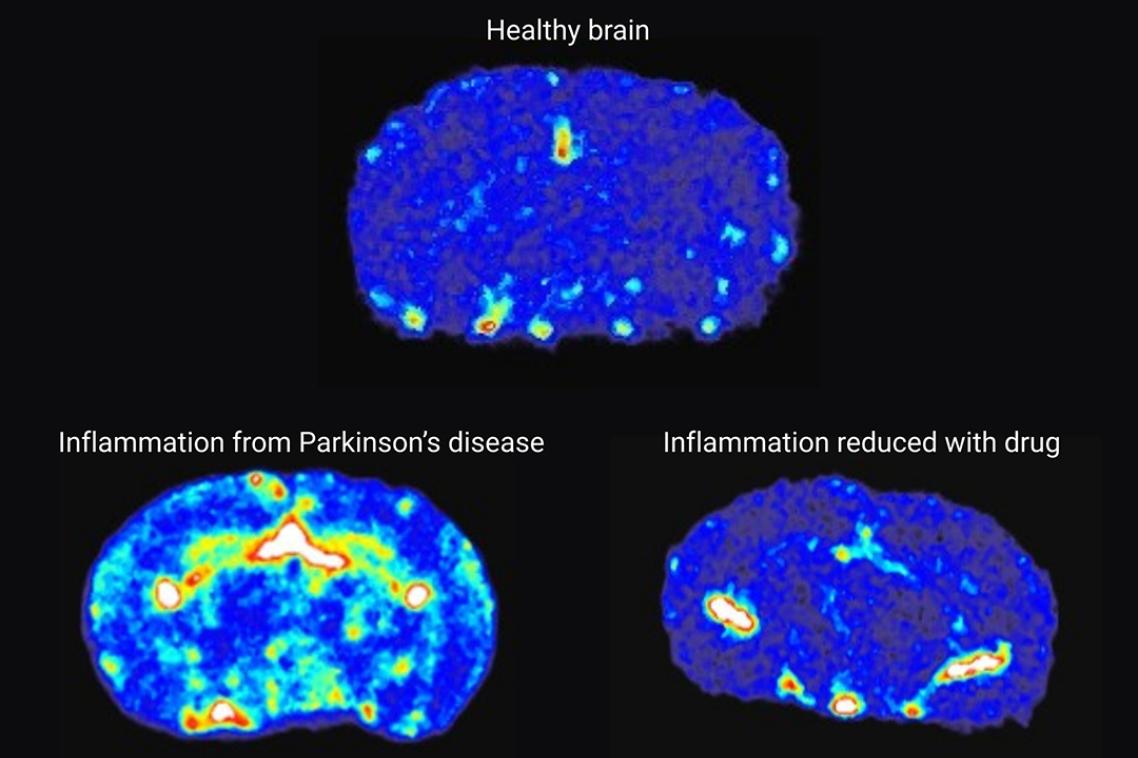
Researchers at the University of Queensland have achieved a significant breakthrough in the treatment of Parkinson’s disease by developing a new anti-inflammatory drug. This innovative oral medication has shown promise in early testing, potentially accelerating the path to more effective therapies for this neurodegenerative condition.
Lead author Dr. Eduardo Albornoz Balmaceda, from the university’s School of Biomedical Sciences, reported that experiments conducted on mouse models demonstrated that the drug effectively blocked inflammation in the brain. This action significantly improved motor function in these subjects. Dr. Albornoz Balmaceda elaborated, stating, “Inflammation acts like a slow-burning fire in the brain, progressively damaging the neurons that produce dopamine, the chemical which controls movement.”
The research team utilized advanced imaging techniques, including simultaneous positron emission tomography (PET) and magnetic resonance imaging (MRI), at the Centre for Advanced Imaging. This allowed them to observe the drug’s effects in real time. “What’s most exciting is we could actually see these changes happening in the living brain,” Dr. Albornoz Balmaceda noted. This methodology provides a robust framework for tracking disease progression and assessing treatment efficacy, critical factors for future clinical trials involving human participants.
In remarks emphasizing the importance of this discovery, senior author Professor Trent Woodruff, who leads the Neuroinflammation Lab at the university, stated that these findings represent a crucial advancement in the search for disease-modifying therapies. He highlighted the urgency of addressing Parkinson’s disease, which is projected to affect more than 25 million people globally by 2050. Current treatments primarily alleviate symptoms without significantly slowing disease progression. This new class of drugs aims to change that dynamic, and the integration of cutting-edge PET/MRI biomarkers allows researchers to measure whether the drug is genuinely protecting the brain.
The study illustrated the typical loss of dopamine-producing neurons associated with Parkinson’s disease, with brain scans showing improved signals following treatment. The drug was developed by Inflazome, a company that originated from a collaboration between the University of Queensland and Trinity College Dublin. Established in 2016 with support from the university’s commercialization branch, UniQuest, Inflazome was later acquired by Roche.
Funding for this vital research came from various esteemed organizations, including the NHMRC (National Health and Medical Research Council), Inflazome, The Michael J. Fox Foundation, and the Shake It Up Australia Foundation. The findings of this study have been published in the journal Brain, marking a hopeful step forward in the quest for effective treatments for Parkinson’s disease.
