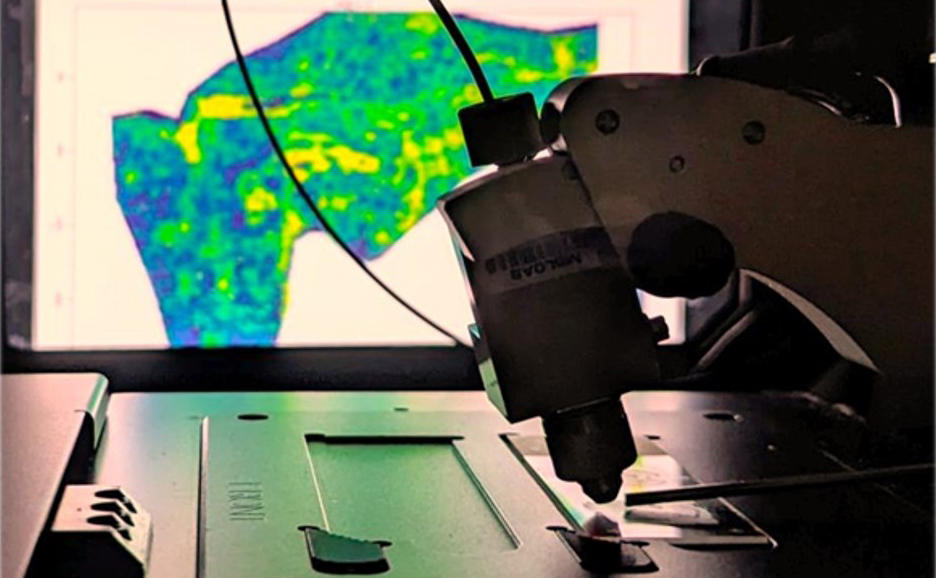
The research group led by Craig Wheelock at the Institute of Environmental Medicine (IMM) has significantly upgraded its analytical capabilities with the recent acquisition of two new mass spectrometers. This expansion brings the total number of operational instruments at the Wheelock Lab to six, positioning it as one of the most well-equipped mass spectrometry facilities in its field.
Mass spectrometry imaging (MSI) is a key feature of one of the newly acquired platforms, greatly enhancing the lab’s capabilities in the dynamic area of spatial biology. This state-of-the-art technology allows researchers to map the spatial organization and interactions of molecules within their native biological settings. By directly imaging metabolites in tissue samples, the platform offers profound chemical insights, enabling scientists to visualize the distribution of small molecules and gain a deeper understanding of their roles in complex biological processes.
Innovative Research Collaborations
Postdoctoral researcher Matt Smith is leading the charge in developing innovative MSI workflows in collaboration with Waters Corporation at the Solna Campus. This initiative is supported by the National Bioinformatics Infrastructure Sweden (NBIS). The advanced methodologies being employed facilitate the direct imaging of metabolites and environmental pollutants from tissue sections, all while preserving the integrity of the samples for further analyses, including spatial transcriptomics.
These new methods enable researchers to apply multiple imaging modalities to a single tissue section, allowing them to examine spatial organization across various biological layers with unprecedented depth and precision. Currently, the team is investigating the roles of lipid mediators, such as prostaglandins and leukotrienes, in inflammatory lung diseases. By combining histological analysis with spatial transcriptomics from the same tissue section, the researchers are identifying specific tissue microenvironments that drive lipid-mediated inflammation in conditions like asthma.
Groundbreaking Applications
The Wheelock Lab is also leveraging MSI technology to visualize environmental chemicals within tissues. In recent research, the team explored the uptake and distribution of PFAS compounds in a zebrafish model, uncovering metabolic disturbances linked to chemical exposure at a high spatial resolution. Their findings indicate that individual PFAS species, specifically PFOS and PFOA, exhibit distinct spatial distributions within the zebrafish, suggesting potential organ-specific effects of these compounds.
In addition to research advancements, Wheelock oversees the Small Molecule Mass Spectrometry Core Facility (KI-SMMS), which provides specialized support in metabolism, experimental design, and data analysis. Whether researchers require metabolomics, lipidomics, targeted fluxomics, or other liquid chromatography-mass spectrometry (LC-MS)-based analyses, KI-SMMS develops tailored solutions to meet specific scientific objectives.
The recent investments in instrumentation not only enhance the service capacity of the core facility but also bolster the research capabilities of the Wheelock Lab, advancing IMM’s mission to understand the impact of environmental chemicals on human health.