



































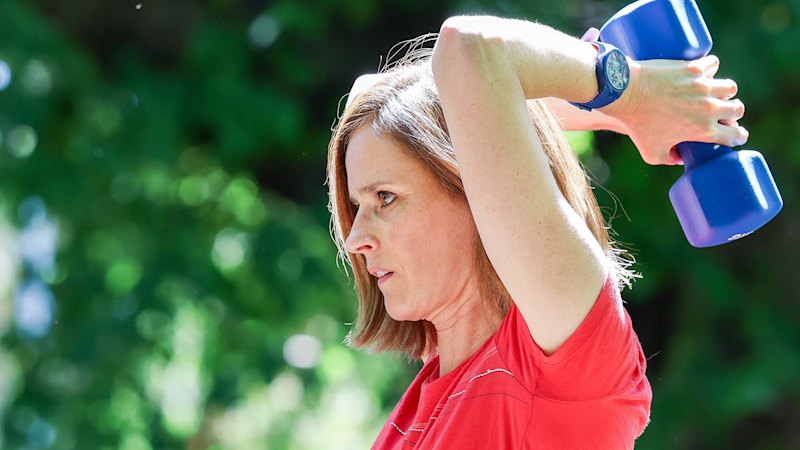
Women over 40 are encouraged to incorporate weightlifting into their fitness routines to counter a significant decline in muscle mass, according to a study led by Severine Lamon, a professor at Deakin University. Her research reveals that without sufficient exercise, women experience a drastic loss of muscle as they enter menopause, a period marked by declining levels of sex hormones such as oestrogen and progesterone.
The findings, published in two papers in The Journal of Physiology, highlight the importance of resistance training for women aged 40 to 60. Lamon and her team examined muscle health across various decades, from ages 18 to 80, uncovering a critical window during midlife where muscle preservation is essential. “Neuromuscular deterioration with age is associated with poor physical function and quality of life,” Lamon stated, underscoring the broader health implications of muscle loss.
Lamon emphasized that while men experience a gradual decline in muscle mass, women face a more abrupt drop-off during their 40s, 50s, and 60s. “In younger women and men, age-related muscle decline happens gradually. In middle-aged women, many indicators of muscle health display a sudden and sharp decline that coincides with the onset of menopause,” she explained. The study suggests that resistance training is crucial during this period to mitigate muscle loss.
Resistance Training as a Lifesaver
The research indicates that the best approach to building muscle mass is through resistance exercises, which involve pushing against external loads. “It is the simplest and most efficient way to build up skeletal muscle mass,” Lamon said. She personally adapted her fitness routine to include two weightlifting sessions each week, demonstrating the urgency of starting early but also reassuring that it’s never too late to begin.
Exercise physiologist and resistance-training coach Dr Ashlee Hendy noted that awareness around the necessity of resistance training is growing, although many women still feel intimidated in gym environments. “I’ve definitely seen a shift towards women lifting heavier weights and not just little colourful dumbbells,” Hendy remarked, reflecting on the changing dynamics within fitness spaces.
For many women, resistance training has proven transformative. Wendy Glen, a 63-year-old athlete, reported remarkable improvements in her running performance after integrating weights into her regimen. “I went to see an exercise physiologist who took my running more seriously than I ever did,” Glen said. “I’m doing some deadlifts, bicep curls, and I’m deadlifting 65 kilograms.” Her experience illustrates the positive impact weight training can have on overall fitness and well-being.
Glen expressed her joy at seeing her running improve due to resistance training. “I’ve discovered this immense enjoyment in running and being outside. While I may not enjoy doing the resistance training, what it gives me more than makes up for it,” she said.
Encouraging Participation in Weightlifting
Lamon’s research serves as a call to action for women in their 40s and beyond. The findings underscore the need for women to “speed up, not slow down” in their resistance training efforts. Lamon encourages women to not only start lifting weights as early as possible but also emphasizes that any form of exercise is beneficial. “If a person feels all they can do is go walking at the moment, then that’s fine. Even walking can maintain muscle mass, to a small extent,” she noted.
As more women join the weightlifting community, the barriers that once deterred them from engaging in resistance training are gradually fading. The increasing visibility of female athletes and fitness advocates is fostering an environment where women feel empowered to embrace strength training as part of their health routines.
In conclusion, the research conducted by Lamon and her colleagues highlights the critical need for women over 40 to prioritize resistance training. By doing so, they can combat the natural decline in muscle mass associated with hormonal changes during menopause, ultimately enhancing their quality of life and physical function.
