



































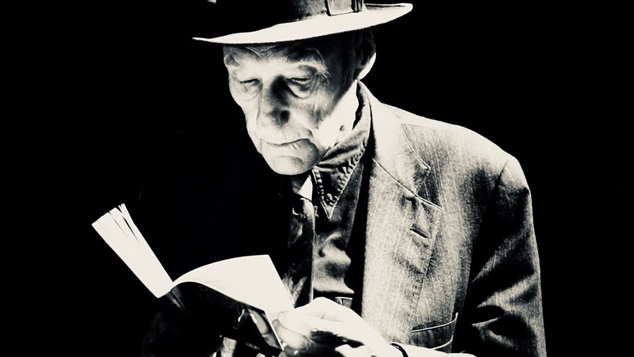
William Burroughs, a pivotal figure in the Beat Generation and a significant post-modern author, was born on February 5, 1914. His life and works have had a profound impact on modern literature and popular culture, marking him as one of the 20th century’s most influential writers.
Burroughs’ early life was marked by extensive travel and encounters with the law. While studying English and Anthropology at Harvard University, he frequented the vibrant LGBTQ scenes of New York City, exploring underground bars and dives in Harlem and Greenwich Village. His experiences during this time laid the groundwork for the themes he would later explore in his writing.
In the 1930s, Burroughs moved to Europe, attending medical school in Vienna. It was here that he immersed himself in the Weimar-era LGBT culture, engaging in the city’s nightlife and forming significant relationships. He notably married Ilse Klapper, a Jewish woman fleeing the Nazi regime, to facilitate her escape to the United States. Although their marriage was brief, the two maintained a friendship for years.
Burroughs enlisted in the army during World War II, signing up in 1942. However, his service was cut short, and he soon found himself in New York, where he developed a lifelong addiction to drugs. It was during this period that he befriended fellow writers Allen Ginsberg and Jack Kerouac, whose collective work became foundational to the Beat Generation and the counterculture movement of the 1960s.
In 1944, Burroughs began a tumultuous relationship with Joan Vollmer, who had a daughter from a previous relationship. The couple eventually had a son together, but both struggled with mental health issues and addiction. Their complex dynamics led them to Mexico, where Burroughs sought refuge from legal troubles stemming from a drug-related incident.
Tragedy struck in Mexico when Burroughs accidentally shot Vollmer during a bizarre incident involving a revolver. While awaiting trial for homicide, he wrote what would become the novel Queer. His lawyer’s abrupt departure from the case led Burroughs to flee the country before the trial, resulting in a conviction in absentia.
Following his escape, Burroughs traveled through South America, searching for a hallucinogenic drug called yage, which he believed could unlock telepathic abilities. His correspondence with Ginsberg during this period resulted in The Yage Letters, published in 1963, although much of the content was later revealed to be fictionalized.
Burroughs’ literary breakthrough came with the publication of Junkie in 1953, followed by Queer. He relocated to Tangiers, where he wrote The Naked Lunch, a groundbreaking work that faced censorship due to its candid portrayal of drug use and sexuality. Despite legal battles over obscenity charges, the court ultimately ruled in favor of Burroughs, affirming the novel’s artistic merit.
In the 1960s, as Burroughs gained notoriety, he lived in various cities, including Paris and London, before returning to the United States in the 1970s. Later years saw him settling in Kansas, where he produced influential works such as The Soft Machine, Nova Express, and Wild Boys. Critics hailed him as a literary genius, and his influence extended to musicians like Kurt Cobain, David Bowie, and Patti Smith.
In his later years, Burroughs collaborated with various musicians, producing albums that blended literature and music. Among his notable projects were collaborations with Kurt Cobain and the band Disposable Heroes of Hiphoprisy.
William Burroughs passed away on August 2, 1997, at the age of 83, following a heart attack. His legacy continues to resonate, with adaptations of his work, including a film version of Queer starring Daniel Craig, released in 2024.
This legacy of innovation and cultural commentary marks Burroughs as a central figure in both literary and LGBTQ histories, underscoring the complexities of his life and the lasting impact of his work.
