



































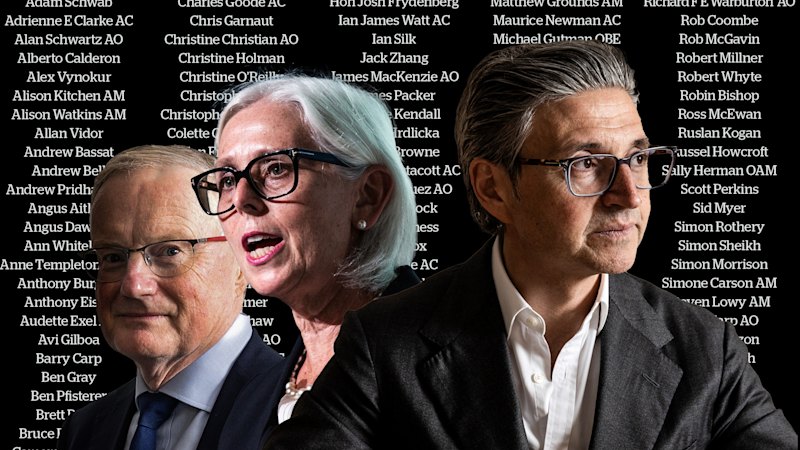
Prominent Australian business leaders and public figures are calling for a federal royal commission into antisemitism following the deadly Bondi Beach terrorist attack. This incident on December 14, 2023, which targeted a Hanukkah celebration, left 15 people dead and has intensified demands for a thorough national inquiry. More than 100 signatories, including former Reserve Bank governors Philip Lowe and Glenn Stevens, have signed an open letter urging the Albanese government to reconsider its stance against a federal investigation.
The letter, published on March 15, 2024, features notable business figures such as Paula Dwyer, chancellor of the University of Tasmania, and Alex Vynokur, founder of BetaShares. Others include former Coca-Cola Amatil CEO Alison Watkins, ex-AustralianSuper chief Ian Silk, and former Tennis Australia chair Jayne Hrdlicka. The collective statement argues that the attack transcends political boundaries, highlighting the need for a unified response to a national crisis.
Prime Minister Anthony Albanese has consistently rejected the idea of a federal royal commission, citing expert advice that such an inquiry could be lengthy and divisive. Instead, he has expressed willingness for the Commonwealth to participate in a New South Wales-led inquiry initiated by Premier Chris Minns. Albanese argues that a national inquiry might inadvertently provide a platform for extremist views.
Supporters of the royal commission emphasize its non-partisan nature, positioning it as a civic initiative aimed at fostering national clarity and addressing the underlying issues that led to the Bondi attack. The authors of the letter assert, “We must end the unprecedented harassment, intimidation and violence directed at the Australian Jewish community since October 7, 2023.”
The open letter states that the inquiry is essential for understanding the factors contributing to the Bondi massacre and for identifying practical solutions to restore social cohesion in Australia. It includes prominent public figures such as Ian Watt, a former head of the Department of Prime Minister and Cabinet, and James Merlino, a former deputy premier of Victoria.
Vynokur, who immigrated to Australia from Ukraine in 1994, expressed his concerns regarding the rising antisemitism since the Hamas attacks on Israel. “I believe now is the time for our government to show real leadership and take urgent, tangible steps to identify the circumstances leading to the Bondi terrorist attack,” he stated, emphasizing the importance of community unity and safety for all Australians.
Other notable supporters of the letter include Michael Rozenes, former Commonwealth director of public prosecutions, and Peter Leahy, a former chief of army. They echo the sentiment that the inquiry should not solely focus on antisemitism but address broader issues affecting all Australians.
On New Year’s Eve, Lorraine Finlay, Australia’s human rights commissioner, became the first current government official to publicly support the call for a federal inquiry. She argued that the existing reviews do not adequately address the root causes of the violence stemming from antisemitism and that direct confrontation of this issue must be a national priority.
The discussion around the inquiry has drawn responses from various political leaders. Sussan Ley, leader of the Liberal Party, criticized Albanese for not substantiating his claims regarding expert advice against a royal commission. Ley suggested that the government’s reluctance may indicate a lack of transparency regarding the events surrounding the Bondi attack.
The Australian Catholic Bishops Conference has also endorsed the idea of a broader inquiry, stressing the need to confront antisemitism present in various sectors, including politics, business, and academia. Timothy Costelloe, the archbishop of Perth, emphasized that a national inquiry should aim to explore the deeper societal issues contributing to antisemitism.
As pressure mounts on the Albanese government, the call for a royal commission into antisemitism continues to resonate across Australia, reflecting a collective desire for accountability and a commitment to fostering a safer and more inclusive society.
