



































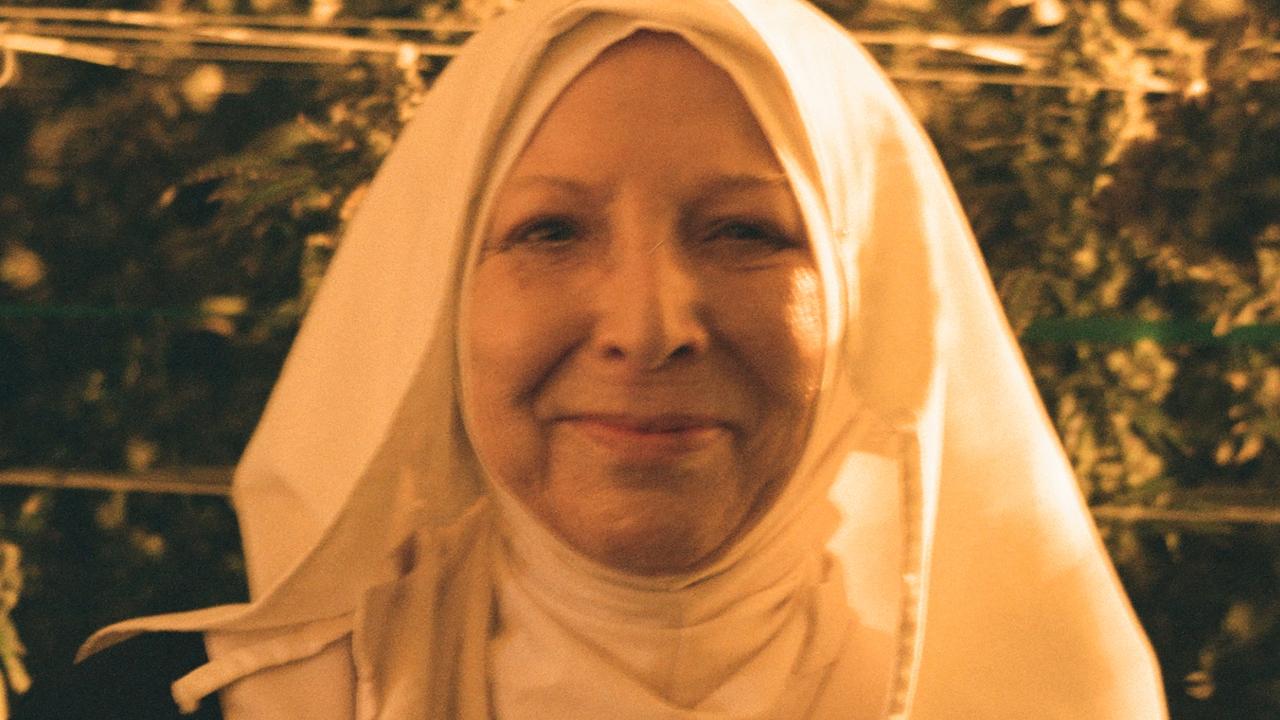
Sister Kate, a prominent figure in California’s cannabis community, has issued a stark warning to Australia regarding its approach to cannabis legislation. As one of the founders of the Sisters of the Valley, a group of nuns who advocate for cannabis use and cultivate the plant, she believes Australia is “fighting reality” by maintaining a partial decriminalization of the substance while the black market continues to thrive.
In a recent interview, Sister Kate stated, “I’ve been around the world. I’ve visited about 30 countries, and there was no country I couldn’t get weed in. None.” She emphasized that cannabis is already circulating in Australia, albeit in an unregulated manner. “I know growers in your country. I’ve been sent seeds from Australia. It’s already happening, just in black and brown bags,” she added.
The Sisters of the Valley operate as a self-sustaining charity in California, where recreational marijuana is legal. The group lives communally, dresses in traditional habits, and sells cannabis-based wellness products. In contrast, Australia has a complex legal landscape regarding cannabis. While medicinal cannabis is federally permitted, recreational use remains largely illegal, with the exception of limited decriminalization in the ACT.
Founded in 2015, the Sisters do not fit the conventional mold of a religious order. They describe themselves as a “modern sisterhood rooted in social justice, women’s independence, and plant-based medicine.” Their striking image of women working with cannabis has garnered attention, even leading to a cameo in Paul Thomas Anderson’s film, One Battle After Another, set to release in 2025.
Despite their unique approach, Sister Kate insists that their mission is serious. “We’re not a stoner culture,” she remarked. “We treat cannabis like medicine.” Public support for cannabis legalization in Australia has steadily increased, yet it remains divided, with recent polls indicating support hovering just below 50 percent. Notably, men are more likely to support reform than women.
Sister Kate, now 66, views the resistance to legalization—especially among older and more traditional Australians—as a significant danger. “Until you completely embrace legalization, you are not embracing the control systems you need to keep people safe,” she stated. “The people fighting legalization are basically fighting to keep cannabis in the hands of the black market, where it’s untested and can be spiked with chemicals.”
Her view extends to the ineffectiveness of partial reforms, such as the decriminalization in the ACT. “Decriminalizing it in one town is nonsense,” she asserted. “It needs to be decriminalized nationally, then regulated properly with testing, standards, and accountability.”
Sister Kate’s strong convictions suggest that legalization is inevitable in Australia. “You’re going to legalize. It’s coming. You don’t get to stop this,” she warned, highlighting that cannabis is already widely available. “I can land in Sydney and have cannabis waiting for me at the hotel. Anybody can do it.”
Drawing from her experiences in California, she cautioned against allowing existing food and drug regulators to control the cannabis industry. “Do not let the same people who regulated drugs and food take charge of this,” she advised. “They fought this plant for decades. When they lose, they punish the industry. We’ve seen it happen in California.”
Sister Kate’s journey to founding the Sisters of the Valley began after a tumultuous period in her life, including a painful divorce and financial hardships. Her activism during the Occupy movement led her to adopt a nun’s habit as a form of political protest. This initial satire eventually evolved into a serious mission, aided by an unexpected camping trip with a Native American community that deepened her commitment to the cause.
“We don’t beg. We don’t rely on donations,” Sister Kate emphasized. “We work.” Although the Sisters currently cannot operate in Australia, Sister Kate’s interest in the country remains strong. “As soon as Australia gets its head out of the sand and legalizes properly, we’ll be there,” she affirmed.
Her message resonates with urgency: whether Australians like it or not, cannabis is already intertwined with everyday life. “The question isn’t if,” she concluded. “It’s whether you want it clean and regulated or dangerous and underground.”
