



































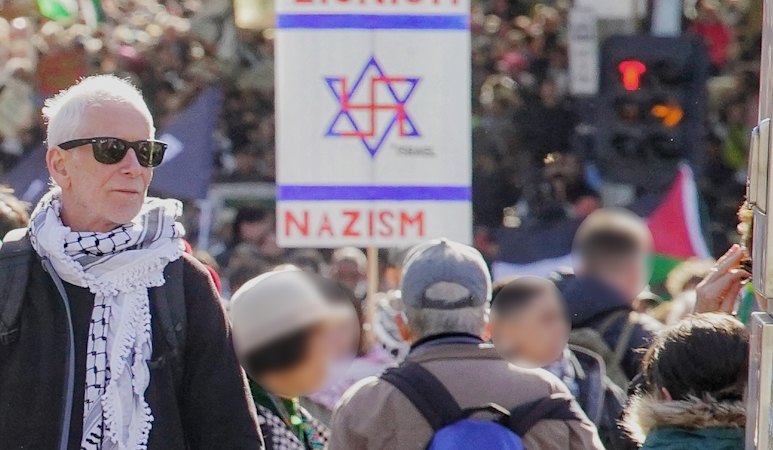
The term ‘Zionist’ has increasingly become a contentious label in political discourse, often used to incite hate against Jewish communities worldwide. Critics of the Israeli government, including many Israelis who identify as Zionist, assert that the term has been distorted from its original meaning. This manipulation has led to its use as a weapon against Jews, significantly impacting public perceptions and discourse surrounding Israel and its policies.
Understanding the implications of this shift is crucial, especially in light of rising anti-Semitism. According to a report from the International Human Rights Watch, there has been a marked increase in anti-Semitic incidents globally, with some attributing this trend to the misuse of the term ‘Zionist.’ The report highlights that in 2021 alone, anti-Semitic incidents surged by over 30% in several countries, including the United States and the United Kingdom.
Redefining Zionism
Historically, Zionism refers to the movement for the re-establishment of a Jewish homeland in Israel. Many within the Jewish community view themselves as proud Zionists, advocating for the right of Jews to exist and thrive in their ancestral land. Prominent Israeli figures, such as former President Shimon Peres and former Prime Minister Golda Meir, have articulated this vision, emphasizing the importance of a democratic and inclusive society.
However, the negative connotation associated with ‘Zionist’ has emerged as a significant concern. Scholars from the University of Cambridge have noted that the term is often weaponized in political debates, reducing complex issues to a single, charged label. This reductionism not only misrepresents the views of many Israelis but also fuels anti-Jewish sentiments under the guise of political critique.
The misuse of ‘Zionism’ has also been observed in various international forums, including discussions at the United Nations. Some resolutions and statements have criticized Israeli policies while inadvertently reinforcing harmful stereotypes about Jewish people. This has prompted backlash from both Israelis and Jewish communities globally, who argue that such rhetoric undermines genuine discourse about the Israeli-Palestinian conflict.
The Human Impact
The ramifications of this discourse extend beyond politics, affecting everyday life for many Jews. Instances of harassment and discrimination have increased, leading to heightened security concerns in Jewish communities. A recent survey indicated that approximately 40% of Jews in the UK reported feeling unsafe due to rising anti-Semitism, a sentiment echoed by many across Europe and North America.
Activists and scholars emphasize the need for a nuanced understanding of the term ‘Zionist’ and its implications. They argue that fostering dialogue grounded in mutual respect and accurate representation is essential to counteract the growing tide of hate. Organizations such as the Anti-Defamation League have initiated campaigns aimed at educating the public about the true meaning of Zionism and combating the narrative that equates it with hate.
In conclusion, the transformation of ‘Zionist’ from a term of identity to a label of hate presents significant challenges. Addressing this issue requires a concerted effort from various sectors, including education, media, and political leadership. By reaffirming the original meaning of Zionism and promoting respectful dialogue, there is hope for reducing the impact of hate speech and fostering a more inclusive discourse on Israel and its policies.
