



































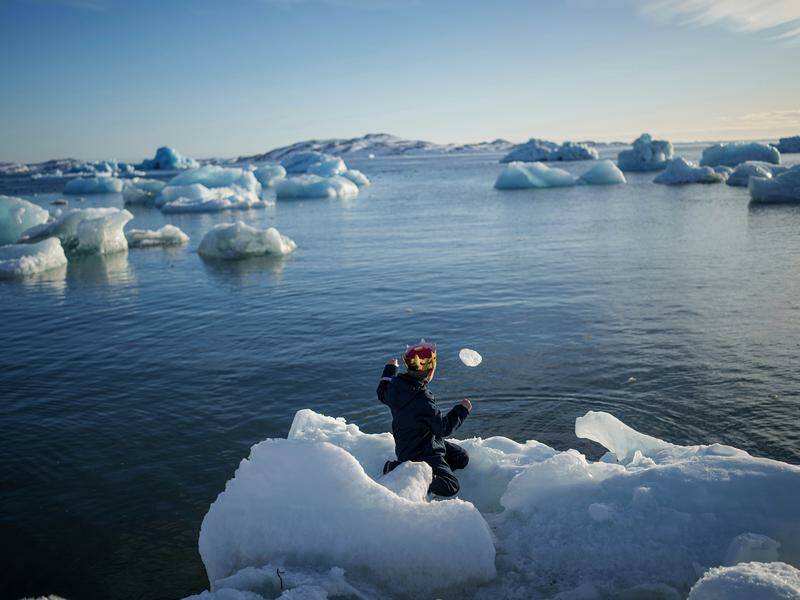
Denmark and Greenland have initiated a request for dialogue with US Secretary of State Marco Rubio following heightened tensions regarding the Arctic territory. This escalation arose after the Trump administration reaffirmed its intent to assert control over Greenland, a Danish territory, amid concerns over security threats posed by China and Russia in the region.
On March 15, 2024, President Donald Trump stated that “the US military is always an option” regarding Greenland, which he views as a critical asset for US security interests. Danish Prime Minister Mette Frederiksen responded firmly, warning that any attempt at a US takeover could jeopardize the NATO military alliance. “The Nordics do not lightly make statements like this,” remarked Maria Martisiute, a defense analyst at the European Policy Centre, emphasizing the gravity of the situation.
Many European leaders have echoed Frederiksen’s sentiments. On the same day, leaders from France, Germany, Italy, Poland, Spain, and the United Kingdom issued a joint statement asserting that the mineral-rich island “belongs to its people,” thereby defending Greenland’s sovereignty. This self-governing territory of Denmark is also a part of NATO, further complicating any potential US actions.
Concerns have been amplified by recent US military operations in Venezuela, which have stirred fears across Europe. Trump has reiterated his position that control over Greenland is vital, stating, “It’s so strategic right now,” during a press briefing. In light of these developments, Danish Foreign Minister Lars Løkke Rasmussen and Greenlandic counterpart Vivian Motzfeldt have formally requested a meeting with Rubio, as indicated in a statement released on Greenland’s government website. Previous requests for dialogue had not yielded results.
In a recent conversation with Jean-Noël Barrot, France’s Foreign Minister, Rubio dismissed the possibility of a military operation similar to that in Venezuela occurring in Greenland. “In the United States, there is massive support for the country belonging to NATO – a membership that would be compromised by any form of aggressiveness towards another NATO member,” Barrot explained in an interview with France Inter radio.
The growing international concern regarding Trump’s remarks has not gone unnoticed by US lawmakers. Senators Jeanne Shaheen and Thom Tillis, co-chairs of the bipartisan Senate NATO Observer Group, criticized Trump’s rhetoric in a joint statement. They emphasized the importance of respecting Denmark’s sovereignty, asserting, “When Denmark and Greenland make it clear that Greenland is not for sale, the United States must honour its treaty obligations.”
As the situation unfolds, the implications of these discussions could extend far beyond Greenland, potentially reshaping alliances and security strategies in the Arctic and beyond. The next steps in this diplomatic encounter will be closely monitored by both international observers and officials within NATO.
